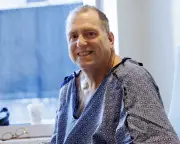
Pioneering cardiothoracic surgeon Keyvan Moghissi dies at 98
Tributes paid to Keyvan Moghissi, the pioneering Iranian-born cardiothoracic surgeon who helped establish a major heart surgery centre in Hull. Read his remarkable life story.
The Trump administration's cuts to mRNA research funding risk America's scientific lead, opening the door for the UK and EU to seize the initiative on next-generation vaccines for flu, HIV, and cancer.
New research exposes 'concerning' inequalities in access to continuous glucose monitors for black and south Asian people in England, despite higher diabetes risk. Urgent action is needed.
Leading scientist Kevin Hall, after 21 years at the NIH, exposes diet and exercise myths in a new book. Discover the real science of weight loss and metabolism. Read the full interview.
Professor Roland Littlewood, a pioneering figure in medical anthropology and psychiatry, has died aged 77. Explore his groundbreaking work on culture and mental health.
Scientists using AI and blood tests have identified two distinct biological subtypes of MS, paving the way for personalised treatments and better patient monitoring in the UK and beyond.
The FDA has approved two new antibiotics for gonorrhoea, a breakthrough in the fight against superbugs. But experts warn the race against resistance is far from over. Discover the new models driving this critical research.
New data on dark energy sparks a major cosmological debate. Will the universe end in a violent Big Rip or collapse in a Big Crunch? Discover the latest research.
A leading surgeon says gene-edited pig kidneys could one day be better than human organs for transplants, offering hope to thousands on waiting lists. Read about the groundbreaking trial.
A simple blood test could transform care for millions with hypertrophic cardiomyopathy (HCM), identifying those at highest risk of heart failure and cardiac arrest.
New research challenges the view that curiosity declines with age, revealing it becomes more targeted. Discover how maintaining broad curiosity can keep our brains young. Listen to the full podcast.
Analysis reveals US pharma giant Pfizer allocated more revenue to shareholders than R&D in 2024, as Trump's drug price rhetoric targets allies over corporate profits. Explore the real drivers of high US medicine costs.
Cambridge researchers create a replica human womb lining, successfully implanting early-stage embryos. This breakthrough could transform our understanding of early pregnancy and miscarriage.
New research reveals ageing isn't a slow decline but happens in dramatic bursts. Discover what drives these critical phases and the science that could help counteract them.
Avi Krishnan, 13, from Pinner, lives with achromatopsia and sees in shades of grey. He and his family are championing Fight for Sight's Christmas appeal for vital research funding.
A new survey finds 13% of 14-17 year olds have used nicotine pouches, prompting a government crackdown to ban sales to under-18s. Experts warn of addiction and health risks.
Breakthrough gene-editing treatments for rare diseases exist, but costs run to seven figures per patient. Experts warn the current market model is broken, demanding a new social contract for NHS delivery.
The NHS is launching a major trial of a pioneering 'liver dialysis' device called Dialive, aiming to treat acute-on-chronic liver failure and save lives. Read about this potential medical breakthrough.
Emily Butler, 26, spent two weeks fighting for her life after a severe reaction to progesterone tablets triggered a rare blood condition. Discover her story and the vital warning about medication risks.
By 2035, Artificial General Intelligence could transform UK daily life. From AI GPs and robot lawyers to 15-hour work weeks, discover the profound changes ahead for healthcare, justice, and leisure.
Space scientist Dame Maggie Aderin-Pocock discusses the Royal Institution Christmas lectures, the search for alien life, and the James Webb Space Telescope. Tune in on BBC Four.
A major new study reveals Alzheimer's disease is more prevalent in the elderly than previously thought, with over 10% of people aged 70+ eligible for new treatments. Blood tests could revolutionise early diagnosis.
A landmark UK study finds 10% of people over 70 have Alzheimer's-like brain changes, meaning over 1 million could be eligible for new treatments. Discover the real-world impact.
New research reveals a dramatic rise in nicotine pouch use, driven by young people. Over 500,000 now use them, prompting calls for stricter marketing and age-of-sale laws. Read the full report.
New UK-US medicines agreement aims to boost NHS access to innovative drugs, but critics warn of eroded sovereignty in wider trade pacts with Trump. Explore the debate.
Groundbreaking research shows ageing isn't linear but occurs in distinct phases. Discover how this changes our approach to health and longevity. Read the full analysis.
Polygenic embryo screening (PES) is a new IVF add-on that claims to predict disease risk. Explore the science, the controversy, and what UK experts say about its efficacy and ethics.
Charlie Quirke embarks on a 140km emotional trek to fundraise for Alzheimer's Research UK after his mum Pauline's diagnosis. Follow his journey and learn how to support the cause.
Explore the groundbreaking five-era model of brain evolution and the promising vaccine that could protect against dementia. Listen to the full Science Weekly podcast for more.
A new UK survey finds people from ethnic minority backgrounds face poorer migraine care and fear discrimination. The Migraine Trust calls for urgent action to address systemic inequalities.