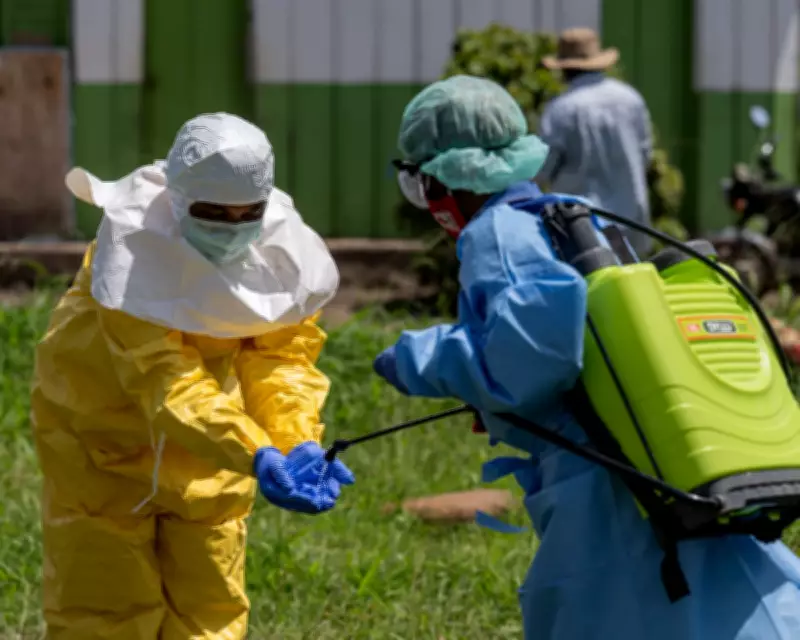
As the world faces a new Ebola outbreak, health experts are calling for a fundamental shift in response strategies, insisting that the international community must learn from the failures of past epidemics. The current outbreak, which has already claimed dozens of lives in Central Africa, risks spiraling out of control if authorities repeat the same mistakes that hampered efforts in West Africa between 2014 and 2016, when over 11,000 people died.
Lessons from West Africa
The 2014-2016 Ebola epidemic in West Africa exposed critical weaknesses in global health systems. The World Health Organization (WHO) was widely criticized for its slow response, lack of coordination, and failure to engage local communities. Dr. Margaret Harris, a spokesperson for the WHO, acknowledged that the organization has since implemented reforms, but stressed that more needs to be done. "We have improved our internal mechanisms, but the real test is on the ground," she said. "Community trust is essential. Without it, even the best medical interventions can fail."
Community Engagement Crucial
One of the key lessons from the West Africa outbreak was the importance of involving local communities in the response. In many affected areas, rumors and misinformation about the disease and treatment centers led to resistance and violence against health workers. In the current outbreak, health authorities are prioritizing community engagement, working with local leaders and using trusted messengers to disseminate accurate information. "We cannot just parachute in with foreign experts and expect to be welcomed," said Dr. Jean-Jacques Muyembe, a Congolese microbiologist who helped discover Ebola in 1976. "We must listen to the people and address their concerns."
Funding and Preparedness Gaps
Despite the lessons learned, funding for outbreak preparedness remains insufficient. A report by the Global Preparedness Monitoring Board found that many countries still lack basic capacities to detect and respond to disease outbreaks. The current Ebola outbreak has already stretched resources thin, with health workers facing shortages of protective equipment and vaccines. "We are seeing the same patterns again: delayed funding, inadequate supplies, and a lack of political will," said Dr. Joanne Liu, former international president of Médecins Sans Frontières. "We need a sustained investment in health systems, not just reactive funding when a crisis hits."
Vaccine Deployment Challenges
While an effective Ebola vaccine exists, deploying it in remote and conflict-affected areas poses significant challenges. The vaccine must be kept at extremely cold temperatures, and reaching communities in hard-to-access regions requires logistical ingenuity. Moreover, vaccine hesitancy, fueled by misinformation, remains a hurdle. Health authorities are working to build trust and ensure that vaccines are administered safely and equitably. "We have the tools to stop Ebola, but we need to use them wisely," said Dr. Anthony Fauci, director of the National Institute of Allergy and Infectious Diseases. "That means investing in cold chain infrastructure, training local health workers, and combating myths with facts."
International Coordination
The response to the current outbreak has seen improved coordination among international agencies, but gaps remain. The WHO has activated its emergency response framework, and neighboring countries are on high alert. However, experts warn that political instability and conflict in the region could hinder efforts. "Ebola does not respect borders, and neither should our response," said Dr. Matshidiso Moeti, WHO Regional Director for Africa. "We must work together across countries and sectors to contain this outbreak and prevent it from becoming a global threat."
As the world watches the situation unfold, the message from health experts is clear: the time to act is now, and the path forward is paved with the hard-earned lessons of the past. Failure to heed those lessons could mean a repeat of the devastating losses seen before.