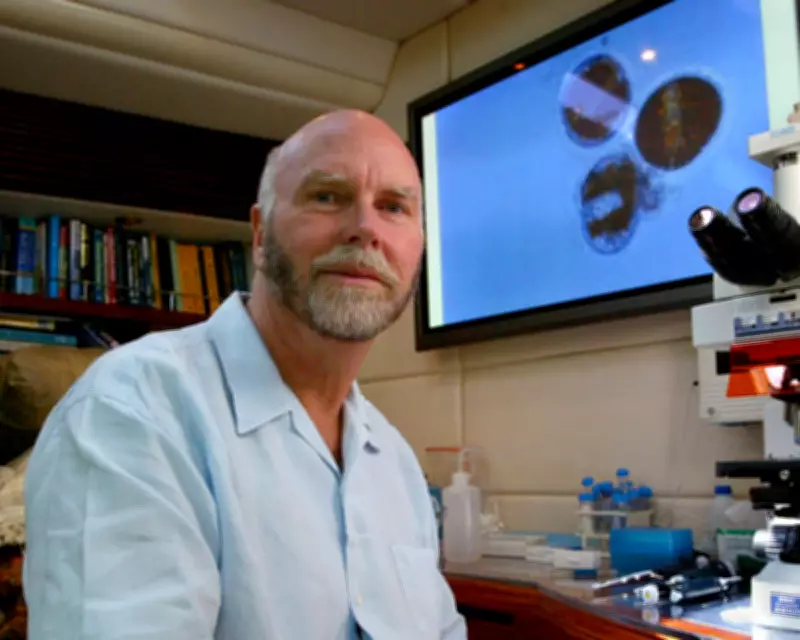
Craig Venter, the pioneering and controversial geneticist who was one of the first to sequence the human genome, has died at the age of 79. His death was announced by his institute, the J. Craig Venter Institute.
Early Life and Education
Venter was born on October 14, 1946, in Salt Lake City, Utah. His parents, Elisabeth and John Venter, both served in the US Marines during World War II. After the war, his father studied accountancy while his mother sold real estate. The family moved to Millbrae, California, where Venter had a lackluster academic record at Mills High School. He turned down a swimming scholarship at Arizona State University, opting instead for a life of leisure on the beaches of Southern California, which he described in his autobiography as involving "drink, girls and bodysurfing."
His carefree lifestyle was interrupted by the Vietnam War. Venter enlisted in the Naval Hospital Corps and served as a senior corpsman in Da Nang, working in the intensive care unit. He later described the experience as "M*A*S*H without the jokes and pretty women." The war deeply affected him, as he witnessed hundreds of soldiers die, often while trying to resuscitate them. This experience sparked his interest in life sciences.

Scientific Career
After returning from Vietnam, Venter studied at the University of California, San Diego, earning a PhD in physiology and pharmacology in 1975. He began research into genome sequencing and in 1992 co-founded the Institute for Genomics Research (later the J. Craig Venter Institute) with biologist Claire Fraser, his second wife. In 1995, his team produced the first genome sequence of a living organism, the bacterium Haemophilus influenzae, using a revolutionary technique called whole genome shotgun sequencing. This method involved sequencing random pieces of DNA and assembling them using powerful computers.
In 1998, Venter founded Celera Genomics to apply this technique to the human genome. His approach contrasted with the slower, more cautious method used by publicly funded scientists in the US and UK. The competition between the two groups accelerated the sequencing process. A truce was declared at a White House ceremony in June 2000, and the first draft of the human genome was published in February 2001.
Controversies and Legacy
Venter was known for his self-promotion and entrepreneurial spirit, which earned him both admirers and critics. James Watson, co-discoverer of DNA's double helix, compared him to Hitler for attempting to patent human genes. Others nicknamed him "Darth Venter." Despite the controversies, many scientists acknowledged that his competitive drive sped up genomic research.
At the BioVision conference in Lyon in February 2001, Venter announced that humans have far fewer genes than previously thought—about 30,000, not 100,000. This revelation undermined the impact of the official publication scheduled for later that week. He argued that the low gene count meant environmental factors play a crucial role in shaping human diversity. However, this view has since been debated.
Later in 2001, Venter was fired from Celera Genomics by Applera's president, Tony White, who wanted to focus on drug discovery. Venter used his severance to endow the J. Craig Venter Institute with $100 million, where he pursued projects on energy-producing microbes and synthetic bacterial genomes. He also founded Human Longevity and Diploid Genomics, aiming to combine AI with genomics to extend human lifespan.
Personal Life
Venter was married three times. His first marriage to Barbara Rae in 1968 ended in divorce in 1980; they had a son, Christopher. His marriage to Claire Fraser in 1981 ended in divorce in 2005. In 2008, he married Heather Kowalski, his former press officer at Celera. She survives him, along with his son and three siblings: Keith, Gary, and Suzanne.
John Craig Venter, geneticist and entrepreneur, born October 14, 1946, died April 29, 2026.