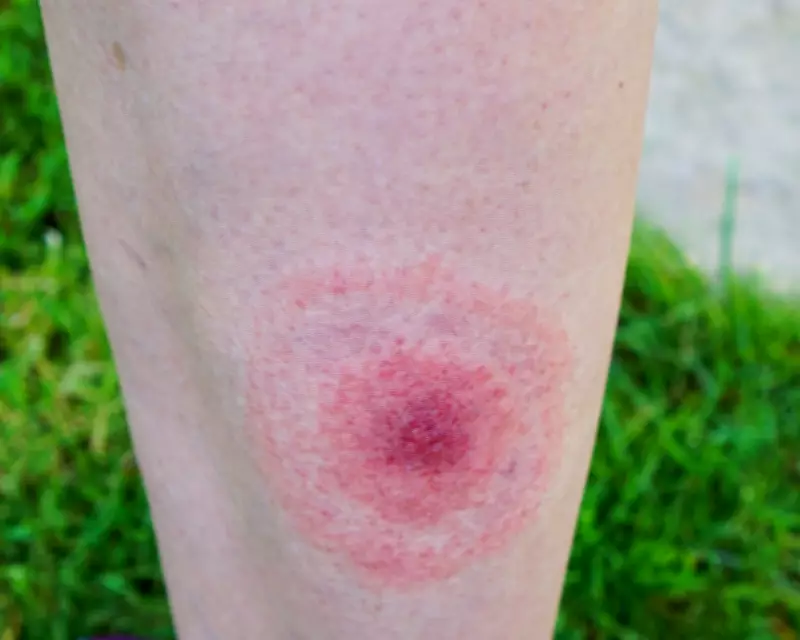
Lyme disease cases in England have surged by more than 20% in the past year, according to public health experts. The UK Health Security Agency (UKHSA) reported 1,168 laboratory-confirmed cases in 2025, up from 959 in 2024—a 22% increase. This figure is similar to the 1,151 cases recorded in 2023.
Rising Threat of Tick-Borne Diseases
Two probable cases of tick-borne encephalitis complex were also identified in 2025, bringing the total number of locally acquired cases to six since 2019, when the virus was first detected in the UK. Dr. Claire Gordon, head of the rare and imported pathogens laboratory at UKHSA, noted that while cases increased, annual variations depend on awareness, testing rates, and outdoor activity factors like weather.
Lyme disease is caused by the bacterium Borrelia burgdorferi, found in ticks that inhabit grassy and wooded areas. Symptoms include a bullseye-like rash, fever, muscle and joint pain, and lethargy. Untreated, it can become chronic, and some patients report ongoing symptoms even after antibiotics.
Vaccine Development Challenges
Unlike pets, which have access to oral tablets and vaccines, human prevention relies on repellents and protective clothing. Linden Hu, a professor at Tufts medical school, explained that veterinary approaches differ due to easier animal studies and higher owner compliance. A previous human vaccine, LYMErix, was withdrawn in 2002 due to low uptake and safety concerns, though evidence linking it to arthritis was lacking.
New treatments are in development, including an mRNA vaccine from Moderna (phase 2) and a vaccine from Pfizer and Valneva. The latter showed over 70% efficacy in a phase 3 trial but faced statistical challenges due to fewer Lyme cases than expected. Other approaches include a monoclonal antibody from Tonix Pharmaceuticals and a tick-killing drug, lotilaner, from Tarsus Pharmaceuticals.
Public Reception Uncertain
Julia Knight of Lyme Disease UK expressed uncertainty about vaccine adoption in the UK, given low reported figures—which likely underestimate true cases due to misdiagnosis and the 70% of patients with the telltale rash who are treated without lab confirmation. She welcomed scientific advances but noted vaccine hesitancy as a potential barrier.