Groundbreaking Dual Biography Sheds Light on Pioneering Gay Artists
A remarkable new literary work has emerged to illuminate the profound artistic partnership between two groundbreaking gay creators who left an indelible mark on twentieth-century art. The Wonderful World That Almost Was, authored by Andrew Durbin, editor-in-chief of Frieze Magazine, represents nearly five years of meticulous research into the intertwined lives of photographer Peter Hujar and sculptor Paul Thek.
A Friendship Forged in Creativity and Love
This comprehensive dual biography traces the extraordinary thirty-year relationship between these two visionary artists, capturing their creative synergy and personal connection that spanned from the mid-1950s until their tragic deaths within a year of each other during the height of the AIDS epidemic. Both artists succumbed to complications from AIDS in 1987 and 1988, leaving behind bodies of work that have experienced a significant cultural resurgence in recent years.
"I wanted to show that they truly lived," Durbin explains regarding his motivation for the project. "They accomplished so much, even as they were dying." This sentiment forms the emotional core of a book that consciously resists reading these artists' lives backward through the lens of their tragic deaths, instead focusing on their vibrant creative output and personal relationship from 1954 to 1975.
Artistic Legacies Reclaimed from History
The cultural rediscovery of Hujar and Thek represents an important act of queer historical recovery. Hujar's photographic work has experienced particularly notable recognition, with actor Ben Whishaw portraying him in Ira Sachs's 2025 film Peter Hujar's Day. His distinctive images have graced album covers for Anohni and the Johnsons and served as cover art for Hanya Yanagihara's bestselling novel A Little Life.
Thek's artistic resurrection has followed a different trajectory, complicated by the ephemeral nature of his most significant works. "His most important works were large-scale installations in Europe, all lost," Durbin notes. "Everyone loved them, but few could experience them. And when they were finished, there wasn't much left to sell. But I think his moment is about to come."
An Intimate Portrait of Creative Partnership
The artistic relationship between Hujar and Thek began when Hujar first photographed Thek in Coral Gables, Florida, around 1956 or 1957, when both were in their early twenties. By 1960, they had become neighbors on Manhattan's Lower East Side and had fallen deeply in love. Durbin describes Thek's magnetic personality that captivated figures including Tennessee Williams and Gore Vidal: "Paul was like a child. He was excited about the world. He was funny, he was playful, he made you laugh. He made you want to take care of him."
Their relationship profoundly influenced their artistic development. A transformative visit to Palermo's Capuchin Catacombs in 1963, where photography was strictly forbidden, yielded significant creative breakthroughs. Hujar defiantly captured images that would become his only published book during his lifetime, Portraits in Life and Death (1976). Thek's experience handling what he initially thought was paper but turned out to be dried human thigh inspired his unsettling "meat pieces"—wax flesh sculptures in glass-and-metal cases that evoked Christian reliquaries and catapulted him to art world prominence.
Resisting Categorization in Life and Art
Both artists consistently resisted easy categorization throughout their careers. Thek frequently destroyed his work, intentionally misdated paintings, and created fragile, ephemeral installations that left no saleable objects behind. Hujar similarly resisted being pigeonholed as merely a "gay photographer," despite creating powerful images of explicitly queer subjects including cruising grounds, parks at night, lovers, drag queens, and openly gay friends and artists.
Durbin observes that Hujar believed "laying claim to homosexuality meant binning your work in a subcategory most museums and serious critics would not touch." This tension manifested in his decision to release a series of erotic images of David Wojnarowicz under the anagrammatic pseudonym Jute Harper, part of his ongoing search for an effective alias. Nevertheless, his lens consistently returned to iconic queer figures including Candy Darling, Susan Sontag, Fran Lebowitz, Wojnarowicz, Jackie Curtis, and John Waters.
The Fracturing of a Creative Partnership
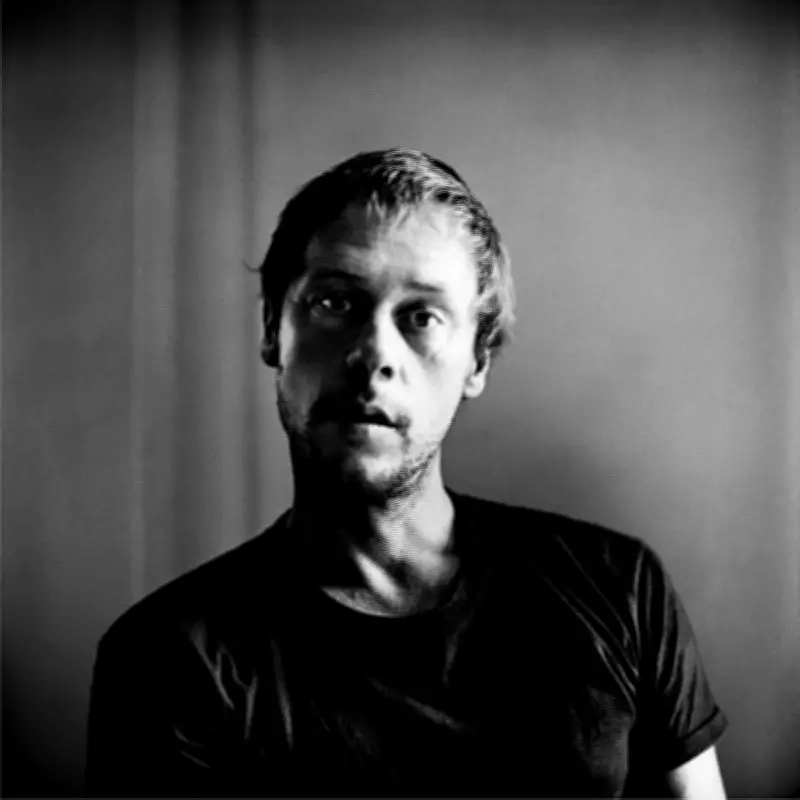
By August 1975, when Thek sat for what would be his final photo sessions with Hujar, their relationship had begun to fracture. Durbin notes that "there isn't a single moment when it began. It's a spectrum of experiences. A book can't capture that." These sessions nevertheless produced some of Hujar's most powerful portraits, with Durbin describing how in the second session, "Paul's face wheels through all his feelings for Peter – his love, his envy, his dismissal, his misunderstandings, his wanting to forget, his wanting to forgive."
The final letter Thek wrote to Hujar reveals the enduring creative connection between them, filled with ideas and suggested photographs for Portraits in Life and Death. He writes as if they are at the beginning rather than the end of their collaboration, concluding with the poignant line: "Any time you want to make love, just ask me."
A Legacy Reclaimed for Future Generations
For queer readers who came of age after AIDS devastated a generation and obscured how those men loved, worked, and created, The Wonderful World That Almost Was offers something profoundly valuable: tangible proof of vibrant queer lives fully lived. Durbin expresses hope that younger readers will discover the book and realize "they can make art however they want."
Linda Rosenkrantz, now ninety-one and one of the last surviving members of Hujar's inner circle, notes that Durbin's work illuminates previously obscured aspects of the photographer's private life: "I don't think I realized how major the relationship [with Thek] was in Peter's life. I suppose it was obscured even by me until Andrew explored it so fully."
The artistic reckoning for both Hujar and Thek has gained significant momentum, with multiple exhibitions and screenings planned internationally. Noah Khoshbin, president of the Paul Thek Foundation, observes that "this is a big success in terms of an estate and legacy. This is an artist who did not have a single work in an American institution when he died."
In 1975, Thek wrote to Hujar expressing their shared desire: "...all we wanted to do, want to do, is also add our names, almost like the lists of names on the tombs for the unknown millions, soldiers, etc, we'd wanted to say I WAS HERE TOO!" Durbin's biography serves as a powerful affirmation of that declaration, ensuring these groundbreaking artists receive the recognition they so richly deserve.
The Wonderful World That Almost Was by Andrew Durbin will be published by Farrar, Straus and Giroux on April 14 in the United States and Australia, with Granta releasing the UK edition on April 23.