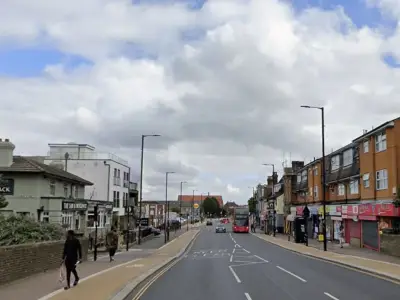
A woman who had been wanted for more than 20 years was arrested during a six-month trial of live facial recognition technology in south London. The Metropolitan Police deployed cameras on Croydon High Street as part of 24 operations, leading to the arrest of a 36-year-old woman who failed to appear in court for an assault dating back to 2004.
Live Facial Recognition Trial Results
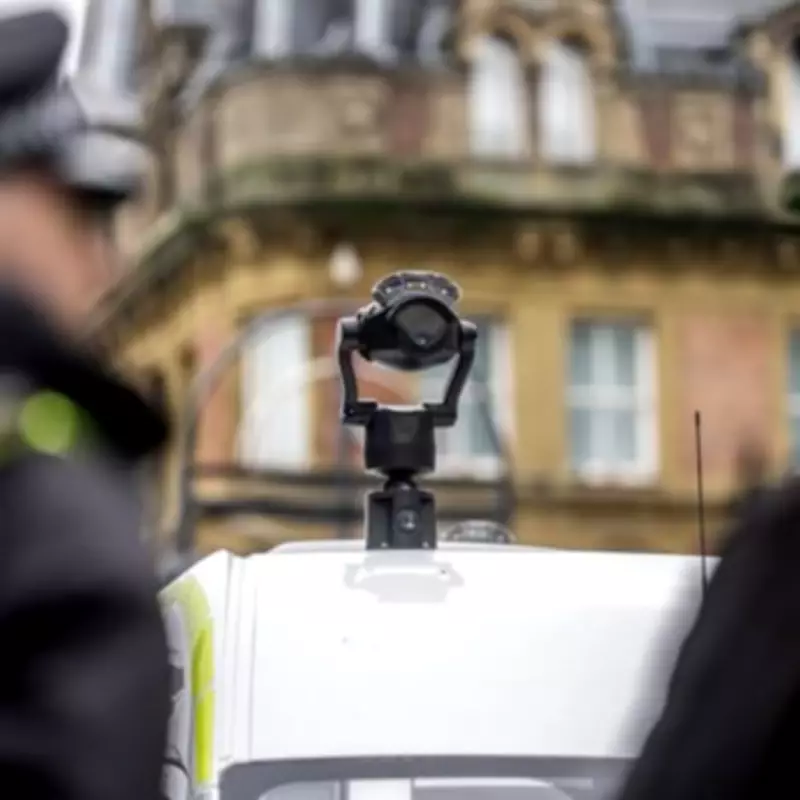
Live Facial Recognition (LFR) uses cameras to scan crowds in real time, matching faces against a watchlist of wanted or vulnerable individuals. If no match is found, data is deleted instantly. During the trial, which ran from October 2025 to March 2026, static cameras were used for the first time instead of vans. In total, 173 suspects were arrested for crimes including kidnap, rape, and serious sexual assault.
The Metropolitan Police reported a 10.5% reduction in crime in the area during the trial, including a 21% drop in violence against women and girls. Other arrests included a 31-year-old man wanted for voyeurism for over six months and a 41-year-old man wanted for a rape in Croydon in November.
Police and Public Response
Lindsey Chiswick, national and Met lead for live facial recognition, stated: “These results show why live facial recognition is such a powerful tool when it’s used carefully, openly and in the right places. Crime in this area is down by more than 10%, and the public can see the difference.” She added that the technology helps find wanted individuals and serious offenders quickly, with exceptional accuracy.
More than 470,000 people walked past the camera during the pilot, which recorded only one false alert. That individual was spoken to by officers and allowed to leave.
Legal Challenge and High Court Ruling
The trial coincided with a High Court challenge against the Met Police’s use of LFR. Youth worker Shaun Thompson and Silkie Carlo from Big Brother Watch brought the claim, arguing that facial recognition could be used arbitrarily or discriminatorily. Thompson was misidentified by the technology. Their lawyers compared facial recognition to a DNA profile and said permanent installations would make it impossible for Londoners to travel without their biometric data being processed.
Scotland Yard defended the policy, and Lord Justice Holgate and Mrs Justice Farbey ruled on Tuesday that the policy was lawful. They stated: “The policy provides the claimants with an adequate indication of the circumstances in which LFR will be used and enables them to foresee, to a degree that is reasonable in the circumstances, the consequences of travelling in an area of London where LFR is in use.” The judges also found that the claimants’ human rights had not been breached.
Met Police Commissioner Sir Mark Rowley welcomed the decision, while Carlo and Thompson said they would seek to appeal.
Government Expansion Plans
The ruling follows government plans to expand facial recognition use across England and Wales. The Home Office announced in January that the number of vans would increase from 10 to 50, making them available to all police forces. However, Freedom of Information disclosures revealed gaps in oversight: the Met has no system to identify complaints specifically about facial recognition and cannot readily track arrest outcomes without examining individual case files.
Dan Squires KC, for the claimants, told a hearing that the force used facial recognition 231 times last year, scanning around four million faces, including over 50,000 in four and a half hours at Oxford Circus in December. He said the technology turns facial characteristics into coded data for comparison with a watchlist.
Anya Proops KC, for the Met, argued that locating wanted individuals was “akin to looking for stray needles in an enormous, exceptionally dense haystack” and that LFR can spot them in ways officers cannot. She noted that up to September 18, 2025, officers made 801 arrests specifically due to LFR, and that intrusion into public privacy is minimal, as data from non-watchlist individuals is deleted a fraction of a second after creation.
In their 47-page ruling, the judges said any intrusion was not directed at the claimants, and the risk of racial discrimination was “no more than faintly asserted”. Sir Mark called the judgment a “significant and important victory for public safety” and said LFR “is not secret surveillance”. He added: “The courts have confirmed our approach is lawful. The public supports its use. It works. And it helps us keep Londoners safe.”
Opposition and Future Steps
Carlo called the ruling “disappointing” but said the legal battle was “far from over”, with Big Brother Watch crowdfunding for an appeal. Thompson described LFR as “stop and search on steroids” and vowed to challenge the ruling to protect Londoners from mass surveillance.