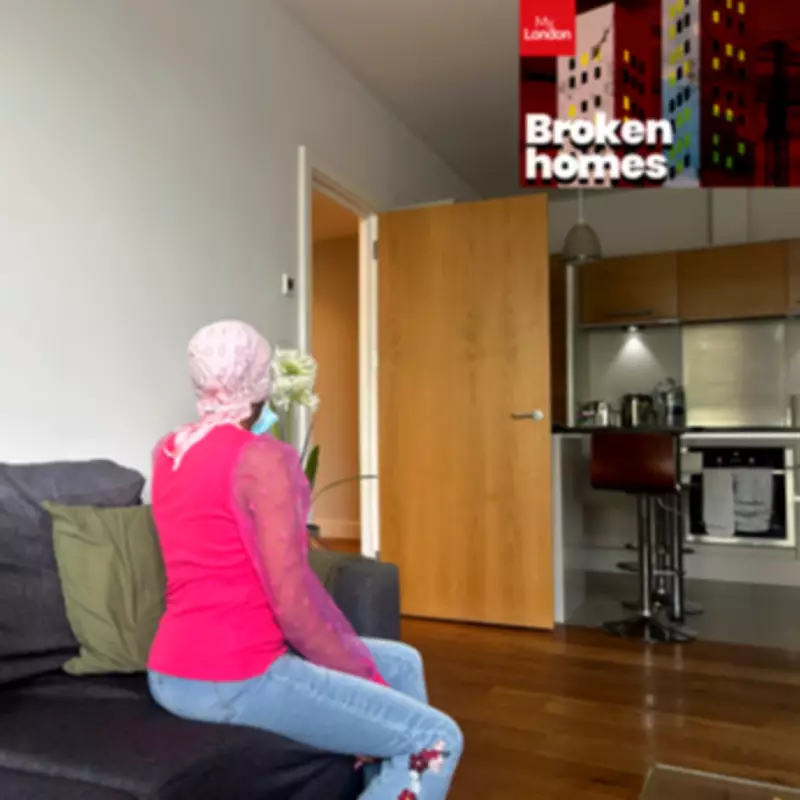
A South London woman with incurable cancer feared she would die in her flat from exposure to mould spores, after her landlord failed to properly address her concerns for months.
The 55-year-old tenant, who asked to be identified only as Ms Moore, struggled with Richmond Housing Partnership (RHP) over excess moisture and health issues in her Teddington home. She was only moved out after hiring an independent surveyor who found high levels of mould spores in her bedroom.
Health and Housing Crisis
Ms Moore suffers from polycythaemia vera, an incurable blood cancer, along with osteoarthritis, osteoporosis, peripheral neuropathy, chronic joint pain, limited mobility from a previous mastectomy, and severe fatigue. She reported mould shortly after moving into the flat in July 2024.

RHP treated the mould, installed passive vents, and advised her to keep running nine dehumidifiers. However, an independent surveyor warned in November 2024 that the property might not be suitable for someone with a serious illness due to persistent humidity and mould issues.
Ms Moore experienced repeated chest infections, coughing, sneezing, itching, allergies, and nosebleeds, which she linked to mould exposure. Her GP supported a transfer request in November 2025, but RHP did not act.
Independent Investigation
In February 2026, RHP contractors surveyed for visible damp but found no major issues. Ms Moore then hired an independent mould specialist, who discovered high mould spore levels in her bedroom, visible mould behind wallpaper, and building defects. The specialist warned her health issues were directly linked to poor indoor air quality.
Despite urgent requests to move Ms Moore, RHP delayed for three weeks. She was moved to a hotel on March 20, 2026, only after she complained to Richmond's public health team.
Ongoing Struggles
Ms Moore faced further difficulties in temporary accommodation, including a room without a fridge for medication and no disabled bathroom. She described the ordeal as exhausting and damaging to her mental health, leading to suicidal feelings.
She criticized RHP for failing to understand hidden mould and spores, especially after Awaab's Law came into force in 2025, which requires social landlords to address damp and mould within strict timeframes.
RHP Response
Annemarie Fenlon, Executive Director of Operations at RHP, expressed regret that Ms Moore felt unsafe, though RHP inspections found no significant damp or mould. She said RHP is investigating its handling of the case and will take appropriate action.
Ms Moore has accepted an offer of alternative accommodation and is currently staying in serviced apartments. She hopes her story will encourage better responses from landlords.