UK Mounts Unprecedented Evacuation Operation Amid Middle East Airport Closures
The United Kingdom has initiated an unprecedented consular operation to support British citizens across the Middle East, as retaliatory Iranian airstrikes have thrown regional travel into complete chaos. With major international airports forced to close for a second consecutive day, UK officials are actively developing contingency plans for the potential evacuation of tens of thousands of nationals, should Gulf airspace remain inaccessible.
Widespread Airport Closures and Flight Cancellations
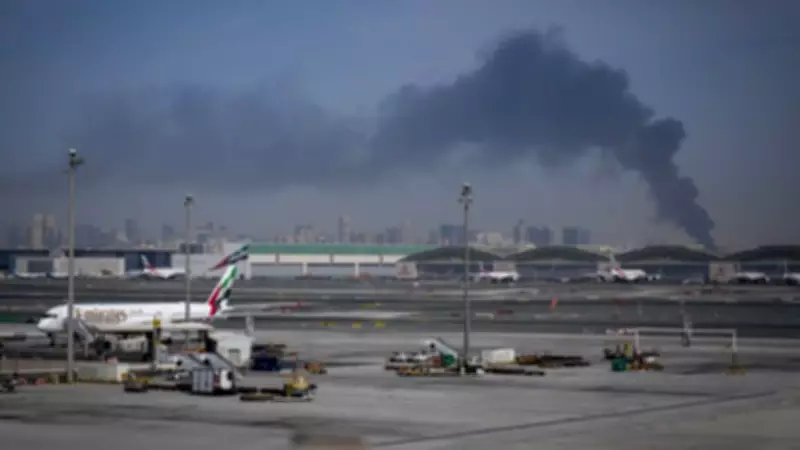
Iran launched sustained counter-attacks on military and civilian targets across the Gulf region in retaliation for strikes by the US and Israel. This has resulted in the closure of some of the world's busiest aviation hubs, including Dubai International Airport and airports in Doha, Qatar. Flight tracking data from Flightradar24 confirms that more than 3,400 flights were cancelled on Sunday alone across seven countries: Bahrain, Israel, Jordan, Kuwait, Qatar, Saudi Arabia, and the United Arab Emirates.
The disruption represents the most severe business interruption in the Gulf since the COVID-19 pandemic. Aviation analyst Cirium estimates that approximately 90,000 passengers per day travel on Emirates, Etihad, and Qatar Airways through the hubs of Dubai, Abu Dhabi, and Doha. The closure of these critical connection points is causing global travel disruption, with stranded passengers reported as far away as Bali, Indonesia.
Massive British Citizen Presence and Registration Drive
UK Prime Minister Keir Starmer has stated that at least 200,000 British citizens are currently in the region, comprising residents, tourists, and transit passengers. In response to the escalating crisis, the Foreign, Commonwealth & Development Office (FCDO) launched an online registration platform. To date, an overwhelming 94,000 individuals—the majority located in the UAE—have registered their presence, marking one of the largest consular cases the Foreign Office has managed in recent years.
"Over the last two days Iran has launched sustained attacks across the region at countries who did not attack them," Sir Keir stated. "They've hit airports and hotels where British citizens are staying. This is clearly a dangerous situation." The majority of registered nationals have been relocated to hotels for their safety.
Evacuation Planning and Heightened Travel Warnings
While British nationals are currently advised to stay in place, follow local authority instructions, and monitor FCDO travel advice, Sky News understands that detailed planning for potential evacuation routes is underway. This preparation is for a scenario where airspace remains closed indefinitely. The Foreign Office has now advised against all but essential travel to Bahrain, Israel, Palestine, Qatar, and the United Arab Emirates.
In a significant geopolitical move, Prime Minister Starmer also confirmed he would permit the United States to use British bases for defensive strikes against Iran. This decision has drawn criticism from the Liberal Democrats, who warned it could represent a "slippery slope" toward Britain being drawn into another prolonged Middle East conflict.
Personal Accounts of Chaos and Disruption
The human impact of the crisis is stark. Jo Hummel, a 43-year-old from the Isle of Wight, was traveling back from Thailand with her family when their connecting flight from Doha to London was cancelled. "We touched down into Qatar and people were opening up their phones and there was a national alert coming through in Arabic. We realized something was going on," she recounted.
After being moved to a hotel by Qatar Airways, the frightening reality set in. "I had to get them out of bed this morning because drones were exploding in the sky above us and we have big windows. It's quite frightening," Ms. Hummel said. "As a mother, I'm scared out of my wits and trying to keep calm, but also be organized."
Casualties and Broader Aviation Implications
The Iranian strikes have resulted in direct casualties at airports. Officials reported four people injured at Dubai International Airport, while a drone strike at Zayed International Airport in Abu Dhabi killed one person and injured seven others. An explosion and fire also occurred near the entrance to the Fairmont The Palm hotel in Dubai.
Aviation analyst Henry Harteveldt of Atmosphere Research Group offered a grim assessment for travelers: "For travellers, there's no way to sugarcoat this." He advised passengers to prepare for delays or cancellations for several days. Airlines may be forced to reroute flights around the region, leading to longer travel times, increased fuel costs, and ultimately higher ticket prices. The duration of the disruption remains uncertain, with earlier US commentary suggesting hostilities could persist for weeks.
The retaliatory strikes followed the confirmed death of Iran's Supreme Leader, Ali Khamenei, in attacks on Saturday. Iranian state television eventually confirmed his death, triggering the wave of retaliatory missile and drone strikes that have now precipitated an international travel and diplomatic crisis.