The Political Reckoning Fueled by Gas Prices
The political movement that spent years training its followers to prioritize immediate, visible concerns above all else is now facing judgment through that very same lens. What began as a strategy of deliberate narrowing—encouraging distrust of institutions that ask citizens to consider distant strangers—has created a public that evaluates policies based on personal financial impact rather than moral considerations.
The Airport Terminal as Political Metaphor
During a recent Las Vegas airport delay caused by Air Force One's presence, travelers demonstrated this limited perspective in real time. As the presidential aircraft finally departed Terminal B, only a handful of observers stood to watch. Most remained seated, preoccupied with their immediate surroundings and personal inconveniences.
This scene perfectly illustrates the human tendency toward proximity bias—our natural inclination to care most about what directly affects us. The Trump administration has masterfully exploited this psychological limitation for political gain, but that same dynamic now threatens to undermine their position.

When War Arrives at the Gas Pump
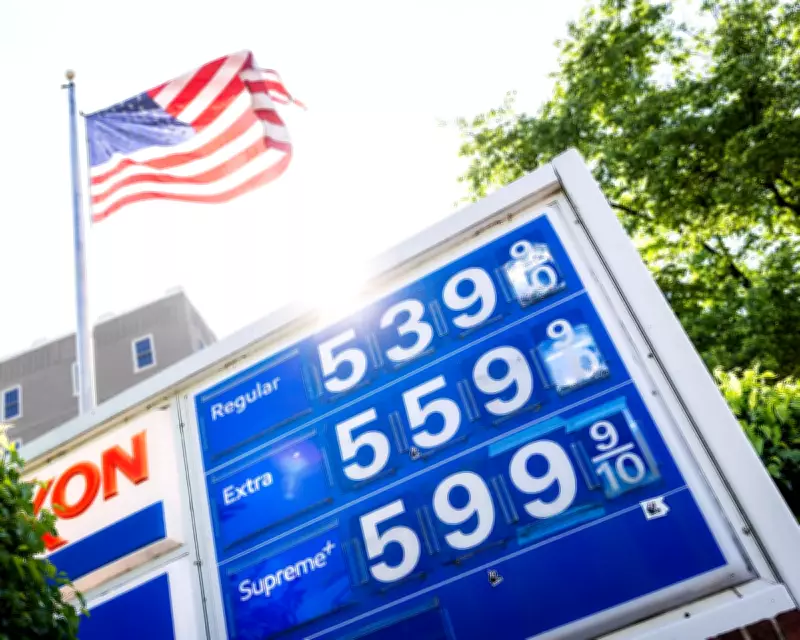
The ongoing conflict with Iran manifests for most Americans not through news images of destruction or moral debates about foreign policy, but through tangible numbers at local gas stations. National averages have surged past $4 per gallon, with some regions like the Bay Area approaching $7. This represents more than a dollar increase since hostilities began.
These prices directly influence daily decisions: whether to visit family gravesites, whether to take weekend trips, whether to use personal vehicles at all. The war's impact becomes measurable through household budgets rather than through ethical calculations about international relations.
The economic consequences extend globally, devastating nations with fewer resources to absorb oil price shocks. Yet for American voters, the primary concern remains their personal financial strain.The Narrowing of Political Vision
For over a decade, conservative political messaging has systematically narrowed public concern. Media institutions that traditionally expanded citizens' understanding of distant events have been framed as untrustworthy. Empathy toward unseen populations has been characterized as naive weakness. Religious symbolism has been weaponized while simultaneously dismissing broader moral considerations.
Now, this cultivated myopia defines how the administration's foreign policy is evaluated. When the White House discusses the Iran conflict, officials increasingly focus on gasoline price projections rather than geopolitical objectives or humanitarian impacts.
The Contradiction of Political Accountability
Current polling reveals this contradiction in stark terms. Foreign policy barely registers among voters' top concerns, while gas prices, grocery bills, housing costs, and healthcare expenses dominate public anxiety. The administration recognizes this dynamic, hence their shifting explanations about when fuel prices might decrease.
Treasury Secretary Scott Bessent predicted $3 gasoline by summer, while Energy Secretary Chris Wright suggested 2027 as a more realistic timeline. President Trump dismissed both projections as "totally wrong," creating confusion about when economic relief might arrive.
The Mechanism of Political Memory
As demonstrated in that Las Vegas terminal, public attention follows a predictable pattern. After Air Force One's departure, flights resumed, passengers boarded, and within hours the delay became a fading memory. This same mechanism operates in politics: immediate pain recedes, and with it goes sustained outrage.
The administration appears to be counting on this dynamic. By creating a crisis, extracting substantial costs in both financial and human terms, then partially resolving the situation through diplomacy, they hope to claim victory as public frustration dissipates.

Beyond the Pump: The Cost of Forgetting
Should gasoline prices eventually decline and presidential approval ratings rebound, this would not validate the administration's approach. Rather, it would demonstrate the effectiveness of their political strategy in redirecting public attention from substantive issues to immediate personal concerns.
The true cost extends beyond financial strain. When a girls' school bombing in Iran receives less sustained attention than fluctuating fuel prices, when children's deaths become secondary to economic calculations, the narrowing of public concern reaches its logical conclusion.
Americans possess the privilege of worrying about gas prices, but they cannot afford the luxury of forgetting how those prices became political weapons. The movement that taught voters to judge policies by their immediate personal impact now faces judgment through that exact framework—and the verdict is written at every gas pump across the nation.