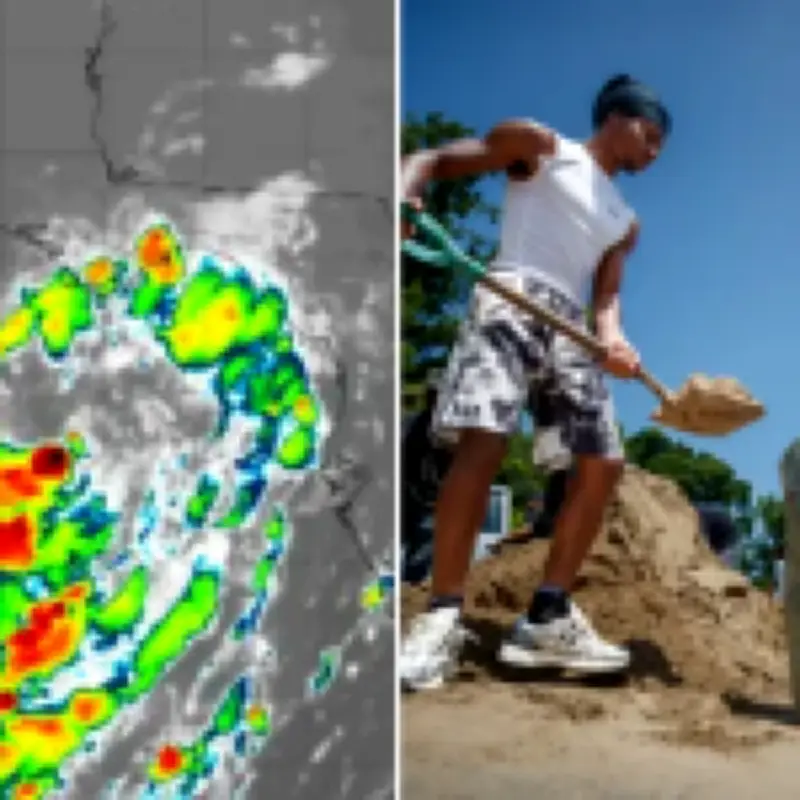
Tropical Storm Bertha is on a collision course with the US Gulf Coast, prompting warnings of life-threatening conditions from the National Hurricane Center (NHC). The storm is expected to bring up to eight inches of heavy rainfall, high winds, and flooding to southeastern states, with Louisiana, Mississippi, and Alabama likely to be the worst hit.
Storm Surge Warning
The NHC issued a Storm Surge Watch, stating: 'A Storm Surge Watch means there is a possibility of life-threatening inundation, from rising water moving inland from the coastline, in the indicated locations during the next 48 hours.' As of Monday, Tropical Storm Bertha was located approximately 105 miles south of Panama City, Florida, carrying wind speeds of 40 mph.
Potential Landfall and Impact
AccuWeather experts predict the storm could make landfall as early as Wednesday night, particularly near New Orleans East, which constitutes roughly 65% of the city's total land area, stretching toward Lake Pontchartrain and Lake Borgne. Preparations are underway in New Orleans, including sandbag distribution to mitigate flooding, and residents are advised to clear local storm drains. Coastal inhabitants and maritime workers are also on alert, as officials warn that Bertha could capsize and damage vessels.

Uncertain Path and Tornado Risk
Bertha's path remains uncertain. Forecasters note that if the storm stays at sea longer, it could strengthen. Lead Hurricane Expert Alex DaSilva stated: 'A hug-the-coast scenario would keep overall winds weaker.' Spaghetti models indicate a northwest trajectory from Florida toward the Gulf Coast, then directly into Louisiana's Black Bay. By Friday, isolated tornadoes could hit Florida, and the storm may drift west toward Texas.
Wind Shear and Rainfall
Despite the NHC's warning, senior researcher Phil Klotzbach from Colorado State University said the storm is not predicted to intensify. Deputy NHC Director Jamie Rhome noted that strong wind shear—changes in wind speed or direction over a short distance—will reduce rainfall totals and push the worst weather offshore. Bertha is the second named tropical storm of the 2026 Atlantic hurricane season, following last month's Tropical Storm Arthur, which caused flash flooding and tornadoes in the south.