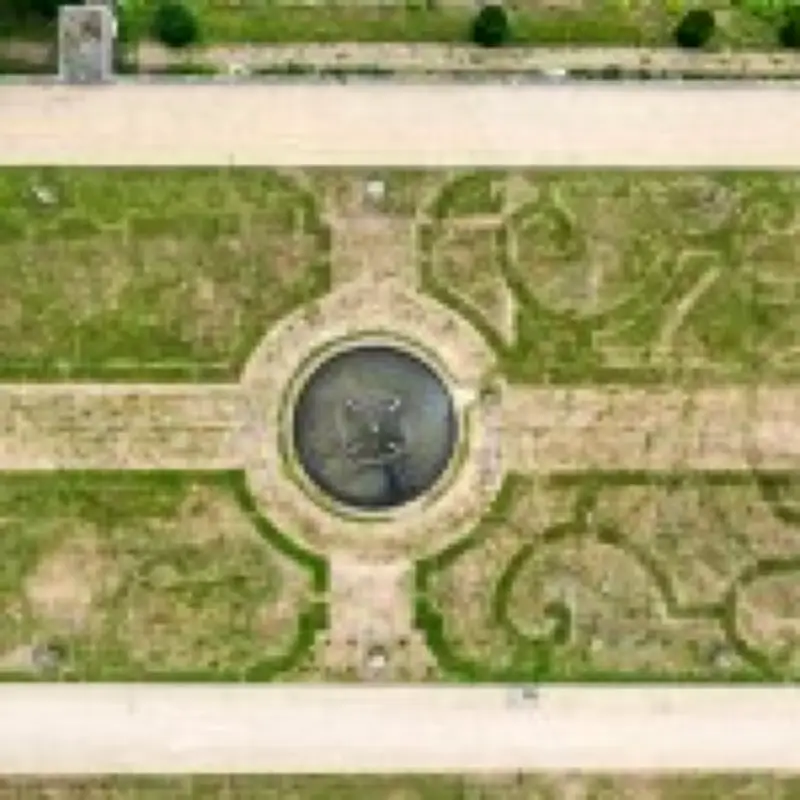
The Great Parterre, a 17th-century garden created around 1699 for the first Duke of Devonshire, has been revealed by weeks of scorching temperatures and minimal rainfall at Chatsworth House in Derbyshire. Estate workers discovered the outline of the ornate garden design, which measures 473 by 277 feet, etched into the brown, parched southern lawns. The garden, featuring swirling flowerbeds and paths, was flattened and replaced by the third Duke, William Cavendish, just 31 years later.
Climate data reveals shift
Chatsworth officials reported that weather monitoring equipment recorded temperatures exceeding 30°C in May, June, and July. The estate experienced 530.8 hours of sunshine, 33% more than normal, while rainfall totaled only 108.2mm, 32% below average. 'While the 2022 heatwave was the most extreme on record, hours of sunshine and mm of rainfall recorded between 2022 and present day show a shift in Chatsworth’s climate towards sunny springs, prolonged dry periods, and occasional bouts of very heavy rainfall,' Chatsworth said in a statement.
Grass reveals hidden history
The grass planted to replace the original flowerbeds has shorter roots, causing it to burn faster during hot, dry weather. As the grass withered, it created a patchwork showing both the old and new garden designs. Chatsworth, one of England's great treasure houses, has been owned by the Cavendish family since 1549.

Hosepipe bans and reservoir levels
The heatwave has led to hosepipe bans across several regions, including Bedfordshire, Berkshire, Buckinghamshire, Essex, Hertfordshire, Surrey, London, Norfolk, Suffolk, Cambridgeshire, Lincolnshire, Northamptonshire, Rutland, parts of Essex, Kent, Hampshire, and the Isle of Wight. Reservoir levels have dropped to 79%, five percentage points lower than the average for this time of year, officials said on Friday. Gardeners at Chatsworth are increasing organic matter in the soil to retain moisture, a practice that may become more common across England.