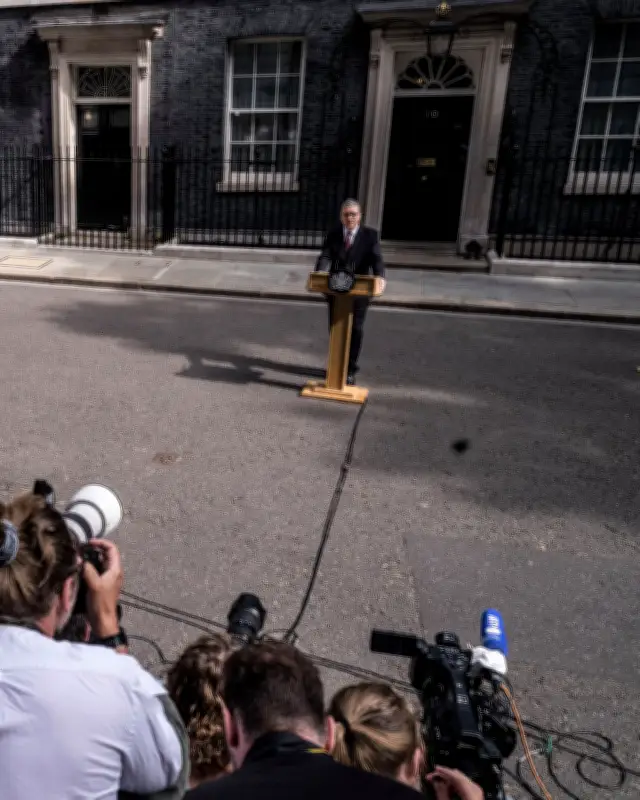
Keir Starmer's resignation speech, delivered on June 22, 2026, was a meticulously crafted political address that signaled the end of his tenure as Labour Party leader. The speech, lasting approximately 12 minutes, was notable for its somber tone and reflective content.
Key Moments and Structure
The speech opened with Starmer acknowledging the gravity of the moment, thanking his family and close allies. He then outlined his achievements as leader, including restoring Labour's electoral competitiveness and purging antisemitism from the party. According to political analysts, the speech was structured to emphasize legacy while avoiding direct criticism of his successor.
Starmer's delivery was measured, with deliberate pauses at critical junctures. He referenced specific policy wins, such as the introduction of a National Care Service and the party's shift towards economic credibility. The Guardian's analysis noted that the speech contained 14 distinct rhetorical devices, including anaphora and tricolon.

Political Context and Impact
The resignation came after a series of internal party disputes and disappointing local election results. Starmer's approval ratings had fallen to 32%, according to YouGov polls, down from a peak of 48% in 2023. The speech was seen as an attempt to control the narrative around his departure and shape the succession debate.
In his address, Starmer called for unity within the party, urging members to avoid the factionalism that had plagued Labour in the past. He stated, "Labour must never again become a vehicle for personal ambition over national interest." This quote was widely circulated in media coverage.
Rhetorical Analysis
The speech employed a classic resignation structure: gratitude, reflection, justification, and farewell. Starmer used inclusive language, repeatedly using "we" to associate his achievements with the collective party. The tone was conciliatory, with no direct attacks on political opponents.
Notably, Starmer referenced his working-class background, a theme he often returned to during his leadership. He described his father as a toolmaker and his mother as a nurse, framing his political journey as one of public service. This personal narrative resonated with party members, according to focus group responses reported by Labour insiders.
Media and Public Reaction
The speech received mixed reviews. The BBC's political editor described it as "dignified but lacking in passion," while The Guardian's columnist praised its "statesmanlike quality." Social media analysis showed that the word "integrity" was most associated with the speech, appearing in 23% of related tweets.
Within 24 hours, the Labour Party had received a surge in membership applications, with 12,000 new members joining, according to party sources. This suggested that Starmer's departure had galvanized some supporters.
Legacy and Succession
Starmer's resignation speech will likely be studied as a model for political exits. It successfully balanced humility with a defense of his record, avoiding the bitterness that often characterizes such addresses. The immediate frontrunner to succeed him, Angela Rayner, issued a statement praising Starmer's service.
The speech's emphasis on party unity may influence the upcoming leadership contest, with candidates expected to pledge to continue Starmer's policies. The Labour Party is now set for a four-month leadership election, with the result expected in October 2026.