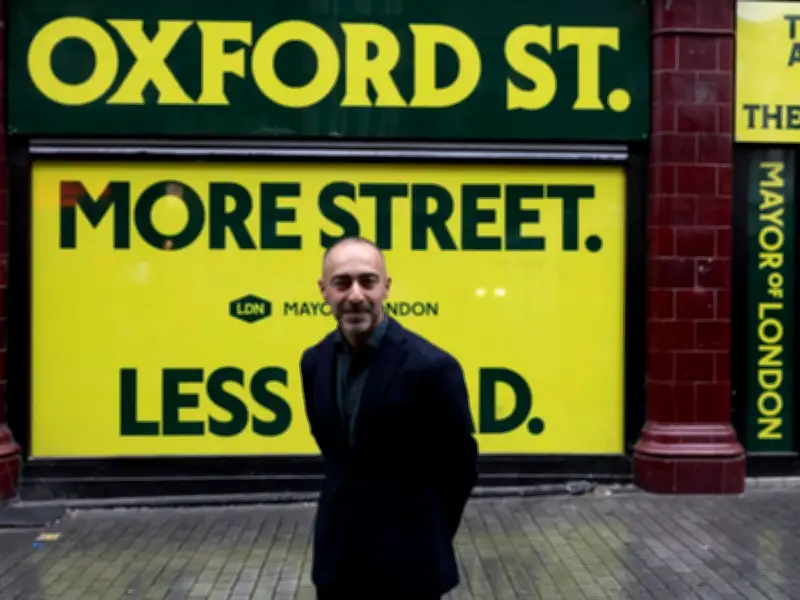
Oxford Street, the nation's most famous shopping thoroughfare, will become car-free from Monday, October 26, under plans championed by London Mayor Sir Sadiq Khan. The vehicle-free zone will stretch approximately one kilometre between Great Portland Street and Orchard Street, with new bollards already installed and signage declaring 'More Street, Less Road'.
Nabeel Khan, CEO of the Oxford Street Development Corporation, told the Local Democracy Reporting Service (LDRS) that the change marks a 'huge transformative change for Londoners'. He said: 'I think looking back in a year's time, I hope Londoners will be saying why did it take us so long to do this? It was such a no-brainer. And generations to come will look back at this, the same way people look back at Trafalgar Square or Southbank or Victoria Embankment.'
Supporters and critics clash over the scheme
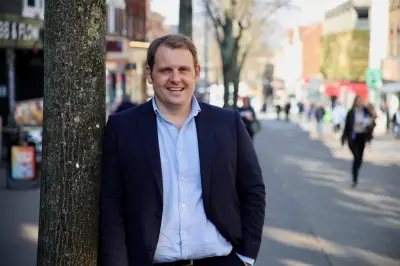
However, Westminster City Council's Deputy Leader and Cabinet Member for Growth and Planning, Councillor Tim Barnes, expressed serious reservations. Speaking outside Oxford Circus Tube Station, he said many local people feel necessary changes have not been ironed out, from rubbish collections to disabled access.
'I'm a local resident. I live just a couple minutes behind where we are and I have done for many years and I'm very concerned that these plans will bring a large amount of disruption to the local area,' Barnes told the LDRS. 'I remain of the view that it will probably be something that many people will come to regret happening. For all the fact that it may be a great shopping experience, it may be a net negative for London as a whole.'
Accessibility concerns over bus and taxi distances
One of the scheme's biggest criticisms centres on accessibility. Oxford Circus Tube Station, one of two Underground stations within the pedestrianised area, lacks step-free access. Bus stops will be relocated up to 200 metres away from Oxford Street, while taxi ranks will be moved up to 100 metres away.
'Accessibility on Oxford Street is really going to be negatively impacted by these proposals,' Barnes said. 'Right now for many of those with mobility issues, particularly those in wheelchairs, the main way of accessing the street is by bus or possibly by taxi and neither of those are going to be possible anymore.'
Mr Khan countered that disabled Londoners have been heavily involved in the planning. 'We've been very clear that taxi ranks will be no more than 100 metres away from the pedestrianised area, bus stops will be relocated no more than 200 metres away, there will be no decrease in Blue Badge space around the pedestrianised area,' he said.
Economic impact and local opposition
The recent closure of HMV's Oxford Street store, three years after it reopened, has sparked debate over Central London trading conditions. HMV cited unaffordable rent as the reason for closure. Mr Khan called these issues 'quite site-specific' and noted HMV is 'keen to retain a presence in the West End and indeed on Oxford Street'. He pointed to pedestrianisation elsewhere as linked to 'a direct economic uplift'.
Westminster City Council had previously agreed a plan to reinvest £120 million in Oxford Street, developed over years, before the Mayor pushed through £150 million for pedestrianisation. Despite differences, Barnes acknowledged that 'many of the staff that are working in the Mayor's office have engaged positively with the council' and that Westminster 'hugely appreciates the time and effort that has gone into that'. Mr Khan credited Westminster's help, saying 'They are right to hold us to account.'
The Marylebone Association warned that removing vehicles from Oxford Street would simply divert traffic into surrounding residential streets, a view shared by amenity societies in Mayfair and Soho. A spokesperson said: 'The Mayor isn't removing traffic. He's moving it from Oxford Street into our residential streets. You cannot improve London's environment simply by moving pollution from one street to another.'
Nick Mills, owner of comedy and live music venue 21 Soho, welcomed the change: 'We're just off Oxford Street. Being an entirely independent business so close to the city centre has its challenges and can feel a bit impersonal, but the community in Soho feels so close-knit because it's mostly pedestrians. I really hope extending that to Oxford Street spreads that local feeling further.'
Dee Corsi, Chief Executive of New West End Company, which represents 800-plus businesses, said the organisation supports the street's regeneration. 'It's critical that a long-term, strategic approach is adopted which takes into account the district's significant operational and service requirements, as well as providing a high quality visitor experience,' she said.
A spokesperson for the Mayor of London said: 'Oxford Street should be the jewel in our city's crown and from next week, one kilometre will be traffic-free - right in time for the busy Christmas season.' Mr Khan added that Monday marks only the start of the transformation, noting the idea has been discussed for over 60 years: 'Londoners deserve more than talking.'