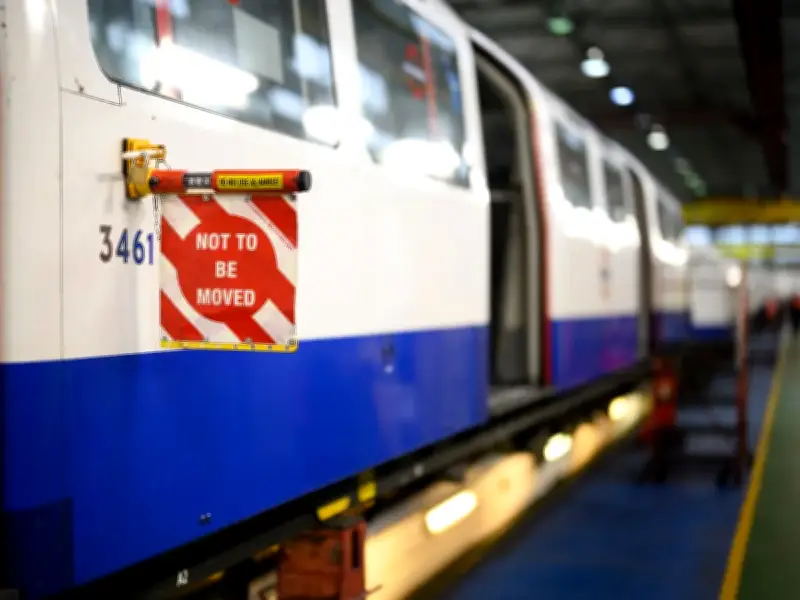
London Underground passengers are losing more than 830,000 hours every week to delays caused by deteriorating assets, according to data presented to the London Assembly Budget and Performance Committee. Transport for London (TfL) faces a renewals backlog estimated at £6.5 billion, with half of that sum attributed to track work alone.
Underinvestment drives growing backlog
TfL has estimated that keeping its assets in a steady condition requires annual renewals investment of approximately £1.1 billion to £1.2 billion. However, renewals expenditure averaged just £700 million per year in the five years to 2025-26, a shortfall that has contributed to the increasing backlog.
The financial gap has led to a surge in service delays. Data from the London Assembly Budget and Performance Committee shows more than 300 incidents related to asset condition decline in the last four years. Problems with the ageing fleet on the London Underground cost commuters an estimated 414,000 hours per week last year alone.
Delays worsen in 2026-27
The situation is expected to deteriorate further in 2026-27. Data for April and May this year suggests travellers will lose a total of 830,000 hours to delays directly linked to declining assets, nearly double the figure from the previous year.
The impact is also visible in service levels across the network. Bakerloo line trains completed only 75 per cent of the distance last year compared to 2016-17, while the network as a whole achieved 89 per cent of its previous distance coverage.
Infrastructure beyond tracks affected
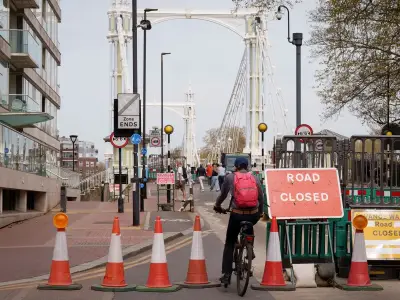
TfL told the cross-party committee that incidents are becoming more frequent and more disruptive. Roads, bridges, and tunnels – including Vauxhall, Westminster, and Lambeth bridges, Croydon Flyover, A40 Westway, and Rotherhithe Tunnel – are also being impacted by the backlog.
Neil Garratt, a Conservative Assembly Member and chair of the committee, has written to the Mayor of London asking whether TfL will publish a clear strategy to prevent the backlog from ballooning further and to return key assets to a sustainable state.
Funding gap and future risks
Garratt highlighted the consequences of underinvestment, including congestion, slower journeys, road restrictions, reduced accessibility, and reduced reliability. He warned that the longer assets deteriorate, the greater the economic impact on the city, and called for funding to reduce the £6.5 billion figure.
The letter suggested that current funding levels remain “significantly below the level required to stabilise the renewals backlog.” The backlog is forecast to increase from £6.5 billion now to £7.4 billion by 2030.
TfL’s 2026-27 GLA Budget sets out a 20-year capital investment programme with a total spend of £121 billion, including £51 billion for capital renewals at an average of £2.6 billion per year. However, the committee notes that just over half of the total figure is funded, casting doubt over what proportion of the capital renewals element can be carried out.
Patrick Doig, TfL’s Chief Financial Officer, told Assembly Members that delays to fixing various bridges and roads across London were due to the lack of a “national funding model for highway structures.” The government has also acknowledged this, stating alongside its funding settlement for TfL that the network is “not expected... to solely finance those from operating incomes.”
The Mayor was subsequently urged to work with ministers to develop a long-term national strategy for bridges, tunnels, and highway structures, with a sustainable national funding mechanism that reduces reliance on ad hoc competitive bidding processes.
A TfL spokesperson said: “Our maintenance and renewal programme is constrained as a result of decades of underinvestment from previous national Governments. Safety remains our top priority, and we are currently investing an average of £860 million per year in renewals - a substantial increase on the investment made pre-pandemic and during the pandemic years.
“Our maintenance regime involves the inspection and repair of assets, while our renewals work involves the replacement of our assets or refurbishment to extend their working life. While current renewals investment remains below that required, we carefully prioritise investment towards those assets most in need. We continue to work with the Government to emphasise the importance of sustained long-term funding for TfL in order to boost investment in our assets and ensure London’s success.”
City Hall was contacted for comment. The letter from the committee chair signals that without immediate and significant financial investment, Londoners should not expect to see fast results in service reliability or reduced congestion.