MCB Leader Draws Inspiration from New York Mayor's Campaign Strategy
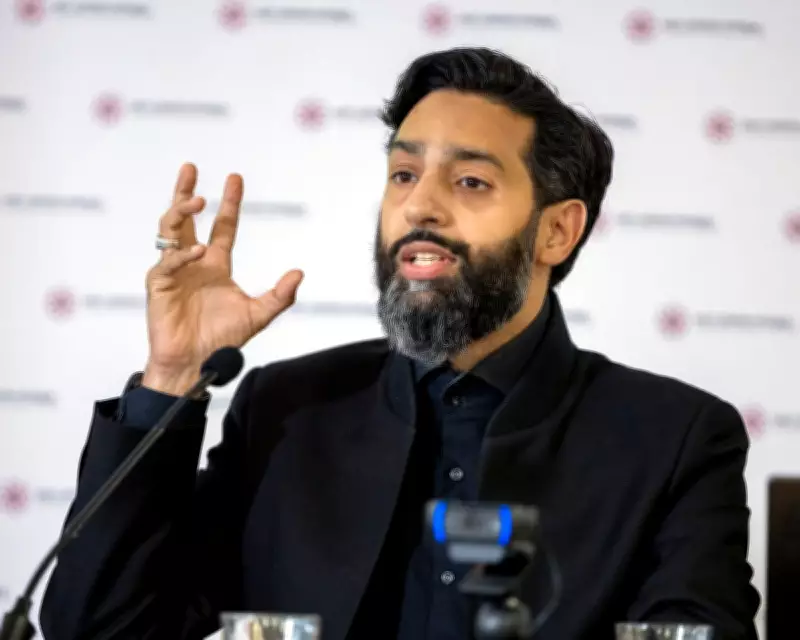
Dr Wajid Akhter, who assumed the role of secretary general at the Muslim Council of Britain last year, is spearheading a transformative initiative aimed at galvanizing British Muslim political participation. The MCB, recognized as the UK's largest and most diverse national Muslim umbrella organization, is taking cues from Zohran Mamdani's groundbreaking campaign that led to his election as New York's first Muslim mayor.
"We dedicated considerable time analyzing his campaign team to uncover the secret formula," revealed Akhter, a practicing GP. He emphasized being particularly impressed by Mamdani's communication approach, noting, "Even when addressing international issues like Gaza, he consistently connected them to local concerns such as housing affordability."
Grassroots Mobilization and Digital Integration
During a recent interview at a bustling east London cafe, Akhter highlighted the extensive grassroots organizing that proved pivotal to Mamdani's electoral success. He praised the campaign's balanced use of digital outreach and traditional ground efforts, stating, "Focusing solely on digital platforms reduces you to just another influencer, while relying exclusively on ground campaigns limits mass penetration. Combining both creates a formidable strategy."

The MCB is now implementing this hybrid model through its ambitious "Hungry for Change" campaign, designed to register Muslim voters and foster grassroots civic engagement. The organization has enlisted 200 voter champions across more than 30 regions ahead of local elections, facilitating thousands of voter registrations. Internal metrics indicate 3,377 visits to the government's registration portal via their efforts.
Akhter confirmed the MCB's non-partisan stance while expressing intentions to expand this framework nationwide before the next general election. With approximately 2,000 mosques in the UK, about 500 of which are MCB-affiliated, the council is overhauling its communication methods, prioritizing video content, social media engagement, and podcast production.
Historical Context and Strategic Reorientation
This campaign signifies a strategic pivot for the MCB, which has faced governmental estrangement for over a decade. The discord originated in 2009 when then-deputy secretary general Daud Abdullah endorsed the Istanbul declaration, a document advocating resistance against Royal Navy interventions in Gaza arms smuggling. The subsequent Labour government demanded Abdullah's resignation as a condition for continued dialogue.
Although Abdullah resigned and the MCB distanced itself from the declaration, leading to brief re-engagement under Gordon Brown, the incoming coalition government reinstated disengagement in 2010. This policy persisted through consecutive Conservative administrations until 2024. Even the recent Labour government, despite engaging with the MCB in opposition, maintained non-engagement upon taking office, a decision met with astonishment and frustration.
"We recognize that engagement won't stem from pity or national interest alone," Akhter remarked. "Ultimately, they will engage because they'll have no alternative." He described the council's shift in focus—or "qibla"—away from seeking governmental approval toward enhancing the welfare of British Muslims and the broader public.
Community Transformation and Future Vision
Akhter advocates reimagining mosques as multifunctional community hubs rather than solely places of worship. Pilot programs offering mental health first aid and CPR training have already been introduced in mosques. He also urges a recalibration of charitable focus among British Muslims, suggesting greater emphasis on domestic issues like knife crime, housing, and economic stability, rather than predominantly directing zakat (obligatory almsgiving) overseas.
Drawing parallels with historical movements, Akhter cited inspiration from black churches during the civil rights era and British anti-slavery efforts. "Each of these movements began facing seemingly insurmountable odds with minimal resources," he observed. "Their common thread was unwavering perseverance."

He underscored the urgency of collective action amid rising Islamophobic rhetoric from certain political factions. "In an era where faith is increasingly marginalized, we remain steadfast," Akhter declared. A self-professed history enthusiast, he encouraged British Muslims to draw courage from the UK's defiance against Nazi Germany, asserting, "This is our moment as British Muslims to confront analogous hatred and scapegoating."
Akhter expressed confidence in widespread solidarity, noting that most UK citizens reject right-wing narratives and desire progressive change. He dismissed assertions of British Muslims' lack of belonging, referencing polls indicating higher loyalty to the UK among Muslims compared to the general population.
Reflecting on his dual identity, Akhter recounted a recent Hajj pilgrimage to Mecca, where he was frequently identified as "that Brit" among pilgrims from 190 nations. Amid the crowded rituals, he humorously recalled a friend's suggestion to form an orderly queue at the Ka'bah, which elicited laughter from fellow pilgrims.