Anders Fogh Rasmussen, former Nato secretary general, has called for the creation of a European coalition of the willing that includes Ukraine to defend the continent, arguing that the US attitude to European defence has changed permanently. Rasmussen, who served as a close adviser to Ukrainian President Volodymyr Zelenskyy, proposed an expanded version of an existing 45-state coalition that is already poised to act as a reassurance and training force inside Ukraine in the event of a peace settlement with Russia.
Coalition as insurance against US troop withdrawal
Speaking at a seminar on Monday, Rasmussen said: 'I would propose a coalition of the willing in which a number of European countries come together that are capable and willing to do what is needed to defend the continent, including Ukraine. The force would be led by the two nuclear powers in Europe, France and the UK.' He sees the coalition as an insurance force in case Donald Trump suddenly removes US troops and European defence partners are not ready to fill the gap.
The proposal comes two days before a meeting of five leading European defence powers in Berlin on Wednesday to draw up a common defence strategy in the run-up to a Nato summit in Ankara on 7 July. The summit will focus on proving to Trump that his instruction for Europe to spend more on its own defence has been followed.

New spending targets and support for Ukraine
The summit is preparing to agree a new target of €70bn (£60bn) extra spending for Ukraine over two years, with the sums contributing to the commitment made by individual countries to spend up to a minimum of 5% of GDP on defence by 2035. European defence officials partly back the target as a way of casting a spotlight on how support for Ukraine is so heavily concentrated on five or so states, predominantly Germany, the UK, Sweden, Denmark and the Netherlands.
US Defence Secretary Pete Hegseth has announced a review of US troop numbers in Europe, but at the military level there is confidence that the Trump administration drawdown will not be so sudden as to leave Europe's security at risk.
Ukraine as a military asset
Rasmussen said Ukraine must be an integrated part of a new European security architecture. 'However this conflict ends, we still have an aggressive Russia and we need Ukraine as a bulwark against that aggressive Russia,' he said. 'And Ukraine today is militarily the strongest nation in Europe. It's battle tested, battle hardened.' He added: 'Usually we look at Ukraine as a country that needs our help. That is still right, but more and more we should look at Ukraine as an asset, a country that can actually contribute to European security.'
Rasmussen acknowledged that European leaders had detected a change in Trump's attitude to the war in Ukraine at the G7 summit last week in Evian. However, he said: 'I think we should stop just reacting to what we think Trump might say or do. Time has come now to make our own decisions without taking into account how Trump would react … It's wishful thinking to believe that after Trump, the situation might return to business as usual. It won't. The world has changed. The American attitude has changed.'
Iran-US conflict and Nato summit
The Iran-US conflict, in which Russia clearly showed support for Iran, may have stimulated new thinking about Russia in the White House, Rasmussen said. He said the task of the Nato summit in Ankara was to harness the potential for a new approach to drive home the message that neither Nato nor the US were going to abandon their support for Ukraine, leaving Vladimir Putin facing a deficit-laden economy with no option but to negotiate.
Rasmussen said he was encouraged by indications that Ukraine will be given licences to manufacture US-designed weapons inside Ukraine, including interceptor missiles and long-range missiles. Ukrainian defence leaders are also calling for the lifting of European bureaucratic constraints that prevent Ukraine's fast and cheap defence industry integrating with Europe. Changing the defence ecosystem is seen as more important than helping individual defence firms.

Caution on EU negotiations with Russia
Rasmussen also cautioned against the EU moving prematurely to appoint its own negotiator with Russia, a topic that divided the last EU heads of state meeting. 'Before even thinking about appointing someone to negotiate on behalf of Europe, we should ensure that he or she will negotiate from position of strength,' he said.
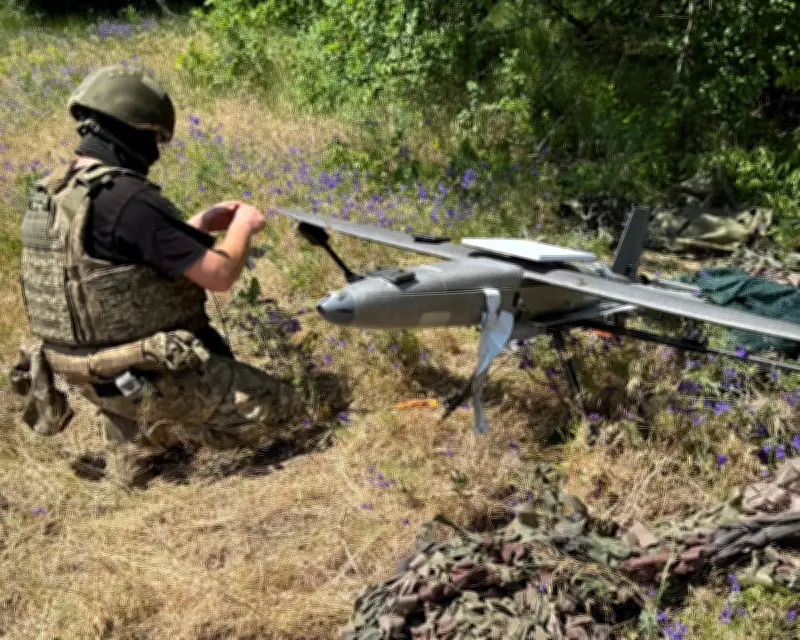
Asked why Ukraine had made progress on the battlefield, Rasmussen said: 'We spent too many months discussing the delivery of battle tanks, fighter jets, everything. But gradually we have stepped up. But first and foremost, the Ukrainians themselves have been very innovative in developing hi-tech military capabilities, mainly drones and other kinds of hi-tech military stuff.'