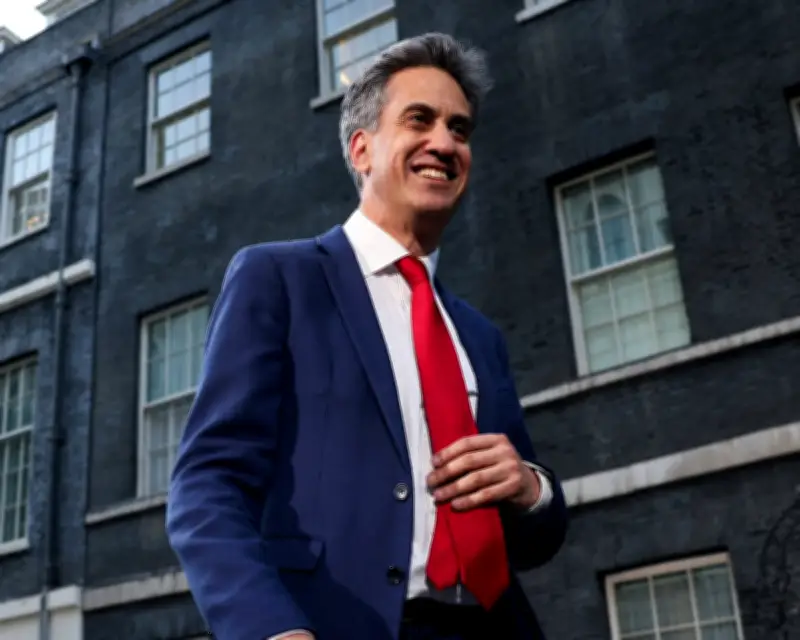
Ed Miliband, appointed Foreign Secretary in Andy Burnham's first cabinet last month, is reportedly energized by the role, contrary to suggestions of disappointment. His allies emphasize his policy-driven approach, focusing on EU relations, the UK's G20 chairmanship, and climate change, while navigating the complexities of the US alliance under Donald Trump.
Miliband's Policy Priorities and EU Relations
Miliband, the tenth foreign secretary since William Hague in 2014, enters office without a permanent secretary after Olly Robbins' sacking, and with staff strikes over job cuts. He plans close involvement in EU talks with Europe minister Hamish Falconer, viewing a successful UK-EU relationship as the nation's biggest challenge. This marks a shift from Keir Starmer's era, where the Cabinet Office led negotiations.
Despite representing a Eurosceptic constituency and honoring manifesto red lines against single market or customs union membership, Miliband aims to influence long-term thinking on EU ties, including European defense. An ally stated, "Having a closer relationship with Europe is a key foreign policy priority to protect our national security and grow our economy."

Reviving the G20 and Global Finance
Miliband seeks to revive the G20, which has declined since 2008. With the UK chairing the illicit finance summit in December and the G20 next year, ideas like a global wealth tax and transparency in overseas holdings are promoted. Gordon Brown remains special envoy, working with Miliband, and Lord Wood joins as a Foreign Office minister.
A global wealth tax, proposed during Brazil's G20 presidency, gained traction. Economist Gabriel Zucman noted, "There is overwhelming public support for this idea," citing that billionaires pay an average of 0.3% tax on wealth, while the top 0.0001% saw average wealth grow 7.1% annually from 1987 to 2024, increasing their global wealth share from 3% to 14%.
Climate Crisis and Aid Cuts
Kirsty McNeill, international development minister, faces the impact of aid cuts, with spending falling to 0.3% of GDP next year. She has argued the UK must set a path to return to 0.7% to regain credibility. The G20 offers a platform to build alliances on debt and illicit finance.
Gaza Policy and US Relations
Miliband's stance on Gaza is clear, having urged recognition of Palestine in 2014. However, immediate action is complicated by Israeli elections and progress on Hamas disarmament. Burnham has acknowledged Labour needs to "do better" on Gaza, but diplomats question the enforceability of trade bans on settlements.
Pressure from Labour backbenchers, including a letter from 80 parliamentarians, calls for comprehensive sanctions on Israel and recognition of genocide findings. Burnham defers to international courts, while Miliband must balance progressive credibility with US relations, particularly on Ukraine support, which has required compromises with figures like the late Senator Lindsey Graham.