Kokedama: The Ancient Japanese Moss Ball Gardening Technique
The Japanese gardening technique of kokedama offers a magical way to bring nature indoors, providing an accessible alternative to the more demanding art of bonsai. Translating literally as "moss ball," this centuries-old practice involves wrapping plant rootballs in dense moss and binding them with twine, creating beautiful living sculptures that can be displayed on tables or hung as decorative pieces.
A Personal Rediscovery in London
Recently, while visiting a previously unfamiliar cafe in Peckham, southeast London, I experienced a moment of unexpected nostalgia. The establishment, it turned out, had been a regular haunt during my younger years. This juxtaposition of past and present – being both a tired woman in her late thirties with children and simultaneously recalling my twenty-two-year-old self – was perfectly mirrored by what sat on the table: a contemporary kokedama.
Historical Roots and Modern Revival
My first encounter with kokedama occurred a decade ago in Japan, where I saw them hanging outside doorways in snow-covered mountain villages, cradling delicate overwintering ferns. Originally a side-product of bonsai cultivation, the technique has evolved into a popular art form in its own right. During the mid-2010s houseplant craze, kokedama often featured fussier plants like maidenhair ferns, but contemporary versions have become more versatile and accessible.

The cafe's example demonstrated this evolution perfectly: a squat moss mound serving as a natural, non-polluting alternative to florists' foam, artfully decorated with sprigs of limonium (sea lavender) and dried sanguisorba. This inspired me to consider how kokedama could brighten both indoor and outdoor spaces during the bleak winter months.
Seasonal Magic and Practical Applications
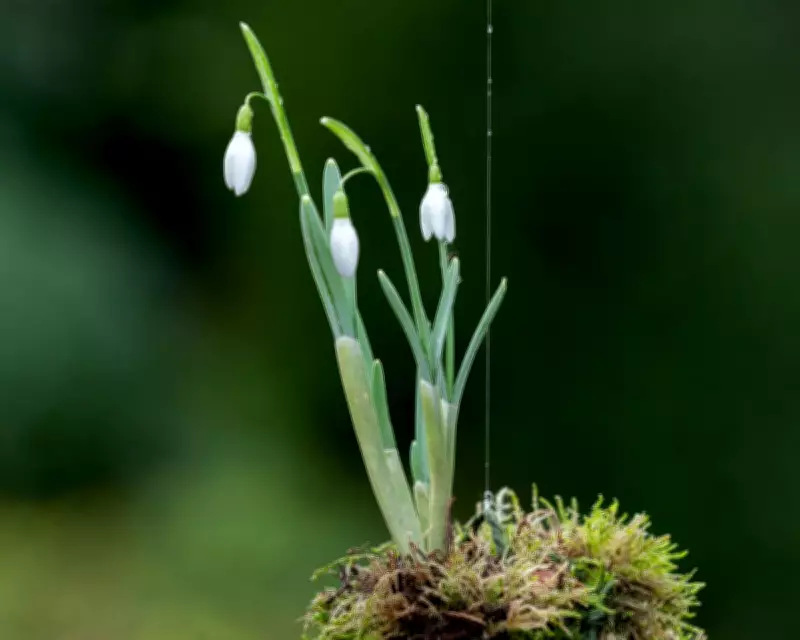
Across London, at the Chelsea Physic Garden's Heralding Spring festival, kokedama takes on a particularly enchanting role. Here, snowdrops emerge from moss balls suspended in trees, creating miniature theatrical displays that herald the coming season. This traditional late-January event demonstrates how these living sculptures can inject welcome magic into the garden year-round.
Creating Your Own Kokedama at Home
Fortunately, kokedama is significantly easier to create than traditional bonsai, requiring just a few basic materials and some patience. Here's a simple guide to making your own:
- Gather your materials: sheet moss, peat-free potting soil, bonsai compost or sharp sand (for drainage), twine, and a suitable plant. Hardier ferns or bulbs are excellent choices for beginners.
- Mix the soil components until you achieve a mud-pie-like consistency that holds together well.
- Carefully remove your chosen plant from its pot, gently shaking excess soil from the roots.
- Form a coconut-sized ball of the soil mixture around the plant's rootball, squeezing out any excess moisture.
- Wrap the soil ball completely in sheet moss, ensuring even coverage.
- Crisscross twine around the moss ball, tying it securely while leaving sufficient length for hanging if desired.
With practice, you can master this rewarding technique that brings a touch of Japanese gardening tradition into your home, creating beautiful living decorations that evolve with the seasons.