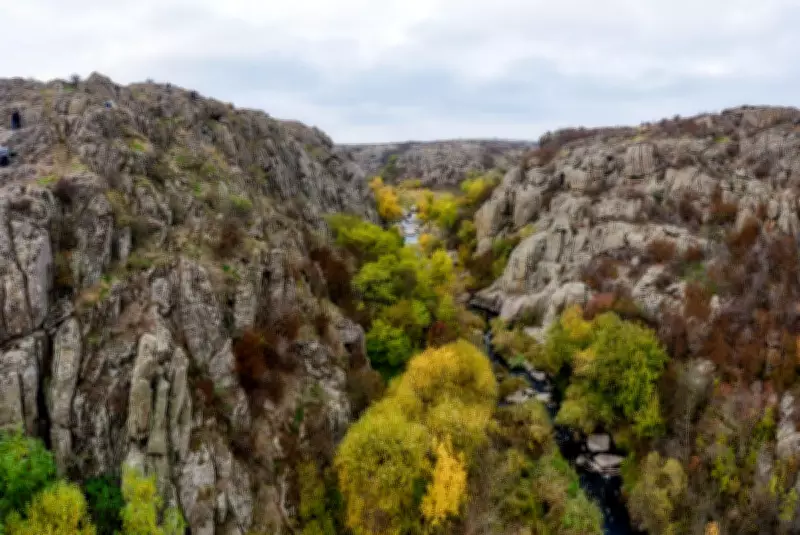
In the heart of Ukraine, a quiet but urgent battle is being waged to save the nation's botanical heritage from the ravages of war. At the National Dendrological Park Sofiyivka in Uman, researchers like Larisa Kolder are working tirelessly in basement laboratories, nurturing rare species such as Moehringia hypanica amidst frequent power outages. This delicate flower, listed as threatened in Ukraine's Red Book of endangered species, grows wild in only a handful of locations, primarily in the Mykolaiv region, making its preservation a critical mission for biodiversity conservation.
The Race to Preserve Endangered Flora
Just months ago, Kolder and her team received a mere 23 seeds of Moehringia hypanica, from which only two successfully germinated. Through meticulous microclonal propagation techniques, they have since cultivated a small grove of 80 seedlings, a significant achievement given the challenging circumstances. This work is not just about saving a single species; it represents a broader effort to safeguard Ukraine's rich natural history, which is under severe threat due to the ongoing conflict with Russia.
Lost Collaborations and Occupied Territories
Before Russia's annexation of Crimea in 2014 and the full-scale invasion in 2022, Ukrainian botanists collaborated closely with experts at key research sites like the Nikitsky Botanical Garden in Crimea and the Nova Kakhovka experimental station in Kherson. These facilities were hubs for biodiversity studies, housing extensive collections of rare plants and conducting vital research on climate adaptation. Today, these sites are inaccessible, with researchers having fled or lost contact, creating what scientist Iryna Denysko describes as a communication black hole worse than the Berlin Wall.

Oleksii Vasyliuk, a zoologist with the Ukraine War Environmental Consequences Work Group, highlights the scale of the loss. He notes that nearly 40% of Ukraine's agricultural land, along with major national parks and reserves such as Askania-Nova—one of the world's oldest steppe reserves—are now under Russian occupation. This territory, heavily mined and damaged, may remain inaccessible for decades, posing a long-term threat to the country's biodiversity, which accounts for about 35% of Europe's total despite covering less than 6% of its landmass.
Documenting Ecocide and Environmental Crimes
In response to the devastation, Ukrainian experts are documenting instances of what they term ecocide, hoping that the International Criminal Court will recognise Russian actions as war crimes against the environment. Volodymyr Hrabovyi, acting director of Sofiyivka, expresses deep concern over the fate of botanical gardens in occupied areas, fearing that rare plant species may have been destroyed or sold. "Nothing is sacred to them," he says, reflecting on the environmental damage wrought by Russian forces, including trench-digging on virgin steppe and the relocation of endangered animals.
Sofiyivka Park: A Beacon of Hope
Founded in 1796 as an English landscape garden by a Polish noble, Sofiyivka Park is now a research institute under the National Academy of Sciences of Ukraine and is celebrated as one of the Seven Wonders of Ukraine. Located near the grave of Rebbe Nachman, it attracts global visitors, but its primary role today is as a sanctuary for botanical research. Despite challenges—including colleagues serving on the frontlines and power outages lasting up to 15 hours a day—the team perseveres.
One researcher, soon to turn 60, is set to return from military service, where he served as a tank crew commander, highlighting the personal sacrifices made by scientists. In the microclonal lab, Kolder carefully transfers plants from sterile test tubes to peat discs, a delicate process that marks their transition to non-sterile conditions. Recently, one of the Moehringia seedlings was moved to the park's arboretum, marking the first time this endemic flower will grow outside its native region—a symbolic victory in the fight for preservation.

The Broader Impact on Ukraine's Natural Heritage
The southern regions of Crimea and Kherson, now occupied, have historically been central to Ukraine's agriculture and botany, home to many rare and endemic species in steppe zones and coastal areas. The loss of these areas not only threatens immediate biodiversity but also undermines long-term scientific research, such as the adaptation of plants to climate change. Anatoliy Opalko, a botanist, recalls how a colleague in Kherson had to relocate persimmon seedlings to a private garden as conditions deteriorated, illustrating the desperate measures taken to save genetic material.
As Sofiyivka emerges as a leading centre for botanical conservation in Ukraine, the team's work takes on added significance. Hrabovyi emphasises that if researchers and their collections disappear, the Earth stands to lose irreplaceable natural resources. This story, supported by initiatives like the International Women's Media Foundation's Women on the Ground, underscores the resilience of Ukrainian scientists in the face of adversity, striving to protect their country's ecological legacy for future generations.