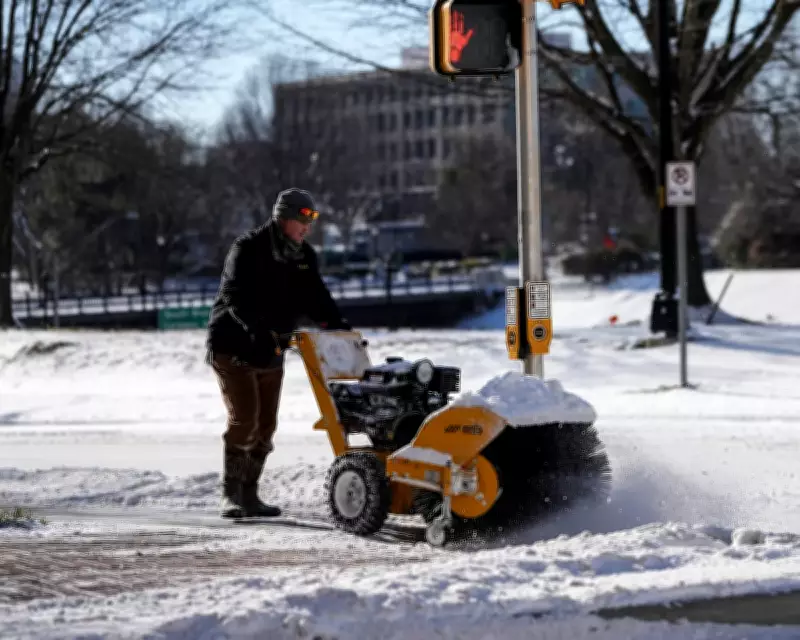
Powerful Bomb Cyclone Grips Eastern US with Record Cold and Snow
A severe bomb cyclone has unleashed freezing temperatures and heavy snowfall across a vast swathe of the eastern United States, from the Gulf Coast to New England. The intense weather system has placed approximately 150 million people under cold weather advisories and extreme cold warnings, with wind chills plummeting to near zero in southern regions.
North Carolina Bears Brunt with Snow and Fatalities
North Carolina experienced some of the most significant impacts, with the storm contributing to nearly a foot (30cm) of snow in and around Charlotte, the state's largest city. Meteorologist Peter Mullinax from the Weather Prediction Center in College Park, Maryland, noted this snowfall represents a top-five snow event in Charlotte's recorded history.
Governor Josh Stein reported that more than 1,000 collisions occurred on snowy roads across the state over the weekend, resulting in two storm-related fatalities. The governor did not provide specific details regarding the victims.

The severe weather caused major travel disruptions, with FlightAware data showing over 2,800 flight cancellations in the US on Saturday and an additional 1,800 on Sunday. More than 800 of Sunday's cancellations involved flights departing from or arriving at Charlotte Douglas International Airport.
Record-Breaking Cold Paralyzes Florida
Florida experienced its coldest air mass since December 1989, with temperatures dropping into the 20s Fahrenheit in the Panhandle and the 30s in southern regions. Several locations broke low-temperature records, including Daytona Beach (23°F), Melbourne (25°F), and Vero Beach (26°F). Miami recorded its coldest morning since 2010 at 35°F (2°C).
The extreme cold had unusual consequences for Florida's wildlife. The Florida Fish and Wildlife Conservation Commission issued an executive order allowing residents to remove cold-stunned green iguanas from properties without permits. These invasive reptiles enter a state of torpor during sustained near-freezing temperatures, causing them to lose muscle control and fall from trees.
"Green iguanas are an invasive species in Florida and have adverse impacts on the state's environment and economy," the commission stated in their announcement.
Residents were given until Monday, February 2nd at 4pm to transport live, cold-stunned iguanas to designated drop-off locations across the state.
Agricultural Impacts and Power Outages
The freezing temperatures left ice on strawberries and oranges throughout Florida, prompting farmers to employ protective measures such as spraying water on fruit trees and berry plants to prevent frost damage.
Power outages affected tens of thousands of homes and businesses across multiple states. In Mississippi and Tennessee, which were struck by snow and ice the previous weekend, more than 87,000 customers remained without electricity on Sunday according to poweroutage.us. An additional 8,000 customers experienced power loss in Florida.
Broader Weather Impacts and Fatalities
Further north in parts of North Carolina, snowfall totals exceeded a foot according to the National Weather Service. The bomb cyclone contributed to what AccuWeather described as temperatures not observed in Florida since 2010, 1989, 1977, and 1966.
Tragically, the wintry weather has been connected to more than 110 deaths across the United States since late January, highlighting the dangerous conditions created by this powerful storm system.