
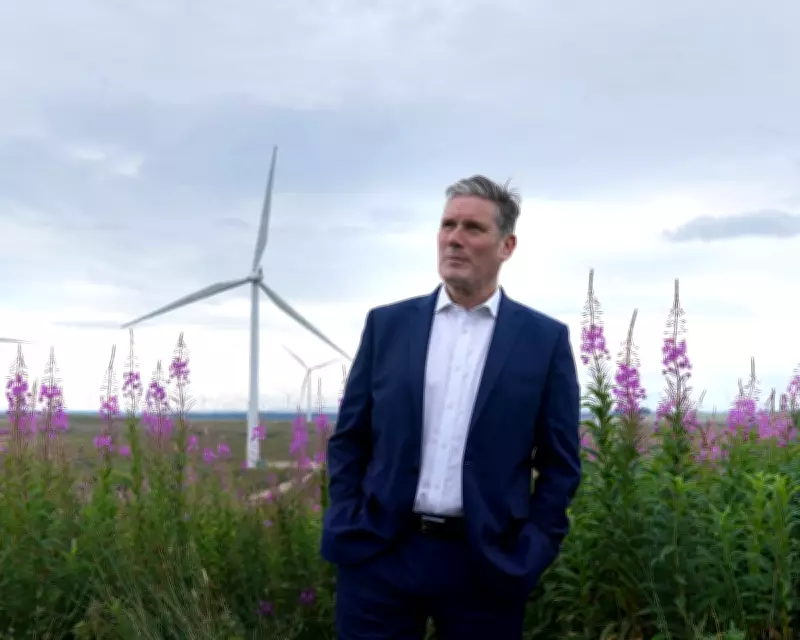
Starmer's Climate Rhetoric Wavers as Internal Factions Clash
Prime Minister Keir Starmer, who once passionately declared climate action to be in the DNA of his government, is now accused of softening his stance on net zero amid intense internal party pressure. This shift has sparked a significant political backlash, culminating in a surprising byelection defeat that underscores growing voter discontent with Labour's environmental policies.
The Lancaster House Speech: A Bold Promise Fades
Less than a year ago, Starmer delivered a powerful speech at Lancaster House, vowing to accelerate the UK's transition to net zero and champion homegrown clean energy as a solution to economic instability. He argued that reducing dependence on volatile international fossil fuel markets was essential for national control and cost-of-living relief. For many observers, this address reflected Starmer's genuine, rationally considered belief in the economic and environmental benefits of climate action.
However, throughout his premiership, Downing Street has been influenced by senior advisers skeptical of green initiatives. These figures have actively worked to water down environmental policies and steer Labour toward anti-net-zero positions aligned with Reform and Conservative viewpoints. Their efforts have now borne bitter fruit, as the safe Labour seat of Gorton and Denton swung decisively to the Green party in a recent byelection.
Byelection Fallout: A Wake-Up Call for Labour
The loss of Gorton and Denton to the Green party, led by newly elected MP Hannah Spencer, has sent shockwaves through Westminster. This defeat highlights Labour's vulnerability due to internal conflicts and confused messaging. While Reform targeted the seat, the Greens secured victory with a platform emphasizing hope, public services, and robust environmental action. Ami McCarthy, head of politics at Greenpeace UK, emphasized that voters are hungry for change, with more than twice as many votes going to parties committed to tackling the climate crisis than to Reform.
McCarthy urged Labour to reset its approach, stating that bold solutions on cost of living, climate, and nature are essential to regain ground. Similarly, Asad Rehman of Friends of the Earth noted that voters prioritize green policies like home insulation and public transport improvements, which should be framed as pro-net-zero initiatives to address economic concerns.
Internal Struggles: The Role of Key Advisers
The recent history of Starmer's green agenda reveals how internal factions have undermined his climate commitments. Key figures, including former chief of staff Morgan McSweeney, opposed the Lancaster House speech and worked to downgrade Labour's pre-election pledge of £28 billion annual investment in the green economy to roughly half that amount. McSweeney, linked to the Blue Labour tradition and figures like Peter Mandelson and Tony Blair, viewed environmental issues as peripheral to core Labour values, focusing instead on urban social justice and electoral strategy.
Despite this, Starmer has drawn on a broader range of influences, including Energy Secretary Ed Miliband, economists, and business leaders, who advocate for the UK's economic benefits from green transition policies. Chancellor Rachel Reeves has also aligned with this view, declaring herself the first green chancellor in 2021. Campaigners acknowledge Starmer's positive steps, such as setting a clean power target for 2030 and supporting renewable energy auctions, but criticize his government's approach to nature conservation, including loosening protections and attacking environmental regulations.
Public Sentiment and Future Directions
Public support for net zero remains resilient, with research from King's College London indicating that roughly two-thirds of Britons want the government to achieve net zero by 2050 or earlier. Polling from YouGov shows Labour losing more voters to the Green party and Liberal Democrats than to Nigel Farage's Reform, a trend reinforced by the Manchester byelection. The memory of energy price spikes post-Ukraine war keeps the appeal of stable, homegrown clean energy strong.
Robbie MacPherson, a former head of secretariat for parliament's all-party climate group, advises that Labour should return to Starmer's instincts and embrace its DNA on net zero to maintain power and counter Reform. With McSweeney gone, Starmer faces a critical choice: follow his pro-climate instincts or succumb to other interests. The byelection result serves as a stark reminder that voters demand decisive action on climate and cost of living, leaving Labour at a crossroads as it navigates its environmental future.



