Iran's Regime Faces Vulnerability After Ayatollah Khamenei's Death
The confirmation of Ayatollah Ali Khamenei's death has plunged Iran into a tumultuous state of contrasting emotions, with jubilation erupting in many parts of the country while deep shock and anger grip his supporters in Tehran. The Supreme Leader's passing, announced on state television in the early hours of Sunday, marks a pivotal moment for the Islamic Republic, revealing both the regime's fragility and its enduring grip on power.
Celebration and Mourning Across a Divided Nation
In a stark display of societal polarization, the demise of Ayatollah Khamenei has triggered wildly different reactions. Throughout Iran, countless citizens have expressed sheer joy and exuberance, with some cheering from windows, lighting fireworks from balconies, and even tearing down monuments to Ayatollah Khomeini, the founder of the Islamic Republic. "Congratulations on our freedom," cried one elated individual, while another shouted, "Am I dreaming? Hello to the new world!" in southern Iran.
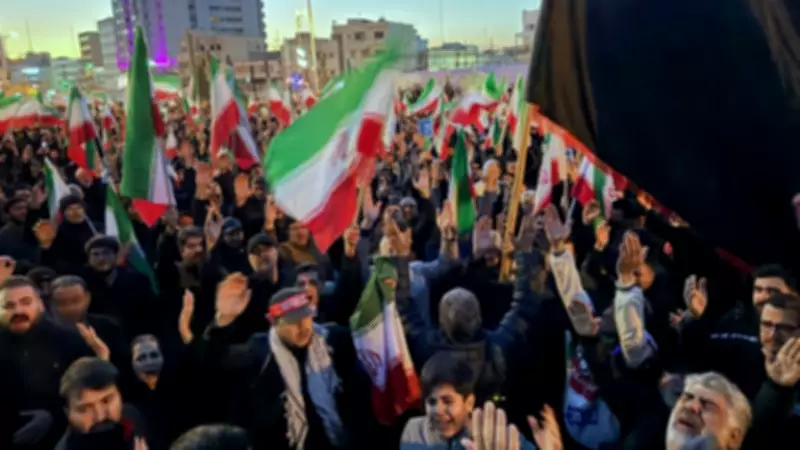
Conversely, in Tehran's Revolution Square, devoted supporters of the late Supreme Leader voiced their profound grief and disbelief. "We were saying to ourselves all night that his death must be a lie. Unfortunately, it was the truth," said one emotionally shaken woman. A tear-stained man added, "We lost our dearest person, we lost our elder, we lost our master." Khamenei, who ruled with an iron fist and was known for repressive measures, was also revered as a divine religious figure by many.
Military Strikes and Regime Vulnerability
The atmosphere in central Tehran has taken on the appearance and sounds of war, despite no formal declaration. Clouds of smoke and the crack of high explosives fill the air as American and Israeli operations target the heart of the capital. These strikes have reportedly achieved a key objective: the elimination of senior Iranian leaders. Critical infrastructure has been hit, including the remains of the police headquarters, the bombed-out shell of the Revolutionary Prosecutor's Office—where political dissidents faced death sentences—and detention facilities used by the feared paramilitary Basij police.
With the U.S. and Israel operating under what seems to be total air superiority, the Iranian regime certainly appears vulnerable. President Trump has stated that he has given Iranians the opportunity to take back their country, yet it remains clear that a significant portion of the population continues to support the existing regime.
Clerical Control Persists Amid Chaos
Despite the visible vulnerabilities and the coalition efforts to dismantle the regime, the clerics and their supporters have not relinquished their hold. They continue to maintain control over the streets of Tehran, demonstrating resilience in the face of external pressures and internal divisions. The ongoing conflict underscores the complex dynamics at play, where military strikes may weaken structural elements but fail to immediately dislodge deep-seated ideological and institutional power.
As Iran navigates this critical juncture, the world watches closely. The death of Ayatollah Khamenei has unleashed a wave of emotions and actions that highlight the country's profound internal splits. While the regime's fragility is exposed by targeted attacks, the enduring presence of clerical authority suggests that the path forward will be fraught with challenges and continued strife.