Fifa's aborted plan to sell stakes in its major tournaments to private investors would have had a devastating impact on women's football, which was on the frontline of the fight against the proposal. The plan, which was scrapped after Uefa threatened a boycott, would have affected youth and senior women's qualifiers and the Women's World Cup itself.
Uefa's Bold Stand Against Infantino
Uefa issued a strong statement declaring that European national teams would not participate in any Fifa competition while the proposals remained alive, unless they were abandoned entirely and binding assurances were given that Fifa would never again open its governance or competitions to private ownership. This was a bold and necessary declaration of war against Fifa president Gianni Infantino.
The timing was critical: with the Under-20 Women's World Cup in Poland next month, the Under-17 Women's World Cup and Uefa's qualifying playoffs beginning in October, and the Women's World Cup in Brazil next summer, women's tournaments would have been the first test cases had a boycott gone ahead.

Financial Stakes and Reliance on International Competition
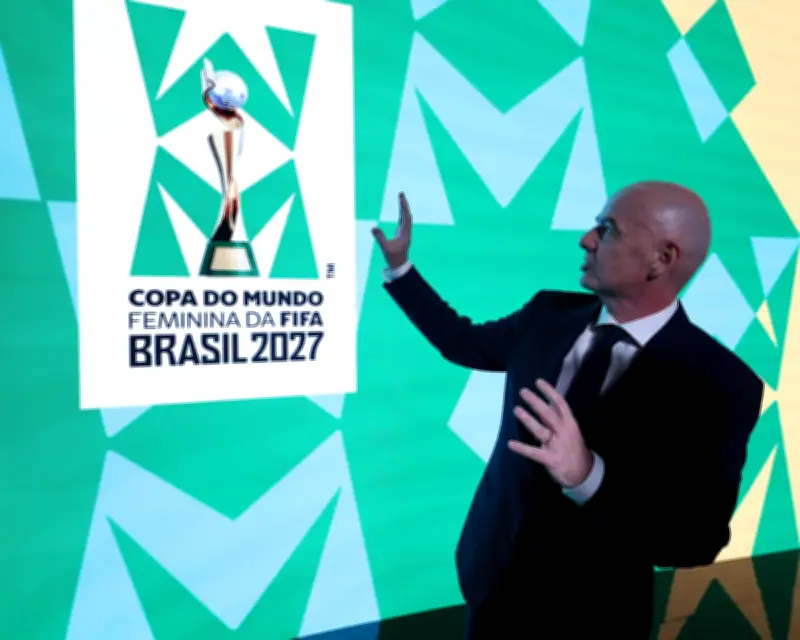
The women's game is desperately reliant on international competition for its growth. The 2023 Women's World Cup was the first to break even, generating over $570m (£424m) in revenue. Fifa said in May 2025 it is targeting $1bn in revenue from the 2027 edition. A boycott would have been catastrophic, setting progress back far more than four years.
Despite the threat, Uefa was not wrong in its stance. The collapse of Infantino's plan demonstrates the effectiveness of the fight back. It was not European football's governing body that engineered the timeframe that put women's football on the frontline, but it was correct not to exclude women's or youth football from its arsenal.
Infantino's Record on Women's Football
The blame for the threat posed by a boycott lies squarely with Infantino, who has been praised for his commitment to accelerating the women's game. Jill Ellis, Fifa's chief football officer and twice a World Cup-winning coach, praised his "commitment to accelerating the women's game and increasing women's influence in shaping its future" and said "investment has moved from rhetoric to action".
To an extent, Ellis is right – Infantino is the Fifa president who has done the most for the women's game. But when his predecessor is Sepp Blatter, who said in 2004 that "tighter shorts" was the way to get more people watching, the bar is staggeringly low.
Under Infantino, Fifa has invested more in the women's game than ever before, but it has been a pawn in his tenure: initially useful for showing progressiveness, and now useful for medium- to long-term financial gain as one of the fastest growing and least-tapped areas of the game.
Evidence of Real Attitude
Step behind the rhetoric and handouts, and Infantino's real attitude is evident. In 2023, Sky News reported he left the Women's World Cup for Tahiti after less than a week, before returning later. By contrast, he attended at least some part of every one of the 64 games of the 2022 men's World Cup, and at times appeared at two a day during the latest men's edition, despite the environmental impact of using a private jet.
Perhaps Infantino waited until the beginning of a new four-year men's World Cup cycle to limit backlash on the showpiece event, but in doing so he added to the evidence of his attitude towards women's football, with the women's edition on the imminent horizon.
A Warning for the Future
It would have been oddly fitting if the women's game had become the sun that melted his Icarus wings. Luckily, women's football didn't have to pay that costly price. However, this episode must act as a warning, both to those who care about the development of the women's game and its future, and those who care about the future of the men's game.
The European Super League debacle and this latest attempt to hand the wealth of football to private finance vultures show that private finance will keep coming back as they search for ways to get a piece of the pie.