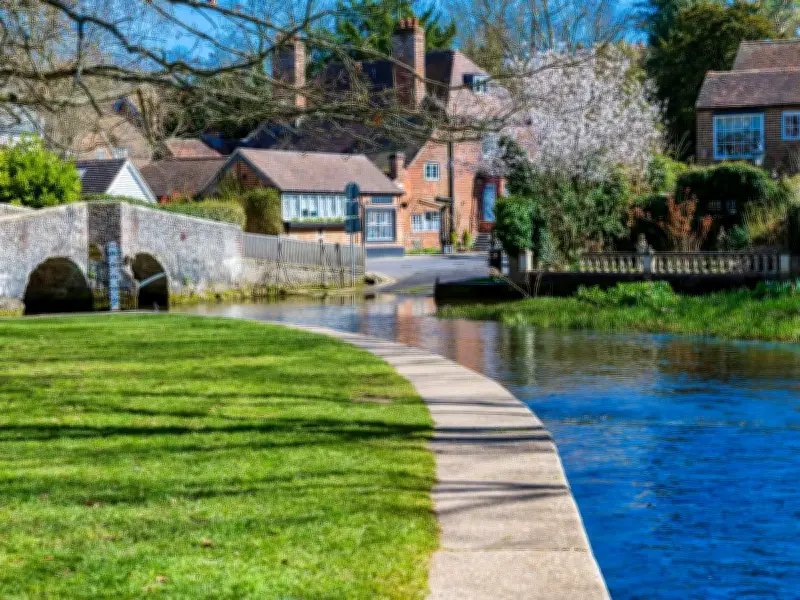
Eynsford, a small village in Kent's Darent Valley, is a 30-minute train ride from London and offers visitors a combination of historical ruins, a wildlife centre with around 100 birds of prey, and a gastropub known for its Sunday roasts. The village, with a population of just under 2,000 residents, is a popular destination for walkers and history enthusiasts.
Village and Getting There
Eynsford is located in Kent's Darent Valley and has a history spanning over a thousand years. The village is accessible by train from London in about 30 minutes, with the station approximately a 10-minute walk from the village centre. Once there, visitors can follow the River Darent as it winds through the village. For those driving, Eynsford is about a 30-minute drive from South East London. From central London via public transport, take the direct Thameslink service from Blackfriars to Sevenoaks, alighting at Eynsford.
Countryside Walks and Lullingstone Country Park
Walking is one of the village's main attractions. The surrounding Darent Valley features rolling hills, farmland, and ancient woodland, with riverside and woodland routes to explore. Lullingstone Country Park is another option, with a collection of more than 300 trees, including oak, beech, and sweet chestnut, some thought to be 800 years old. In spring and summer, orchids and other wildflowers dot its chalk grassland. The park also has a visitor centre with a café, toilets, and a shop.
Historical Attractions: Eynsford Castle and Lullingstone Roman Villa
Eynsford Castle, managed by English Heritage, offers free entry to explore medieval ruins. It is an unusual early Norman castle with substantial enclosing walls and living accommodation within its hall, rather than a towering keep. The curtain wall was built between 1085 and 1087. The castle was damaged during an ownership dispute in 1312 and was never lived in again, but its surviving ruins provide a glimpse into its past.
Lullingstone Roman Villa, begun around AD 100, is another local highlight. It developed as successive wealthy owners adapted it to their tastes and beliefs. Visitors can see mosaics, a heated bath-suite, and a 'house-church', alongside prints of rare wall paintings, offering a closer look at how an impressive Roman home evolved over the centuries.
Eagle Heights Wildlife Foundation and The Plough Inn
Eagle Heights Wildlife Foundation has a collection of around 100 birds of prey, alongside animals including meerkats, huskies, and reptiles. The centre offers hands-on animal experiences, from meeting eagles and owls to trekking with alpacas. All animal experiences help fund animal care at the centre.
The Plough Inn is a top-rated gastropub with roaring fires and a riverside garden, well-known for its Sunday roasts. One Google reviewer said: "We had a fantastic Sunday roast at the pub and were looked after by Steph. The food was absolutely delicious - perfectly cooked meat, crispy roast potatoes, and rich, flavourful gravy. The portions were generous, and everything tasted homemade and hearty. Steph was warm, attentive, and made us feel right at home. We'll definitely be back for another roast soon!"
The village's combination of natural beauty, historical sites, and dining options makes it a suitable destination for a full day trip from London.