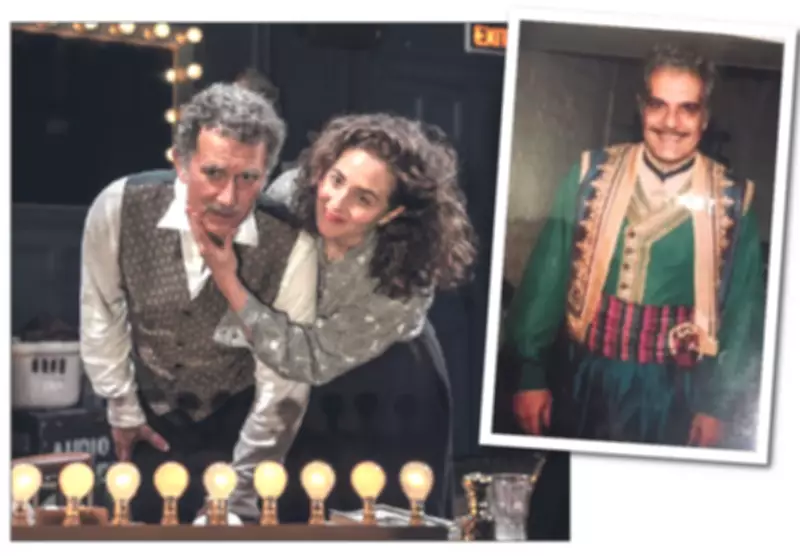
Playwright Hannah Khalil discusses her new play Love Omar, now premiering at Theatro Technis, which delves into the life of legendary actor Omar Sharif during his 1983 run at the Chichester Festival Theatre. The play, a backstage comedy, sheds light on the man behind the iconic moustache and the cultural impact he had on Khalil's own family.
Khalil reveals a personal connection to Sharif: "I don't think I'd exist if it wasn't for him." Her mother, an Irish village girl, became obsessed with Sharif's films and later met Khalil's father, who bore a resemblance to the actor. This fascination inspired Khalil to explore Sharif's legacy.
Unearthing a Piece of Arab Theatre History
The idea for Love Omar struck Khalil while waiting in line at the Chichester Festival Theatre. She noticed a production photo from Terence Rattigan's The Sleeping Prince featuring Sharif, which sparked her curiosity. "It was so bizarre – why was Omar in Chichester?" she recalls. The play captures the frenzy surrounding Sharif's celebrity, including crowds of female fans and bags of sexualised letters that caused complaints from the local sorting office.

Khalil interviewed many who worked with Sharif during that production, gathering anecdotes that paint a nuanced picture of the actor: his charm, loneliness, and aged pride. One notable detail involves Sharif's moustache, which he dyed nightly to hide its greying, often smearing black on his co-star Debbie Arnold's upper lip during kisses. "Relations between the two cooled somewhat," Khalil notes, adding that Arnold is attending the show later this week.
Cultural Etiquette and Identity
The play explores cultural differences through Daphne, Omar's dresser, who must navigate his generosity, such as gifting his weekly pay to a younger crew member. "There are so many cultural etiquette differences, and that generosity is definitely up there," says Khalil. The character of Mag, a fictitious Scottish-Lebanese assistant director, serves as a stand-in for Khalil, wrestling with her mixed heritage. Mag asks why Sharif changed his name from Michel, reflecting on his PR savvy: "He thought about how he would be perceived, and thought, well, if that's what they want, I'll give them that."
Khalil admits that even now, she grapples with this conflict: "She [Mag] is frustrated because Omar's not what he says he is – he is, but he isn't."
Bringing the Play to Life
Although written years ago, Love Omar is only now being performed due to casting challenges. Khalil found the perfect lead in Al Nedjari, who had a similar experience to Sharif, receiving fan mail and gifts after a major role in Coronation Street. The play's 1983 setting, anchored by a radio news broadcast about Suez shipping disruption, feels eerily relevant today. Khalil notes, "Omar had the privilege of not always playing Arabs. And the moment we're in now, that can't really happen."
She started writing 24 years ago out of frustration with limited opportunities for Arab actors, and continues because "those parts still don't exist." Love Omar runs until June 6 at Theatro Technis, with tickets from £13.50. A Q&A with the playwright and director follows the 7:30pm show on Wednesday, June 3.