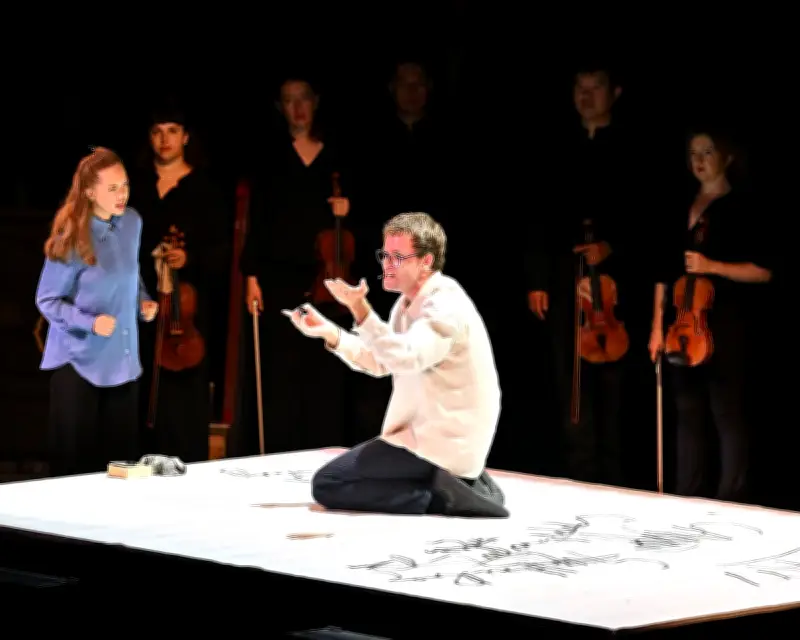
The Aurora Orchestra, under conductor Nicholas Collon, delivered a uniquely theatrical performance of Gustav Mahler's First Symphony at the Royal Albert Hall, prefaced by an acted dialogue between Sigmund Freud and the composer. The presentation, part of the BBC Proms, aimed to decode the symphony's emotional core, which had baffled its 1889 Budapest audience with critics calling it "ridiculous," "offensively trivial," and "a complete disaster."
A Freudian Framework for Musical Understanding
The evening began with a staged programme note, scripted by Jane Mitchell, set in a psychiatrist's office. Actor Jack Bardoe portrayed Mahler with a compelling mix of frenetic energy and artistic neurosis, while Sarah Twomey's forthright Freud probed his psyche, asking, "Tell me about your mother." The dialogue linked Mahler's compulsion to compose with a need to re-enact childhood trauma, including paternal cruelty, the loss of eight siblings in infancy, and a disastrous love affair. This psychological framing aimed to provide deeper insight into the composer's motivations.
Ferdinand Pfohl, a one-time friend, described Mahler as "a bomb encased in razorblades," a quote that resonated throughout the performance. The orchestra and Collon interwove illuminating musical examples into the dialogue, even including a digression on the breeding cycle of the cuckoo, a bird whose call features prominently in the symphony. Mezzo-soprano Natalie Lewis contributed velvet-voiced renditions of excerpts from Mahler's Songs of a Wayfarer, which served as vital source material for the symphony.

The Performance Itself: Familiar Yet Surprising
Did the theatrical prelude enhance the performance of the symphony, which the orchestra played from memory? The answer was both yes and no. On one hand, much of the music arrived like a familiar friend, with the duelling ländlers of the second movement and the eerie tread of the third capturing the work's pioneering spirit. However, the extensive musical examples robbed the finale of some surprise, particularly the breathtaking modulation from C major to D, which felt strangely rushed in this performance.
The opening was slightly brisk, and the offstage brass sounded overly present, but the final five minutes worked their usual magic. Mahler's repurposed cuckoo calls rang out on the horns, reminding the audience of the engrossing music lesson that had preceded the symphony. The performance was recorded for BBC Sounds, available until 12 October, while the Proms continue until 12 September.
Innovative Approach Divides Opinion
This Freudian trip, as described in promotional materials, is part of Aurora Orchestra's broader effort to make classical music more accessible. The orchestra has previously performed works from memory, and this staged approach adds a theatrical dimension that challenges traditional concert formats. While some purists might question the need for such elaborate framing, the packed Royal Albert Hall audience seemed engaged by the blend of drama and music.
Jane Mitchell's script was meticulously crafted, weaving together historical anecdotes and musical analysis without becoming overly didactic. The actors and musicians moved seamlessly between dialogue and performance, creating a fluid narrative that traced the symphony's genesis from Mahler's personal struggles to its eventual triumph as a cornerstone of the repertoire.
Critical Reception and Legacy
The original 1889 premiere in Budapest was a failure, but Mahler's First Symphony has since become one of the most performed works in the classical canon. This Proms performance, with its innovative staging, adds another layer to its rich performance history. The Aurora Orchestra's approach, combining musicology with theatre, reflects a growing trend in classical music to engage audiences through multi-disciplinary presentations.
As the orchestra concluded the symphony, the audience's applause was enthusiastic, a testament to the success of this bold experiment. For those unable to attend, the BBC Sounds recording offers a chance to experience this unique interpretation. The Proms season continues, but this performance will likely be remembered as one of its most talked-about events.