The 2026 ZEKE award for systemic change has been awarded to Ginevra Bonina for her project Out for Blood, which sheds light on period poverty in India and the women and girls fighting to reclaim their bodies as a site of struggle, resistance, and liberation. The award for documentary photography goes to Ebrahim Alipoor for his long-term project Bullets Have No Borders, documenting the lives of border porters who carry goods across the treacherous Iran-Iraq mountains to support their families.
Period Poverty in India
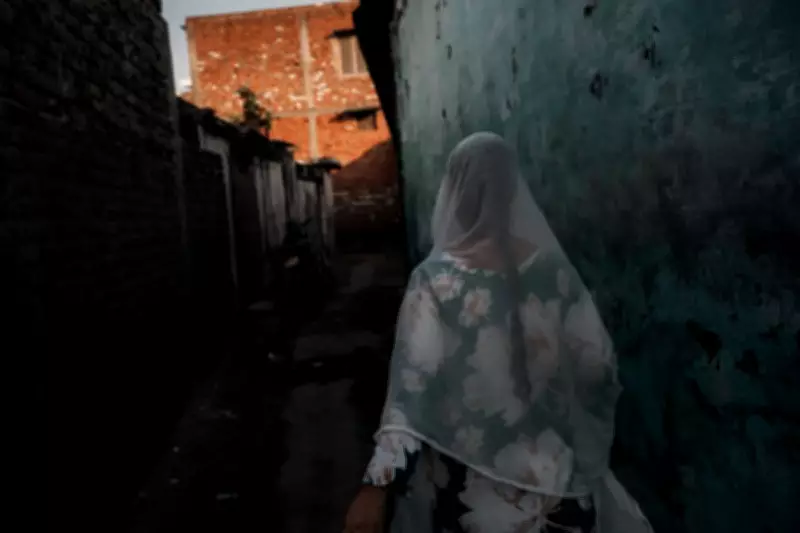
Bonina's project captures the harsh realities of menstruation in India, where taboos and stigma deeply condition women's lives, even those from stable economic backgrounds. In the village of Baghori, a Muslim woman walks through alleys, her life and that of her female relatives still shaped by these restrictions. A still life of two pomegranates, symbols of fertility and rebirth, held by male hands, contrasts with the patriarchal society where gender roles are clearly separated.
Farmers work in cotton plantations in Telangana, reflecting a society where gender divisions are present in daily life regardless of class or religion. Dr. Kritika Singh Chauhan, a volunteer with the Humjoli Foundation, conducts menstrual and sexual education sessions at a police academy in Maharashtra. A group of women reflected in water highlights that despite 355 million menstruating women in India, only 45% of girls are aware of menstruation before menarche, and 50% still rely on unhygienic cloths.
A 35-year-old woman lies on a bed inside a kurma ghar, a mud and bamboo hut used for isolation during menstruation in tribal villages. These huts lack basic services, and women risk abuse or fatal accidents like snake bites. Hurera Khanam, a menstrual educator with Pinkishe Foundation, works door-to-door in a complex context of diverse religions and restrictions. Women operate a small sanitary pad production centre run by a self-help group in Adilabad. A young goat destined for sacrifice to the goddess Kamakhya, associated with the divine feminine and menstrual cycle, is shown at the Kamakhya Temple in Assam. A teenage girl participates in a menstrual health session organised by Pinkishe Foundation at a school in Ghaziabad, where girls can normalise menstruation in a safe space.
Border Porters in Iran-Iraq
Ebrahim Alipoor's project focuses on the Koolbars, border porters who carry goods across the Iran-Iraq mountains. Some Koolbars cover their faces with masks to remain anonymous, as they are educated people or national heroes forced into this work. The Iranian Kurdish village of Hawraman Takht is a centre for smuggled goods, where most villagers are Koolbars. A man attempts to revive Dariush Shukri, a 22-year-old caught in an avalanche, but fails; avalanches are a common cause of death among Koolbars.
The loads carried include cigarettes, home appliances, and European goods belonging to large business owners. A Koolbar eats snow to quench his thirst, unable to carry water due to heavy loads. The families of Koolbars live with constant worry; dozens of brides become widows every year due to killings. Susan, 18, volunteers to teach the Kurdish language, which is prohibited in Iranian Kurdistan schools. Ahmad, 41, lost all his fingers to frostbite after getting lost in the mountains while smuggling; he could not afford hospital care. After border police shot Khaled in the head during Koolbari, doctors had to remove both his eyes. Khaled is 32 and has two children.