Warsaw's Neon Museum Sparks Major Revival of Cold War Era Signs and Aesthetic
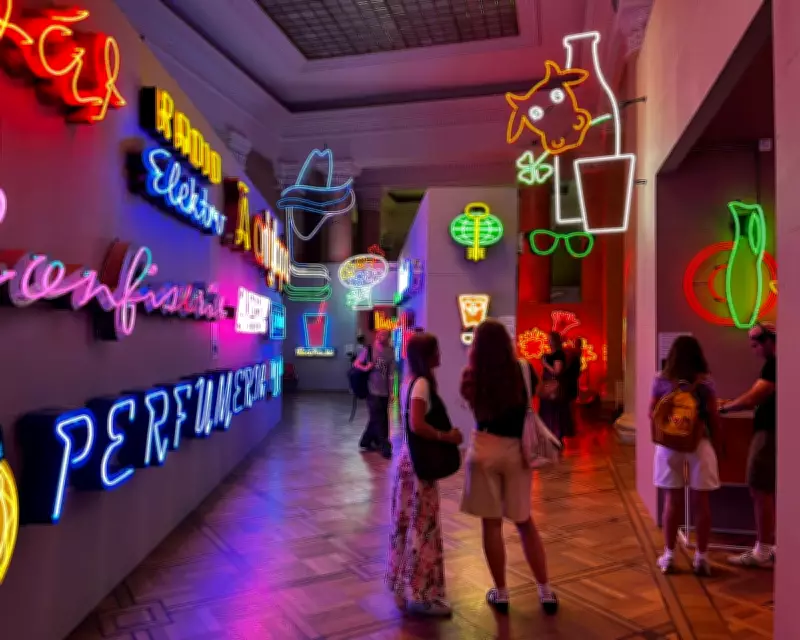
The Neon Museum in Warsaw has become a cultural phenomenon, attracting more than 100,000 visitors annually to view its extensive collection of Cold War-era illuminated signs. These vibrant symbols, once left to rust after communism's fall, now represent a powerful revival of historical interest and artistic appreciation.
From Neglect to Cultural Treasure
During the Cold War decades, Warsaw's neon signs served as beacons of light, color, and hope for citizens enduring political repression and urban gloom. What began as Soviet propaganda unexpectedly sparked remarkable creativity that even Communist authorities couldn't suppress. Following communism's collapse in the late 1980s, however, these signs lost their purpose and faced destruction—many were removed for scrap metal or left decaying where they hung.
Polish-British photographer Ilona Karwińska and her partner David Hill, a graphic designer, founded the Neon Museum in 2012 after developing what they describe as a life-changing passion for these historical artifacts. "When we started this, the neon signs were unloved and unwanted," Hill explained. "They were ancient and rusting. Many were being taken down and tossed away."
The Historical Journey of Warsaw's Neon Signs
Neon technology originated with the 1898 discovery of noble gases by British chemists Sir William Ramsay and Morris Travers. French engineer Georges Claude pioneered commercial applications, selling the first neon sign to a Paris hairdresser in 1913. Warsaw received its inaugural neon sign in 1926, though few of the subsequent seventy installations survived the Second World War's devastation, when Nazis destroyed up to 90% of the city in retaliation for the 1944 Warsaw Uprising.
Poland's postwar "neonisation" began in 1956 when the Soviet satellite government established Reklama company to manufacture luminous signs. Communist authorities viewed neon as a method to brighten dull, grey cities—particularly Warsaw, which remained largely in ruins. Esteemed graphic designers from the Polish poster school movement, including Jan Mucharski and Tadeusz Rogowski, created many iconic signs during this period.
"It was part of a social and political idea associated with modernisation and optimism," Hill noted. "Something to cheer people up and give them the idea life was improving."
Political Significance and Contemporary Revival
Neon signs occasionally served political purposes during turbulent times. When the government imposed martial law between December 1981 and July 1983 in response to Solidarity protests, authorities frequently turned off the lights, plunging Warsaw into symbolic darkness.
The museum's success has inspired a new generation of architects and designers to work with neon technology. One particularly spectacular new installation features the Polish phrase "It's nice to see you" on Gdański Bridge across the Vistula River, created by graphic designer Mariusz Lewczyk following a citywide competition.
Karwińska and Hill have expanded their preservation efforts beyond museum walls, restoring historic signs and returning them to or near their original locations. Notable projects include a four-meter-high red cockerel that once adorned a folk art warehouse and a Syrenka mermaid, Warsaw's official symbol.
Expanding Influence and Emotional Connections
The museum's collection extends beyond Polish borders to include signs from throughout the former Eastern Bloc, with plans underway to open a second museum location in Budapest. For many visitors, particularly older generations, these illuminated artifacts evoke powerful memories and emotions.
"They are beautiful symbols and people have realized the value of them," Hill observed. "Lots of people from older generations remember them and get quite teary-eyed, because they often represented important places. They say things like: 'This is where I met your mother.'"
What began as Karwińska's personal photography project in 2006 has transformed into a full-time mission that continues to gain momentum. "We thought it would take a couple of months and we'd get back to our lives," Hill recalled. "Now it is our lives. We've become neon nerds."
The museum's remarkable success demonstrates how cultural artifacts once deemed worthless can be reimagined as valuable historical treasures, preserving collective memory while inspiring contemporary creativity.