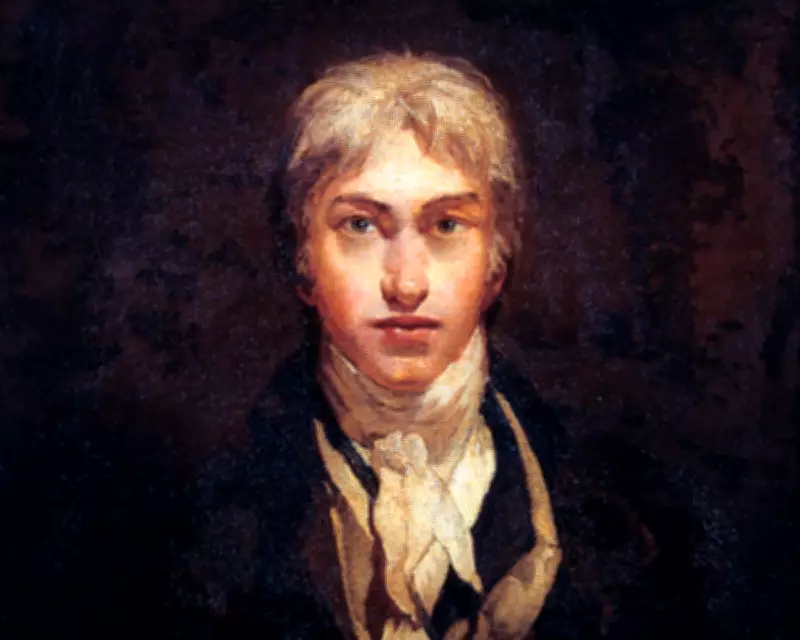
A leading expert has cast doubt on the authenticity of the most famous portrait of English Romantic artist JMW Turner, suggesting it is not a self-portrait but the work of his contemporary, John Opie. The painting, which inspired the depiction on the £20 banknote, has long been considered a self-portrait by Turner, but Dr James Hamilton, a biographer and curator, now believes it was misattributed.
The Portrait in Question
The oil painting, dated around 1799 when Turner was 24, shows the artist in a three-quarter pose with intense, sparkling eyes and tousled hair. It is part of the Turner Bequest at Tate Britain. Hamilton, who has written extensively on Turner, said he initially accepted the attribution in his 1997 book Turner – A Life and even used the image on the cover, but he now admits he “failed to think hard enough about it.”
According to Hamilton, the portrait’s style is inconsistent with Turner’s known work. “There’s nothing else like it in Turner’s work,” he told the Guardian. He points to the “brilliant dexterity” of a master portrait painter, which he believes points to John Opie, a renowned portraitist of the era. Opie was known for painting other artists, including David Wilkie and Thomas Girtin, and often depicted sitters with dramatic lighting emerging from darkness.
Historical Misattribution
Hamilton explains that after Turner’s death in 1851, his will was challenged by his family. The resulting court case awarded the family the money, while the nation received all paintings and sketches from his studio, including those not specifically bequeathed. “They had no way of knowing who the portrait might be by if it wasn’t by Turner, and of course it was too good to lose. So it was lumped in with the rest,” Hamilton said. Early lists referred to it as a “portrait of Turner,” not a “self-portrait,” but over time, the assumption grew that it was by Turner himself.
Stylistic Evidence
Hamilton draws comparisons between the Turner portrait and Opie’s known works, such as a portrait of an unidentified young man at the San Diego Museum of Art. “This has a similar full-face directness as the Turner portrait – sparkly eyes, energetic shadow-play and a curious interest in untidy hair. Indeed, the two portraits are immediately comparable,” he said. He also notes that Opie admired Turner’s talent and may have given the portrait to Turner as a gift, as it had little commercial value to Opie.
Call for Reattribution
Writing in Turner Society News, Hamilton urges the Tate to reattribute the work to Opie. “Turner would not have appeared on the £20 note if there had not been so extraordinarily striking a portrait as this. So, if indeed he did, we should be grateful to Opie for taking Turner on as a sitter,” he argues.
Dr Pieter van der Merwe, chair of the Turner Society, acknowledges that Hamilton has made “a good case for it not being a self-portrait, both on documentary grounds and from a lack of anything similar in his work, and a plausible but only speculative one for Opie.” However, he expects the Tate to maintain its current attribution due to legal implications: the Turner Bequest only comprises works by Turner, and if proven otherwise, it could become a restitution issue.
Not all experts agree. Dr Selby Whittingham, a leading Turner scholar, remains convinced the portrait is correctly attributed. “I don’t think it’s by Opie. Its light tonality is characteristic of Turner’s work,” he said.
A Tate spokesperson responded: “As the home of the Turner Bequest, we always welcome new ideas about Turner’s life and new interpretations of his work. We look forward to exploring James Hamilton’s research further.”