Raghu Rai, the celebrated Indian photographer whose work spanned more than five decades and captured the soul of a nation in transition, has died at the age of 83. His family confirmed his passing on May 4, 2026, in New Delhi.
A Life Behind the Lens
Born on December 18, 1942, in Jhang, now in Pakistan, Rai moved to India after partition. He began his career as a photojournalist for The Statesman in 1965, and soon his images gained international recognition. In 1971, he was invited to join the prestigious Magnum Photos by Henri Cartier-Bresson, becoming one of the first Indian photographers to do so.
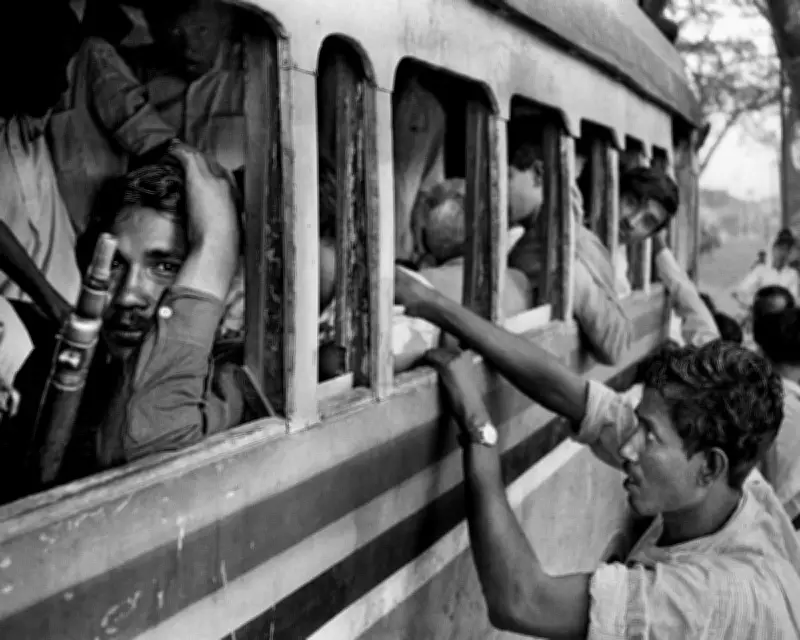
Rai's work covered a vast range of subjects, from political upheavals and natural disasters to intimate portraits of daily life. He photographed Indira Gandhi, Mother Teresa, and the Dalai Lama, but also focused on the marginalized and the poor, highlighting social injustices with empathy and dignity.
Iconic Works
Among his most famous images is that of a young boy selling newspapers during a flood in Kolkata, which became a symbol of resilience. His series on the Bhopal gas tragedy in 1984 remains a haunting documentation of one of the world's worst industrial disasters. Rai's book The Indians (1996) is considered a classic, offering a nuanced portrait of Indian society.
Recognition and Legacy
Rai received numerous awards, including the Padma Shri in 1972, India's fourth-highest civilian honor. He was also awarded the Photographer of the Year by the World Press Photo in 1976. His work has been exhibited globally, and he continued to mentor young photographers until his final years.
Colleagues remember him as a gentle giant who believed in the power of photography to evoke change. "Raghu Rai was more than a photographer; he was a storyteller who used light and shadow to reveal the truth," said fellow photographer Pablo Bartholomew.
Rai is survived by his wife, two daughters, and a son. His legacy endures through his vast archive, which will be preserved at the Alkazi Foundation for the Arts in New Delhi.