The Curator Who Championed the People's Story
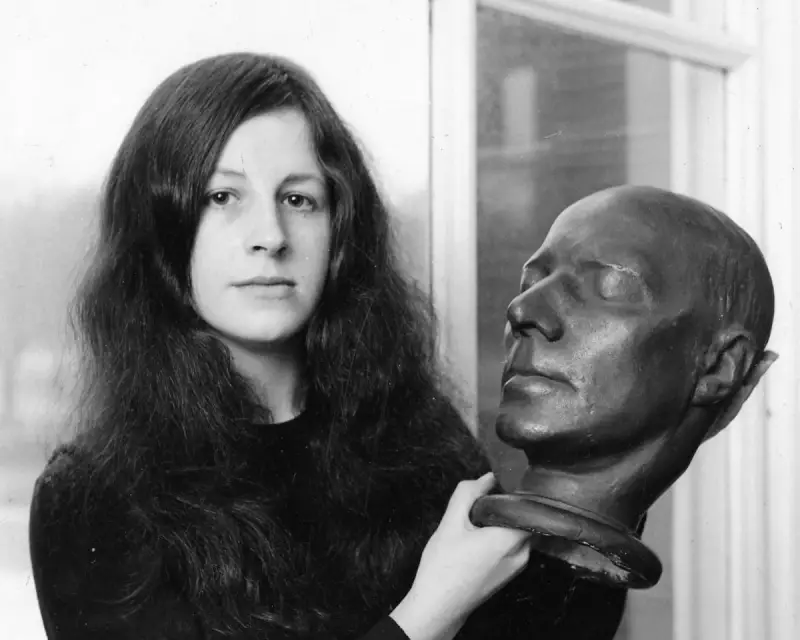
Elspeth King, a transformative figure in Scottish museum culture, has died at the age of 76. As the curator of Glasgow's People's Palace from 1974 to 1990, she fundamentally reshaped the institution, arguing that the everyday lives of working people deserved the same meticulous preservation as fine art or aristocratic artefacts.
Breathing New Life into the People's Palace
When King arrived at the People's Palace, the museum, founded in 1898 for Glasgow's East End, had become a fading institution with dusty display cases and declining visitor numbers. Over her 16-year tenure, she injected it with new energy and a clear vision: the city's story should be told through its own people. She curated more than 40 exhibitions, many developed directly with local communities.
Her 1979 exhibition, Scotland Sober and Free, commemorating the 150th anniversary of the temperance movement, attracted record-breaking audiences. In 1981, she collaborated with her partner and colleague, Michael Donnelly, an expert in Scottish stained glass, on a show that advanced research into Glasgow's pivotal role in the craft, rescuing threatened works and establishing a significant permanent collection.
Controversy and Lasting Legacy
King was never afraid of controversy. One of her earliest and most debated successes was the acquisition of Billy Connolly's iconic 'banana boots', designed by pop artist Edmund Smith. While some critics protested that the comedian's reputation had no place in a museum, King stood firm, arguing they captured the city's irreverent spirit. The boots became a permanent and beloved exhibit.
Her blend of wit and social conscience was further illustrated when she made her cat, Smudge, the museum's official 'rodent catcher' in 1979 and a member of the GMB union. Politically engaged, she led opposition to a motorway project that threatened the museum's existence in the late 1970s. To bolster her campaign, she commissioned the then little-known artist Alasdair Gray to document city life. His Continuous Glasgow Show in 1978 gave the museum fresh impetus and is credited with helping save it from closure.
Under her leadership, the People's Palace won European Museum of the Year in 1981 and British Museum of the Year in 1983. However, her outspoken advocacy for community-based culture often put her at odds with Glasgow City Council. She left the People's Palace in 1990 after being passed over for promotion to Keeper of Social History.
A Lifelong Commitment to Scotland's Hidden Histories
King's work extended far beyond a single museum. She became director of the Dunfermline Heritage Trust, overseeing the restoration of Abbot House, and in 1994 commissioned Alasdair Gray to paint a vast thistle ceiling mural. That same year, she was appointed director of the Stirling Smith Art Gallery and Museum, where she remained for 24 years, once again appointing her cat Smudge to official duties.
Perhaps one of her most profound contributions was to the recovery of Scotland's feminist history. From the 1970s, she meticulously researched the Scottish suffrage movement, unearthing the stories of women like Helen Crawfurd, Ethel Moorhead, Frances Parker, and Janie Allan, who had been largely forgotten. Through exhibitions, lectures, and publications, she demonstrated that Scotland's fight for the vote was as fierce and imaginative as the campaign in England.
Born in Lochore, Fife, in 1949, the daughter of a miner, King studied medieval history at the University of St Andrews and gained a postgraduate degree in museum studies from Leicester University. She was awarded an honorary doctorate from the University of Stirling in 2005. Elspeth King is survived by her partner, Michael Donnelly. Her life's work proved that museums could be dynamic spaces of civic pride and shared memory, ensuring that Scotland's history truly belongs to everyone.