Five travel writers share how classic novels inspired their journeys to Istanbul, the Yukon, the Côte d'Azur, Kyrgyzstan, and Cornwall, each finding the essence of the book in the real-world setting.
Istanbul: Agatha Christie's Murder on the Orient Express
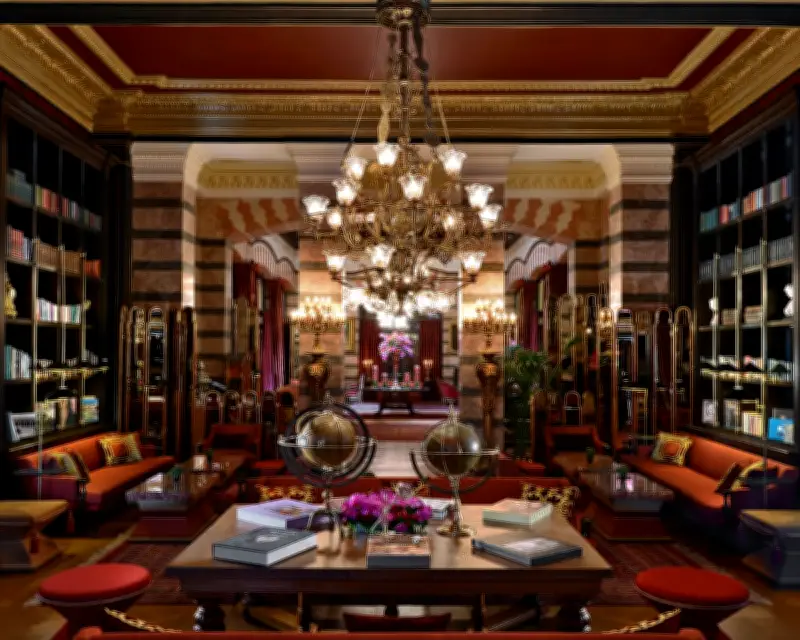
Marcel Theroux visited Istanbul because of Agatha Christie's Murder on the Orient Express, despite the city's fleeting appearance in the novel. He notes that Christie's spare descriptions are part of her charm, and the city's importance is easy to miss. Christie's first trip to Istanbul was a landmark after her first marriage ended, and she often stayed at the Pera Palace Hotel, where suite 411 is named in her honour.
The Tokatlian Hotel, mentioned in the novel's second chapter, still stands on İstiklal Avenue, though it now houses shops and offices. Theroux describes sneaking in for an underwhelming wander, but the building's facade remains intact. Christie herself spent her first nights in Istanbul there, and the nearby restaurant Rejans, now Istanbul 1924, still serves Russian-inspired food.

Yukon and Alaska: Jack London's The Call of the Wild
Adam Weymouth came to Jack London through his English teacher and was captivated by the Yukon. He spent five months paddling the 2,000-mile Yukon River, from its source in the Pelly Mountains. Rereading the book, place names like Five Fingers and Little Salmon became familiar, and he visited London's cabin in Dawson, where London spent fewer than nine months, mostly ill with scurvy.
Weymouth acknowledges London's fantasy of the Northland, but also notes the absence of Indigenous people in the narrative. Meeting the Tr'ondëk Hwëch'in and Tlingit tribes gave him a clearer perspective, yet he still felt the lure of the place. He quotes Edward Abbey's gratitude that Alaska exists, even if he never goes there.
South of France: Françoise Sagan's Bonjour Tristesse
Elaine Kingett, a bored 15-year-old in Basingstoke in 1964, was transported by Sagan's 1954 novella Bonjour Tristesse. She dreamed of being French, sitting in Paris cafes, and staying in a white-walled villa on the Côte d'Azur. By 1969, she was in Paris with an artist boyfriend, marvelling at the sophistication and the proper ways of French life.
In 1971, she finally reached the Côte d'Azur, finding heat, sunlight, and the liberation she craved. In 1979, she and her husband stayed in a villa in Cap d'Antibes, where she conceived her first child after dinner at the Hotel du Cap-Eden-Roc. She still dreams of writing her own hedonistic novel.
Kyrgyzstan: Chinghiz Aitmatov's The White Ship
Caroline Eden first wanted to visit Issyk-Kul after reading Aitmatov's The White Ship, a fable about a lonely boy who dreams of becoming a fish. The lake, the world's second largest mountain lake, is central to the story. In 2011, she finally dipped her toes in its frigid water and met a Russian woman who praised the lake's health-giving properties.
Eden visited Rukh Ordo, an open-air museum dedicated to Aitmatov after his death in 2008. She found a statue of him and had her photograph taken, a personal tribute to Kyrgyzstan's beloved literary son. The lake offered simple pleasures, with a backdrop of the Tian Shan mountains.
Cornwall: Daphne du Maurier's Frenchman's Creek
Lois Pryce first read Frenchman's Creek as a teen and was swept up in the adventure of Lady Dona St Columb. The novel's immersive setting, a mysterious Cornwall, bore no resemblance to her childhood holidays. The real Frenchman's Creek, 15 miles south of Falmouth, is now owned by the National Trust and remains largely unchanged.
A 3.8-mile circular walk from Helford follows the creek, and a Landmark Trust holiday cottage at its head offers a remote retreat with no wifi. Du Maurier's subversive female characters and themes of female lust were controversial in 1941, but Pryce finds them refreshingly unapologetic. She encourages readers to ask themselves, "What would Dona do?"