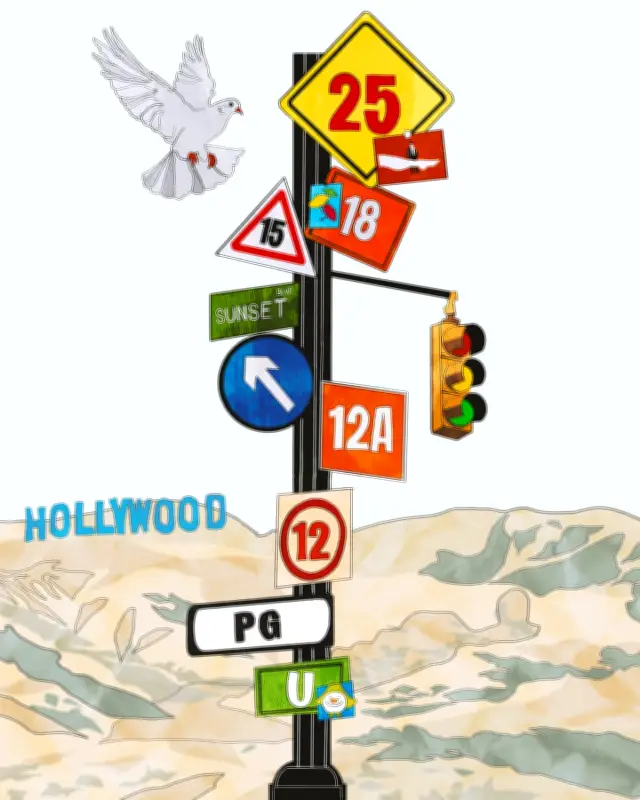
In an era dominated by AI-generated content and endless doom-scrolling, the need for carefully chosen, meaningful cinema has never been more pressing. To counter the digital noise, a collective of filmmakers, critics, and industry professionals has curated a list of 25 films, each selected for a specific age, from infancy to age 25. This list serves as a cinematic guide for parents and young adults, offering a diverse range of stories that entertain, provoke thought, and foster imagination.
The Early Years: Sparking Wonder (Ages 1-5)
For the youngest viewers, the emphasis is on visual and auditory stimulation that captivates and delights. Tom Nicoll, director, recommends Disney's Fantasia (1940), a film that merges music and animation into a visceral experience. Nicoll, expecting his first child, hopes to share this early memory of dancing ostriches and Mickey Mouse, calling it "truly visceral and joyous cinema."
Michael Leader, author of The Animation Atlas, champions The Snowman (1982), a dreamlike tale with crayon textures. He notes how the Snowman expands young James's horizons, soaring over the Sussex countryside, leaving the magic to linger even after the snow melts.

For a different tone, director Imran Perretta selects Hayao Miyazaki's My Neighbour Totoro (1988), a meditative film about illness, grief, and nature. Perretta observed his three-year-old daughter being "totally mesmerised," praising its shift from typical American fare.
Michelle Carey, founder of Red Balloon alliance, picks Muppets Take Manhattan (1984), directed by Frank Oz. She highlights the film's lessons on hardship and life, filled with laughs and cameos, including Joan Rivers's makeover of Miss Piggy, calling it a deserving entry in 1980s New York City films.
Briony Hanson, director of film at the British Council, chooses Chicken Run (2000) for five-year-olds, a stop-motion masterclass. Drawing on second world war adventure films, it's a tale of chickens dreaming of freedom, filled with slapstick and gags for all ages, wrapping a message about the fundamental right to freedom. Hanson describes it as "The Great Escape – with chickens."
Growing Imaginations: Ages 6-10
As children grow, films can expand their understanding of the world. Director Prano Bailey-Bond credits The Wizard of Oz (1939) with changing her life at age six, calling it a visual delight that expands imaginations.
Naqqash Khalid, director, offers a modern take with Scooby-Doo (2002), which he calls "pure pop spectacle." Rewatching as an adult, he sees it as an autopsy of the American project post-9/11, an examination of gender relations, and a deep exploration of friendship under late capitalism.
Alex Larman, author of Lazarus: The Second Coming of David Bowie, selects Labyrinth (1986), featuring David Bowie as Jareth the Goblin King, a charming fantasy adventure where Jennifer Connelly's Sarah undertakes a perilous journey.
Andrew Pulver, associate editor at the Guardian, recommends The Amazing Mr Blunden (1972), a ghost story that introduced him to "exhilarating dread." He suggests the recent remake by Mark Gatiss can serve as a gateway to the original, noting the profound effect it had on him as a child.
Director Julia Jackman picks The Princess Bride (1987), calling it whimsical fun for kids with jokes for grownups that land on rewatch, a perfect comfort film.
Critic Rhianna Dhillon recommends Mulan (1998), praising its songs, romance, and Eddie Murphy's comic brilliance as Mushu. Based on the Chinese legend, it follows a girl who disguises herself as a boy, exploring identity and defiance.
Preteens and Teenagers: Darker Themes and New Perspectives
For preteens, Rebecca Fons, Barbican head of cinema, suggests The Witches (1990), Roald Dahl's dark tale with Anjelica Huston as the Grand High Witch. She notes how young viewers root for Luke and his grandmother, who use cleverness and bravery to triumph.

Director David Osit selects Princess Mononoke (1997), a film about nature and technology. Osit believes a child can grasp its profundity as easily as an adult, noting that in Miyazaki's films, children often achieve wisdom more readily than rigid adults.
Producer Elizabeth Karlsen, who avoided John Hughes films in her youth, was won over by Ferris Bueller's Day Off (1986) through her assistant, finding it "pretty damn funny" despite its un-PC flaws.
Director Edgar Wright vividly remembers seeing Run Lola Run (1998) as a young man, leaving the matinee "fizzing with excitement," desperate to make a movie. He praises its brisk but profound take on how life can change in 20 minutes, propelled by a pulse-quickening techno score.
Director Gareth Tunley admits he was initially resistant to The Umbrellas of Cherbourg (1964), a pastel musical about young lovers, but it "changed" him, teaching a lesson about how disappointing life can be, and is one of the most beautiful films ever made.
Farhana Bhula, director of Film4, recommends Get Out (2017) as the perfect gateway for a young cinephile, so fun you barely notice it's teaching you how to watch.
Young Adulthood: Provocative and Thought-Provoking (Ages 18-25)
Director Ken Loach offers a powerful double bill: Gaza: Doctors Under Attack (2025) and Louis Theroux: The Settlers (2025). These documentaries depict the genocidal war on Gaza and the ethnic cleansing of the West Bank, with heartbreaking images. Loach quotes Martin Luther King: "The ultimate tragedy is not the oppression and cruelty by the bad people but the silence over that by the good people."
Andrew Macdonald, producer of Trainspotting (1996), reflects on the film's 30-year legacy. He recommends it for those old enough, noting it's screening at the Edinburgh International Film Festival this year.
Co-directors Iain Forsyth and Jane Pollard cite Blue (1993) by Derek Jarman as a manifesto that invited them to question everything. Jarman described it as "an infinite possibility, becoming tangible," a devastating yet hopeful farewell to film-making.
Novelist David Nicholls chooses Cléo from 5 to 7 (1962) for the age of 21, a French New Wave film about a pop star evaluating her life in real time, capturing optimism, transformation, and connection.
Eva Yates, director of BBC Film, selects Do the Right Thing (1989), calling it stylish, dynamic, and urgent, inviting young minds to interrogate community, power, justice, and personal morality.
Director Carol Morley recommends The Girl Chewing Gum (1976), an avant-garde masterpiece by John Smith that wittily interrogates how film constructs meaning through deliberate unreliable narration.
Director Sandi Tan picks Morvern Callar (2002), a film that captures the feeling of being young and adrift, a rite of passage for many, rearranging their entire being.
Finally, Guardian film critic Peter Bradshaw suggests The Graduate (1967) for the quarterlife crisis at 25. He describes it as a dark, existential masterpiece about the burden of irreversible life choices, with Dustin Hoffman's Benjamin and Anne Bancroft's Mrs Robinson, whose subversive sexual politics are funny, alarming, and desperately sad.