Jamaican MP's Patois Speech Sparks Parliamentary Row Over Language and Colonial Legacy
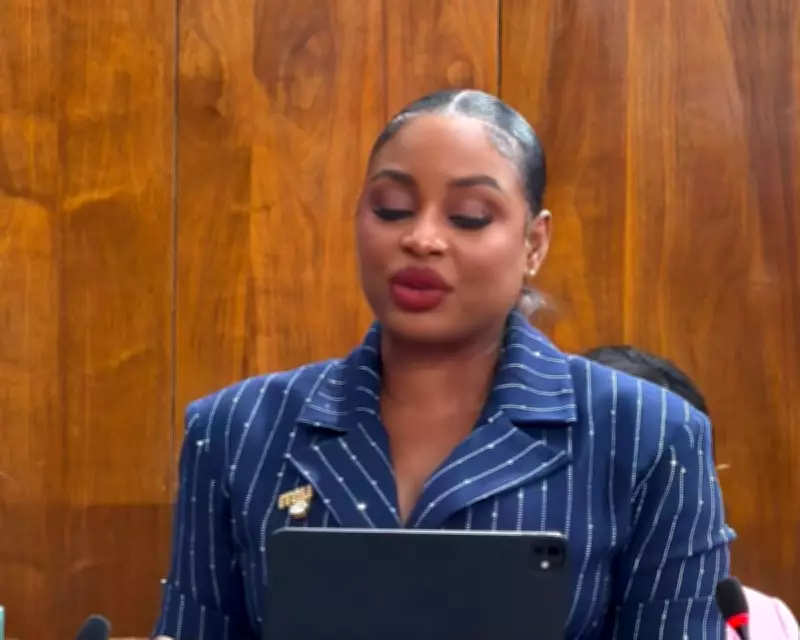
When Jamaican opposition MP Nekeisha Burchell rose to deliver her maiden speech in parliament on May 12, she aimed to highlight the cultural confidence of her nation. However, her attempt to speak in Jamaican, the local language commonly known as Patois, was swiftly cut short by the speaker, reigniting a long-standing debate about language, legitimacy, and postcolonial identity.
Burchell, the opposition spokesperson for culture, creative industries, and information, began her speech with the words: “Madam speaka, mi git up dis afta noon fi mek mi fuss sectoral speech, pan me portfolio …” Speaker Juliet Holness immediately intervened, citing parliamentary standing orders that require all proceedings to be conducted in English. “Hold on, hold on, hold on! Standing orders, and I think you are fully aware,” Holness said, warning that if Burchell continued, she would lose speaking time. The chamber erupted in protest, with some members deriding the language as “broken English.”
Burchell later switched to standard English, remarking: “Madam speaker, perhaps I should abandon that attempt to use our local language because I have been reminded of the linguistic conventions of this honourable house.” She added that there was “no more fitting way to begin a presentation on culture than to speak briefly in the language understood by the overwhelming majority of Jamaican people – even if that language still struggles for full acceptance in some of our most formal national spaces.”
A Clash Over Colonial Echoes
The incident has sparked widespread discussion across Jamaica and beyond, focusing on the enduring legacy of British colonialism. Burchell told the Guardian that her intervention was not meant to be “anti-British” or “anti-English,” but rather about Jamaica’s cultural confidence. “The moment really exposed unresolved tensions around language, legitimacy and postcolonial identity,” she said. She emphasized that the question is not whether parliament should have rules, but whether Jamaicans have become “comfortable with keeping things like the prayer we say before parliament starts every single week … We’re saying these words that we don’t understand. We’re still wearing these wigs and these robes in a hot climate like Jamaica, because we are still keeping these models.”
Marlon Morgan, parliamentary secretary in the Ministry of Education, Skills, Youth and Information, argued that the issue is not about a lack of appreciation for the Jamaican language. He suggested that Burchell could have sought permission to suspend the English-only rule and that any permanent change should be part of a “thoughtful and consultative approach.”
Public Opinion Divided
On the streets of Kingston, opinions are mixed. Attorney Juliette Blake insisted that “rules should govern,” while event project manager Danea Dunkley pointed to examples like Wales and New Zealand, where indigenous languages are allowed in parliament. “It raises the question that every postcolonial society must sit with at some point: whose language is legitimate and what spaces can they be used in?” she said.
Academics have largely supported Burchell’s stand. Professor Carolyn Cooper, a literary scholar, interviewed Burchell entirely in Jamaican on the University of the West Indies (UWI) YouTube platform. “I describe our language as Jamaican. Not Jamaican Patois, not Jamaican Creole, not dialect, none of those. Jamaican! Just like French, Spanish, English, German and any other language,” Cooper said. She noted that many Jamaicans still perceive their language as a “broken version of English, meaning that it’s a corruption – we couldn’t learn it properly, so we twisted it.”
Dr. Joseph Farquharson, coordinator of the Jamaican Language Unit (JLU) at UWI, affirmed that Jamaican “has all of the features, all of the characteristics or properties of a language.” He explained that the language emerged from the interaction between Europeans and West Africans during Atlantic plantation slavery. A 2005 language attitude survey indicated that most Jamaicans recognize Patwa as a language and support making it an official language alongside English. “Nobody has suggested getting rid of English. What is being suggested is that we make a space for the language that most Jamaicans use and understand,” Farquharson said.
Reparations and Cultural Identity
Sonjah Stanley Niaah, director of UWI’s Centre for Reparation Research, described the English-only rule as a “direct legacy of enslavement.” She expressed surprise that in a parliament with intentions to petition the British monarchy regarding whether enslavement was a crime against humanity, such a negative response to the use of Jamaican was upheld. The debate continues to resonate, reflecting deeper questions about language, power, and identity in postcolonial societies.