Unchosen Review: Netflix's Cult Drama Squanders Exceptional Talent
Netflix's latest drama Unchosen represents a significant disappointment, squandering an impressive ensemble cast that includes acclaimed actors Christopher Eccleston and Siobhan Finneran. Despite the promising premise of exploring a Christian splinter sect, the series quickly reveals itself as formulaic television that fails to capitalize on its considerable potential.
A Promising Premise That Quickly Unravels
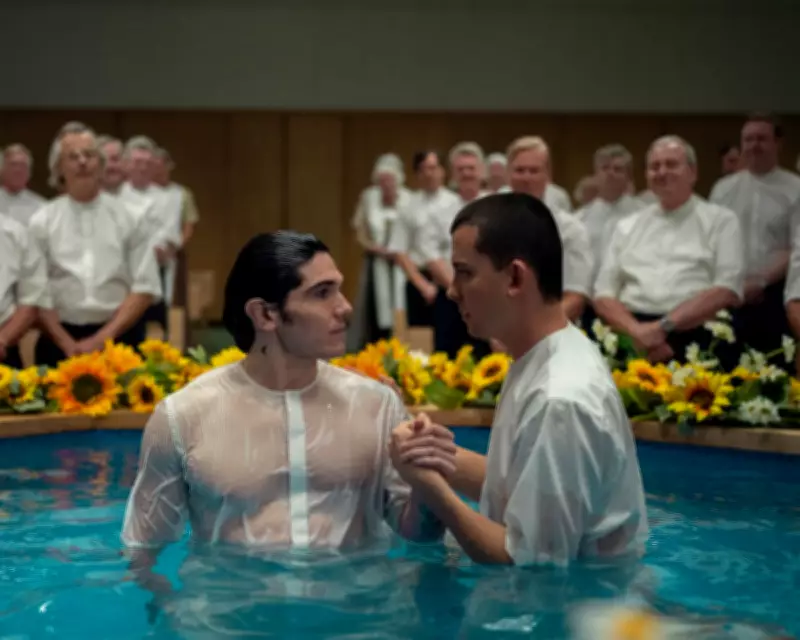
The series introduces viewers to The Fellowship of the Divine, a cult community led by the charismatic Mr. Phillips, portrayed by Christopher Eccleston. From the outset, Eccleston's performance suggests a depth that the script ultimately fails to deliver. The cult maintains strict gender roles where women nurture and obey while men pray and provide, all while maintaining separation from what they term "the unchosen" modern world.
What begins as an intriguing setup quickly devolves into predictable territory. The narrative follows familiar cult drama tropes without adding meaningful innovation or insight. The fundamental question that persists throughout the series is why such talented performers chose to participate in material that rarely rises above workmanlike execution.

Plot Mechanics Over Character Development
The story centers on a pivotal thunderstorm incident that disrupts the community's picnic. Young Grace, a deaf child played by Olivia Pickering, mistakes the storm's noise for the Rapture and flees into nearby woods. Her mother Rosie, portrayed by Molly Windsor, defies cult leader Mr. Phillips' orders and discovers Grace drowning in a pond.
A mysterious stranger, played by Fra Fee, dramatically rescues the child before disappearing. This incident triggers a chain of events that exposes the community's hypocrisies and tensions. The rescue necessitates an emergency phone call, forcing cult member Isaac to reveal his secret smartphone possession—a direct violation of the community's technology ban.
Unconvincing Character Dynamics
Asa Butterfield portrays Adam, Rosie's husband, whose character quickly establishes himself as antagonistic through his disregard for his wife's consent and his willingness to betray family members for personal advancement within the cult hierarchy. His denunciation of his brother Isaac for possessing forbidden technology results in Isaac's punishment and Adam's promotion to Elder status.
Meanwhile, Rosie develops increasingly vivid fantasies about the mysterious rescuer Sam, whose arrival at her doorstep complicates her already strained existence within the cult. Sam's mysterious background, hinted at through flashbacks involving priests, prison, and a fish factory, suggests a complex history that the narrative only superficially explores.
Missed Opportunities and Predictable Progression
Siobhan Finneran delivers one of the series' more nuanced performances as Mrs. Phillips, occupying a space between Nurse Ratched and Mother Superior while nursing her own secret sorrows. Unfortunately, like other characters in the ensemble, her potential remains largely untapped by the conventional script.
The drama progresses through familiar territory as yearnings intensify, power corrupts further, and escape attempts unfold. While these elements could create genuine tension in more capable hands, Unchosen relies on clichéd dialogue and underdeveloped character motivations. The script frequently resorts to platitudes like "Regulations are the word of God. Even when the heart says otherwise," rather than developing authentic character voices.
Final Assessment: Undemanding But Ultimately Unsatisfying
Unchosen functions as undemanding entertainment that requires minimal engagement from viewers. The four-hour runtime passes without significant narrative surprises or character revelations. While competently produced, the series fails to justify its talented cast's involvement or provide compelling reasons for audience investment.
For viewers seeking substantive cult drama or character-driven storytelling, Unchosen represents a missed opportunity. The series demonstrates how even exceptional performers cannot elevate material that remains stubbornly conventional and uninspired throughout its duration.