Gianfranco Rosi Completes Trilogy with Naples Documentary 'Pompei: Below the Clouds'
Award-winning Italian filmmaker Gianfranco Rosi has solidified his reputation as one of Europe's foremost documentary directors with his latest work, Pompei: Below the Clouds. This film concludes a trilogy that began with Sacro GRA, which won the Golden Lion at Venice, and continued with Fire at Sea, a Golden Bear winner at Berlin. Set in Naples, the project offers a stark departure from typical portrayals of the city, focusing on hidden layers beneath its vibrant surface.
Capturing an Alien Naples: Beyond Pizza and Mafia
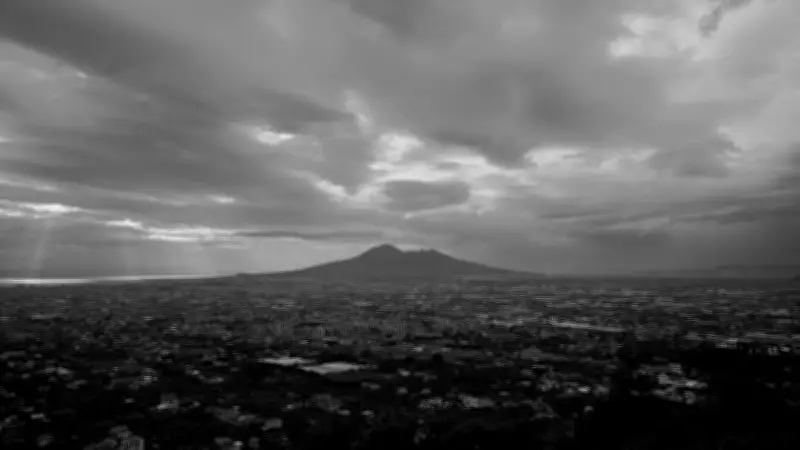
Rosi, who spent four years in Naples, aimed to depict a side of the city rarely seen by tourists or popular media. In an interview, he explained, "I started this film with very little awareness of Naples. I was a tourist in a city that everybody loves, but I tried also to capture a Naples that is not immediately there." Shot in black and white, the film eschews clichés like pizza, mafia lore, and Maradona murals, instead presenting Naples as a frontier settlement on an alien planet, dominated by the ominous presence of Mount Vesuvius and the Campanian volcanic arc.
The extraterrestrial atmosphere is enhanced by an innovative saxophone soundtrack from Oscar-winning composer Daniel Blumberg, who created otherworldly sounds by playing through an underwater speaker and re-recording on Naples' beaches. Much of the film unfolds in the control room of the Naples fire brigade, where residents call in panic or curiosity about seismic tremors, asking questions like, "Was that an earthquake? Will there be another one?"
Psychogeography and Human Devotion in a City on Edge
Rosi's approach aligns with British psychogeographers like Iain Sinclair, delving into the psychological states of Naples' inhabitants. The film features characters such as Titti, a street teacher instructing pupils from his antiques shop; Maria, a conservator at the National Archaeological Museum; Japanese archaeologists excavating the Villa Augustea; and a Syrian ship captain transporting Ukrainian grain. Rosi emphasizes that none of these encounters are staged, blurring the line between documentary and fiction without fabrication.
Throughout the film, themes of poverty, violence, and war emerge, reflecting a city in constant tension. Titti teaches Victor Hugo's Les Misérables while firefighters battle blazes set by disaffected youth, and a woman calls emergency services from a bathroom to escape a drunken husband. Rosi describes this as an oxymoron: "There's a constant sense of a tragedy, but also a sense that the tragedy has already passed and we lived through it without realising what was happening."
Vesuvius as Myth and the Power of Secular Devotion
For Rosi, Vesuvius became a mythical figure, akin to Shiva—both destroyer and regenerator. He notes, "The volcano destroyed Pompeii, destroyed 3,000 years of history, but also preserved it under the ashes." This duality mirrors the film's exploration of human resilience. In editing, Rosi realized that all characters share a sense of devotion, giving themselves to others in acts of secular faith.
A poignant moment features a Japanese archaeologist explaining how Naples' port historically spread grain to prevent wars, followed by the Syrian captain vowing to return to conflict zones. Rosi concludes, "All the characters in the film have this quality, a kind of secular devotion. I believe that that is where civilisation starts." Pompei: Below the Clouds releases on Mubi on March 27, offering a profound meditation on anxiety, empathy, and the unseen layers of urban life.