Animated Adventure Film Brings Islamic Scholars to Life Through Time Travel
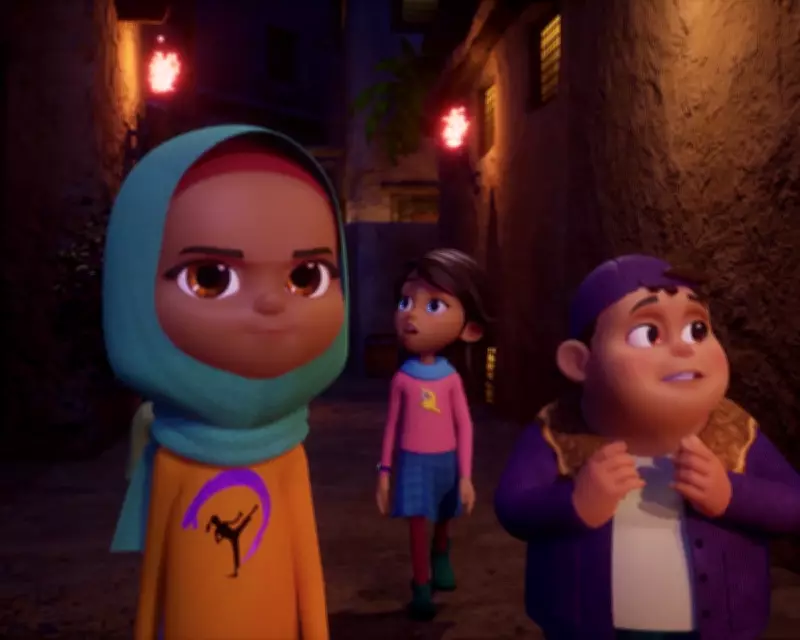
Time Hoppers: The Silk Road represents a groundbreaking animated feature that combines fast-paced adventure with educational storytelling, focusing on the often-overlooked contributions of Islamic scholars to modern science and mathematics. Created by husband-and-wife team Michael Milo and Flordeliza Dayrit from their home in Edmonton, Canada, the film follows four young protagonists who discover a time-travel device and embark on a mission through medieval Islamic civilization.
From Personal Curiosity to Global Cinematic Release
The project began as personal intrigue about the historical Silk Road trade network, which Dayrit describes as something "some people said doesn't exist – that it's a fantasy." This curiosity evolved into a full-length animated feature now showing in UK cinemas, with the film expanding from 200 to 299 theaters following strong audience response. In the United States, the film premiered in 660 theaters with more than 35,000 tickets sold, demonstrating significant commercial viability.
Educational Mission Through Entertainment
"What we're trying to do is make learning about that era fun and interesting," explains Milo. The film's child heroes – Abdullah, Aysha, Khalid, and Layla – accidentally activate a time-travel device in a laboratory, then find themselves pursued by a rogue alchemist who wants to control its power. Their journey takes them across centuries and civilizations where they encounter influential historical figures while protecting them from interference.

The film specifically highlights scholars including:
- Al-Khwarizmi, recognized as the "father of algebra"
- Ibn al-Haytham, a pioneer in optics who explored camera obscura principles
- Mansa Musa, ruler of the Malian empire considered history's wealthiest individual
- Maryam al-Astrulabi, a 10th-century Syrian woman who developed the astrolabe astronomical instrument
"We wanted to showcase that it's not only men that were scholars or scientists – there were also a lot of women who were at the forefront," Dayrit emphasizes.
Addressing Representation Gaps in Children's Media
The film emerges from nearly two decades of work through Muslim Kids TV, a platform the couple founded to create content where Muslim children could see themselves represented. "We've been making content for kids for close to 20 years," Milo notes, "and we knew that Muslim kids are really underrepresented."
Both creators converted to Islam independently in 1995 before marrying the following year, and their personal journeys influenced their creative direction. "For us, it was really important to have a story where, first and foremost, the kids were the heroes," Dayrit explains. This approach connects to broader ideas about representation: "It's not just about visibility, it's also about possibility."
Countering Negative Narratives Through Historical Reframing
The creators specifically designed the film to counter rising Islamophobia and negative media portrayals affecting Muslim children in Europe and North America. "When you're constantly hearing that, in the news and in everyday life, you start to believe that you don't belong in these spaces," Dayrit observes. "It's important for them to know they belong."
The production team worked with researchers to ensure historical accuracy in architecture, costumes, and cultural details, introducing young audiences to a broader range of historical figures than typically appears in school curricula. "They learn about Aristotle or Plato," Milo points out, "but it's equally important that they understand there are other people that have contributed to the world."
From Educational Content to Feature Film
Time Hoppers began as an educational ebook before expanding into a game and an unreleased television series, forming part of a comprehensive educational ecosystem. The film's theatrical release strategy relied heavily on grassroots community engagement, with local champions helping generate excitement and word-of-mouth promotion.
"What we're showing the film industry is that Muslim stories are not niche," Dayrit asserts. "They can be globally relevant and commercially viable." The team is already developing a sequel, building on the film's successful reception.

Broader Vision for Children's Entertainment
While Dayrit acknowledges their long-term goal of becoming "the Disney of the Muslim world," the immediate focus remains on the children watching their film. "We want them to feel proud and feel they can make a difference," she says. The film carries a simple but powerful message that Dayrit shares with young audiences: "Hands are for helping, words are kind, and ideas are brave."
Time Hoppers: The Silk Road represents more than just entertainment – it's a carefully crafted educational tool that makes medieval Islamic history accessible and exciting for children while addressing significant representation gaps in contemporary media. The film's commercial success demonstrates that stories featuring Muslim characters and historical narratives have broad appeal beyond specific religious or cultural communities.