One thing unites the British more than anything else: a deep-seated eccentricity that manifests in the most wonderful ways. From colossal bronze statues to eerie mannequin graveyards, Britain is full of strange and enchanting oddities. Dave Hamilton, author of the new book Weird Guide, has spent years exploring these curiosities and shares 10 of his favourites.
Yoxman, Suffolk
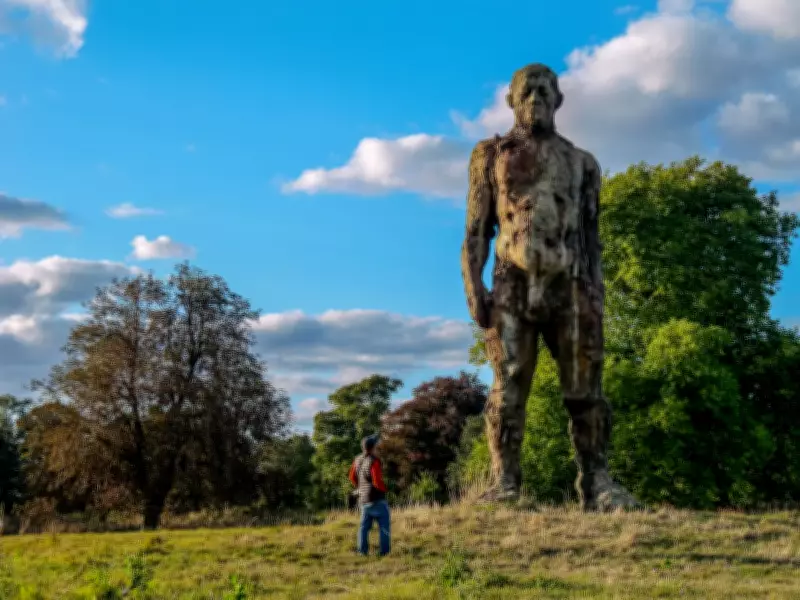
In a field near Yoxford, Suffolk, stands the Yoxman, an 8-metre (26ft) bronze colossus. Created by Laurence Edwards and his team over four years, the figure is a tribute to Suffolk, described by the artist as a visitor from the past. Completed in 2021, it dwarfs even the surrounding trees. To see it, take the path opposite the shop in Yoxford village and follow it through the grounds of the hall.
Little Italy, Gwynedd
The late Mark Bourne, a chicken farmer obsessed with Italy, filled notebooks with sketches of Italian architecture. With his wife, he recreated models of the Leaning Tower of Pisa and Florence's Duomo in their garden on the Corris hillside. Although the garden is private, the buildings are visible from the path. From the Corris Institute, turn left up the hill, then follow a footpath on the right after the youth hostel for about 100 metres.

Mannakin Hall, Lincolnshire
Near Grantham, Mannakin Hall resembles a plastic graveyard. Roz Edwards established it in 2008 to rescue mannequins destined for landfill. With about 15,000 mannequins on site, some dressed in costumes, it is a working business. It is not open for walk-ins, but you can prebook group visits, attend open days, or even stay overnight in a camper van.
White Scar, Yorkshire Dales
On the west side of Ingleborough summit lies White Scar, one of Britain's most remarkable limestone pavements. Formed after the last ice age, millennia of weathering created intricate miniature canyons called grykes. These fissures provide habitats for rare plants typically found in dark woodlands.
The Library, Isle of Arran
Near Levencorroch, the woodland Library is a cabin built by Albert Holmes from storm-felled trees. Its interior resembles a 3D visitors' book, covered with drawings, poems, and messages from around the world, now about 25 layers deep. To visit, pick up a map at Eas Mor Ecology cafe, then follow a steep gravel path to the waterfall and on to the library, a 25-minute walk.
Sultan the Pit Pony, Mid-Glamorgan
On the site of the old Penallta colliery north of Caerphilly, Sultan the Pit Pony is the UK's largest earth sculpture, measuring nearly 200 metres from nose to tail. Built by Mike Petts in the late 1990s using 60,000 tons of coal shale, it honours the thousands of ponies that worked in British mines during the Industrial Revolution. It is close to Parc Penallta Ponds, with wildlife and walking trails.
Painshill Follies, Surrey
In 1738, aristocrat Charles Hamilton transformed his Cobham estate into a garden of art. Among temples and a gothic tower, he created a spectacular grotto with sparkling stalactites made from feldspar and quartz. The park fell into ruin in the 1940s but was acquired by the local authority in the late 1970s. The crystal grotto was restored in 2013, using paintings to replicate the original.
Rock-cut Tombs, Lancashire
At Heysham, eight rock-cut tombs lie beside the remains of an eighth-century chapel dedicated to Saint Patrick. Local legend says Patrick was shipwrecked here, though he is also said to have landed on Anglesey. The tombs are grouped in sets of six and two.
Blackchurch Rock, Devon
Around 320 million years ago, the collision of Gondwana and Laurasia pushed up rocks near Clovelly into the formation now known as Blackchurch Rock. Tidal seas later carved out the great arch. It is a 30-minute walk northwest along the coast path from Clovelly village.
The Tilted Globe, Highlands
Joe Smith, a dry-stone waller since age 11, created The Tilted Globe at Knockan Crag from local moine schist. The area is geologically significant, with ancient rock moved 43 miles west by tectonic action. A short walk from the turf-roofed visitor centre leads to the sculpture.
This is an edited extract from Weird Guide by Dave Hamilton, published by Wild Things Publishing.