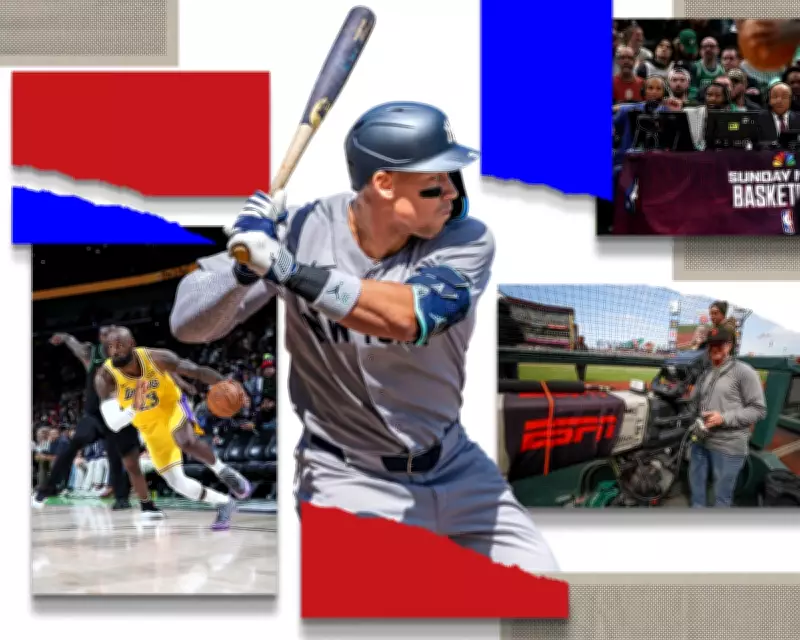
The Streaming Dream Turns into a Costly Maze for Sports Fans
What began as a fan-friendly revolution in sports broadcasting has splintered into a confusing, expensive web of subscriptions, blackouts, and advertisements. A decade ago, it seemed like nirvana was near: fans could access any game on any device, anytime, anywhere, as cord-cutting disrupted traditional cable models. However, the age of abundance has become an era of excess, with too many services offering too many subscriptions for too much money, mutating a clear proposal into complexity and confusion.
Major League Baseball: A Case Study in Fragmentation
This fragmentation is especially evident in Major League Baseball, once the bedrock of regional sports networks on cable TV. This season, seven providers—including traditional broadcasters and Apple TV—carry games nationally, depending on the day. For fans in local markets, the picture is blurry due to old-fashioned blackouts and channel churn as failing regional sports networks restructure at a dizzying rate.
In the New York area, most Yankees games stream on the Gotham Sports App, which costs $119.99 for a Season Pass. However, Amazon’s Prime Video has exclusive local rights to 21 Yankees games, while Netflix broadcast the season-opening game. An all-in Yankees devotee could pay about $800 to access every game this season across 10 networks, according to The Athletic.
Industry Leaders Admit the Problem
Even Apple TV’s boss, Eddy Cue, acknowledges the issue, stating, "We’ve gone backwards. You used to buy one subscription, your cable subscription, and you got pretty much everything they had. Now, there’s so many different subscriptions, so I think that needs to be fixed." MLB commissioner Rob Manfred aims to centralize local rights by 2028, but it’s far from certain the future will be less splintered as clubs and leagues follow the money.
The Broader Landscape: NFL and Beyond
The NFL, the richest and most influential league, has chosen fragmentation as a strategy, showing games on CBS, Fox, NBC, ESPN/ABC, Prime Video, NFL Network, YouTube, and Netflix. This approach allows the league to make extra money by selling additional game packages to streamers. However, it creates a confusing, costly experience for viewers, who must sign up for multiple services and endure intrusive in-game advertisements.
The Impact on Viewers and the Future of Advertising
Watching sports today is hardly the frictionless entertainment experience heralded by the digital age. Viewers face a barrage of ads, from commercial breaks to digital logos on fields. The promise of commercial-free streaming has faded, with streamers hiking subscription costs and offering ad-free premium tiers. This trend is driven by desperation as rights become increasingly expensive and most streaming services remain unprofitable.
Degrading the viewing experience carries risks, as sports are not as essential as industry insiders believe. Jon Lewis, founder of Sports Media Watch, warns, "If you irritate people and make it hard for them to watch, they might fall out of the habit." This is a particular risk for younger generations, who consume media in clips and may not develop the habit of watching full games.
Personalization and the Future of Sports Broadcasting
Despite these challenges, the future holds potential for personalization through AI-directed digital ads and shoppable streaming. Sports deliver loyal fans who are engaged and inclined towards interactivity, such as gambling and impulse buying. For example, after watching a game-winning shot, a deal on a player’s jersey might flash on screen, enabling easy spending via QR codes and notifications.
Companies like Amazon aim to connect the entire consumer journey, offering sports bundles and integrating content with shopping. However, as platforms prioritize profits, the quality of services may decline, a phenomenon termed "enshittification" by writer Cory Doctorow. While one-stop-shops could mitigate this, Lewis cautions against nostalgia, noting that sports broadcasting has always had complexities.
In summary, the streaming dream has turned sports TV into a costly maze, with fans facing high prices and confusion. As the industry evolves, balancing profitability with viewer satisfaction will be crucial to avoid alienating audiences and losing future generations of fans.