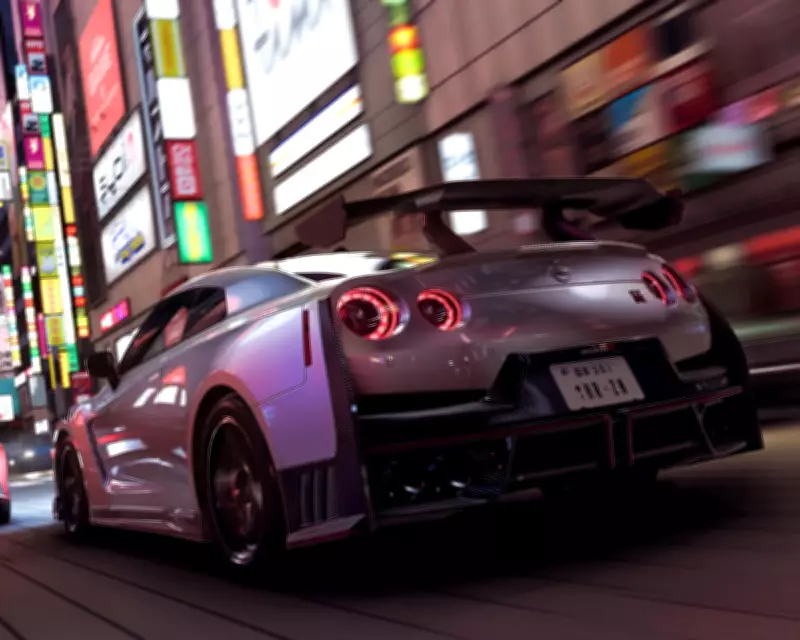
The open-world driving sim Forza Horizon has roared through locations from Colorado to Australia, with its authentic feel resting on exhaustive research. But for the latest installment, the team faced their toughest challenge yet: Japan.
A Long-Awaited Setting
Since the original Forza Horizon in 2012, British developer Playground Games has promised authenticity with its settings. For each game, design teams are sent on location to take thousands of photos, hours of video, and detailed captures of the sky before constructing a virtual copy. Japan, however, remained out of reach for years. Design director Torben Ellert explains: "Japan has been on our shortlist for several games now, but we just didn't feel like we were ready to take on the challenge of building it."
The Challenge of Expectations
Japan's landscape variety is immense, but there's another factor: gamers worldwide hold strong preconceptions of Japan, shaped by games like Persona 4, Shenmue, and Yakuza. Art director Don Arceta notes, "With Japan there's such an expectation of what gamers want – it's a certain version of Japan that they picture." To avoid clichés, Playground moved away from depictions in other games and manga like Initial D. Instead, they hired cultural consultant Kyoko Yamashita, a former Porsche ambassador who worked with the team for three years, advising on everything from traditional store sign colors to racing culture.
Immersive Research with 360-Degree Cameras
The team also collaborated with Kyoto-based bodyshop Rocket Bunny and car culture photographer Larry Chen, who appears in the game and fronted the YouTube documentary series Art of Driving. Ellert says, "Because it's a culture we see a lot, there's a temptation to think you know it better than you do. Which is why we tried really hard to get people to course correct us." This time, research went beyond dashboard GoPros. Arceta explains: "We did the reference photography with 360-degree cameras, which allowed us to capture the whole environment in both 2D and 3D – it was like our own version of Google Maps. That helped us generate how we set dressed the world, but we also had proper scale and dimension."
Capturing Japanese Car Culture
Playground sought to replicate major elements of the Japanese street-racing scene. Iconic cars like the Nissan Skyline, Toyota Supra, and Mazda RX-7 appear, along with narrow winding mountain roads of the touge racing scene. Ellert notes, "We knew we wanted to do a touge experience, but if you get 50 people in a room and ask them to define it, you'd get 50 different descriptions. We're imposing some class restrictions, delivering interesting liveried vehicles, and putting players on super iconic roads such as Hakone Nanamagari or Mount Haruna."
The Largest Map Yet
The Forza Horizon 6 map is the largest so far, a curated amalgam of scenic types. Players can zoom through bamboo forests and rice fields, run close to railway tracks as bullet trains rocket past, and discover little details like roadside temples and pristine vending machines. In the south is a condensed yet sprawling version of Tokyo, featuring Shibuya's bustle, Akihabara's electrical stores, and quaint suburban outskirts. Ellert is particularly proud of the city: "When the preview version was released, a Japanese streamer who worked at Tokyo railway station said it looked really good. For someone who lives there to say 'I recognise this place' suggests we went in the right direction."
A Sacred Car Meet
Arceta adds, "Tokyo is probably one of my favorite areas, specifically Daikoku, because that's basically a church for cars. It's so sacred. Getting that right and capturing that type of car meet was really important."
The Biggest Test Yet
Forza Horizon 6 releases on May 19. With the era of open-world racers like The Crew and Burnout Paradise mostly passed, Horizon remains. Japan represents its biggest test yet, but the team's dedication to authenticity suggests they may have passed.