Guernica's Political Turmoil: Picasso's Anti-War Masterpiece Sparks Spanish Feud
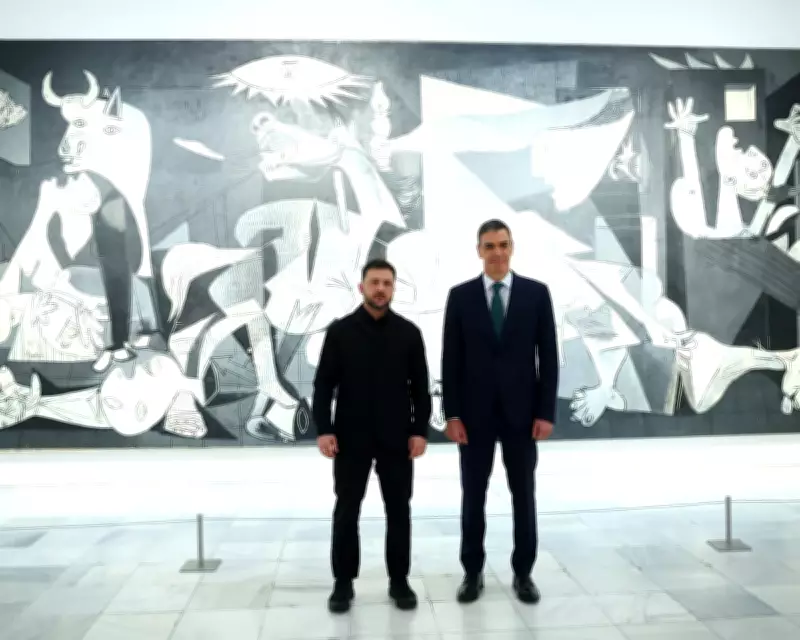
In a poignant moment captured in Madrid on 18 November 2025, Ukrainian president Volodymyr Zelenskyy stood with Spanish prime minister Pedro Sánchez before Pablo Picasso's Guernica, a painting that has long served as a universal cry against the atrocities of war. This iconic artwork, depicting the 1937 bombing of the Basque town of Gernika during the Spanish Civil War, remains a powerful emblem of civilian suffering, yet it finds itself once again at the heart of Spain's partisan political squabbles.
A Symbolic Return and Renewed Controversy
Forty-five years after its celebrated return from exile in New York, where it had been housed at the Museum of Modern Art since the Franco era, Guernica is embroiled in fresh controversy. Every September, Spain commemorates the flight that brought the masterpiece home in 1981, marking a key moment in the country's democratic transition. Picasso intended the painting as a stark reminder of war's brutality, hoping it would become obsolete in a peaceful world. However, with ongoing conflicts in the Middle East and Europe, its message resonates more strongly than ever, transcending borders to become a global icon of aerial bombardment's horrors.
In Spain, though, this cultural treasure has devolved into a petty political battleground. Basque Country president Imanol Pradales, representing the conservative Basque Nationalist party (PNV), has formally requested that Guernica be temporarily transferred from Madrid's Reina Sofía museum to Bilbao's Guggenheim Museum. This move, proposed for a special exhibition next year commemorating the 90th anniversary of the Gernika bombing, is framed as a gesture of "reparation for the Basque people."
Conservation Concerns and Political Maneuvering
The Spanish government, led by prime minister Pedro Sánchez, has rejected this appeal on conservation grounds, citing advice from gallery experts who warn against further moves due to the painting's fragile state. Over the decades, Guernica has suffered from discoloration, dents, and fractures from extensive travel, including loans to exhibitions worldwide from Milan to Chicago. Culture minister Ernest Urtasun, from the leftist coalition partner Sumar, emphasized the duty to safeguard this vital piece of heritage, stating that ensuring its longevity for future generations is the best way to honor the anniversary.
Conservatives in Spain have seized the opportunity to attack Basque nationalism, with Madrid region president Isabel Díaz Ayuso dismissing the transfer request with derogatory language. This political infighting threatens to overshadow the painting's universal message, reducing it to a tool in regional disputes.
Guernica's Enduring Legacy and Universal Power
Picasso created Guernica in just over a month in 1937, inspired by newspaper reports of the Luftwaffe and Francoist forces bombing civilians. Initially used as a political tool to rally support against fascism in Europe and the US, it later became a symbol at the United Nations, where a tapestry reproduction hangs at the Security Council entrance. The painting's monochrome palette and textured style pay tribute to the free press, highlighting how Picasso learned of the atrocity through international media.
Today, Guernica is displayed in an open, luminous space at the Reina Sofía, a stark contrast to its earlier presentation behind bulletproof glass during Spain's fragile democratic years. Visitors can now photograph it freely, reflecting a more relaxed era. Yet, its power lies in its specificity—the memory of Gernika's suffering—which grants it universal relevance, as evidenced by Zelenskyy's visit and references in speeches on modern warfare.
As Spain debates Guernica's location, the painting continues to convey the horrors of war and civilian agony, remaining tragically pertinent in today's conflict-ridden world. It deserves to be celebrated for its artistic and humanitarian value, not mired in partisan disputes that detract from its profound message.