The Rise of the Female Gaze in Contemporary Culture
In today's entertainment landscape, a powerful shift is underway. From the passionate pages of romantasy bestsellers to premium television dramas, culture is increasingly bringing the agency, desires, and complex interior lives of women to the forefront. This movement, known as the female gaze, represents storytelling that highlights the textured, meandering, and sublimely messy inner worlds of women. What began as a niche concept has exploded into mainstream consciousness, proving not just artistically significant but commercially lucrative.
From Guilty Pleasure to Cultural Zeitgeist
The portrayal of internalized female perspectives—and crucially, female desires—has transformed from guilty pleasure to the center of contemporary zeitgeist. Across television screens, this evolution is visible everywhere. Shows like Big Little Lies, Sirens, and Little Fires Everywhere have taken up the mantle of exploring women's interior lives with unprecedented depth. Meanwhile, the romantasy genre has embraced this approach through powerful female protagonists navigating fairy realms and explicit sexual encounters.
This cultural shift represents more than just a moment—it's becoming a commercial juggernaut. The idea of centering women's subjectivity, rather than objectivity, has gained remarkable visibility across the cultural canon. Emerald Fennell's adaptations, including her box office-topping version of Wuthering Heights, filter traditional narratives through female-centric psychological and erotic lenses, while romantasy has generated billions of TikTok views and driven publishers to record sales.
Challenging the Male Gaze Tradition
The emergent body of pop culture actively challenges society's conditioning to experience women's lives through the lens of male storytellers. Coined in 1973 by film theorist Laura Mulvey, the concept of the male gaze explains how women in visual media, art, and literature have historically been reduced to objects of desire as viewed by heterosexual men. While subversion of this perspective isn't new in arthouse cinema—with landmark works like Jane Campion's The Piano and Céline Sciamma's Portrait of a Lady on Fire—mainstream acceptance has taken decades to achieve.
Today, however, the female gaze is finally making significant commercial impact. Romantasy alone has buoyed publishers to approximately $610 million in annual sales during 2024, while generating unprecedented engagement on platforms like BookTok, where discussions of romance, world-building, and sexual content draw emotionally invested users in massive numbers.
Representing Female Desire in 2026
One of the most compelling examples of the burgeoning female gaze on screen is the nine-time Emmy-nominated series Dying for Sex. This groundbreaking show centers on Molly Kochan, portrayed by Michelle Williams, who experiences an end-of-life sexual awakening while battling metastatic breast cancer. The series explores taboo subjects with remarkable honesty, including women's experiences of illness intertwined with desire for pleasure.
Shannon Murphy, who directed and executive produced the series, explains her approach: "I'm drawn to projects that are less A+B=C. I like something more meandering, holistic, which I do think goes with the feminine brain." Murphy notes a distinctive quality in female storytelling—a "grey area" that's "in some ways less judgmental" compared to more "obvious" male depictions. She believes that telling more stories from this perspective will culturally help society move beyond black-and-white thinking.
Mainstream Success and Commercial Validation
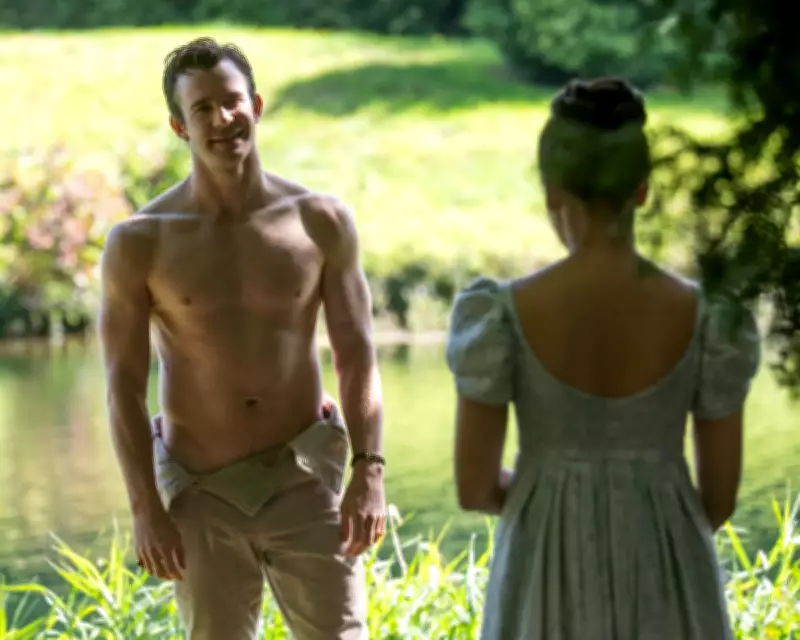
The success of female-focused narratives has provided undeniable commercial validation for studios and publishers. Shonda Rhimes' television empire, from Grey's Anatomy to the lustfully successful Bridgerton—among Netflix's most-watched shows ever—has demonstrated the financial viability of female perspectives. Similarly, Heated Rivalry, this year's raunchy gay ice-hockey drama, garnered massive female followings by framing slow-burn intimacy in emotionally resonant ways.
Iris Brey, author of The Female Gaze: A Revolution on Screen, observes that these successes prove "women can bring money to the industry; they're telling studios we can have bigger budgets and ambition." Brey emphasizes that the most subversive works are those that don't center on whether male characters love female characters, but instead show women discussing topics beyond men.
The Centrality of Female Friendship
Murphy argues that female friendship represents one of the most important relationships in this ascendant era for the female gaze. "We've got so many films which are almost all male cast, male friendships, male stories but we still really don't have many that authentically portray that female connection," she notes. "As a result, for a long time people didn't really understand the potency of it and just how deep a love affair it can be."
This focus on authentic female relationships marks a significant departure from traditional narratives that often position women in competition with one another or define them primarily through their relationships with men.
Challenges and Future Directions
Despite significant progress, challenges remain in sustaining this cultural shift. Brey tracks the prevalence of the female gaze alongside societal movements, noting that after #MeToo, many in power positions became more willing to invest in female perspectives. However, she warns of potential "receding moments" on the horizon, pointing to difficulties in funding and distributing complex female stories.
The film The Chronology of Water, directed by Kristen Stewart and based on Lidia Yuknavitch's 2011 memoir, spent eight years in development before being shot outside the United States, illustrating the ongoing challenges for projects that tackle difficult aspects of female experience. Brey notes that while progress has been dramatic, "we are deprived of representation and narratives that could really change the way we view relationships and love."
Romantasy's Transformative Impact
The romantasy genre has played a particularly transformative role in altering how female worlds are received in popular culture. Jennifer L. Armentrout, author of the internationally bestselling From Blood and Ash series, explains how the genre has changed expectations: "You never really saw female characters represented in any way where you felt safe, thinking they're going to be here in the end and not have to give up their sense of identity to do so."
Armentrout credits BookTok with "removing the guilty pleasure" from consuming these narratives, allowing readers to immerse themselves in textured worlds navigated by complex heroines. These stories frequently address serious real-life issues—from handling depression to assault—making them remarkably relatable despite their fantastical settings.
Romantic setups in these narratives vary widely, encompassing female-male, female-female, and male-male relationships, yet they consistently emphasize equality by series conclusions. "Women don't want to see the significant other being steamrollered over," Armentrout observes, highlighting how these stories reframe traditional conquest tropes.
Toward a Sustainable Cultural Shift
As the female gaze continues to gain prominence, creators like Murphy find themselves navigating an industry still grappling with gender dynamics. She has participated in panels where "male directors get to talk about the work and creative process and here we are talking about being women." True progress, she suggests, would mean reaching a point where the female gaze is simply normalized rather than treated as exceptional.
"I'm never making work for women more than men," Murphy clarifies. "But, of course, as a woman, I'm very proud that the work is accessing feelings and thoughts for women that they haven't seen as much of. I do think that's something that just has to keep happening."
The explosion of the female gaze across film, television, and fiction represents more than a passing trend—it signals a fundamental reorientation of how culture represents women's experiences. From challenging the male gaze tradition to celebrating female friendship and desire, this movement continues to reshape entertainment while proving that centering women's perspectives is both artistically rich and commercially viable. As this revolution unfolds, the question remains whether it will become a permanent fixture of our cultural landscape or face the cyclical challenges that have historically confronted feminist advances in the arts.