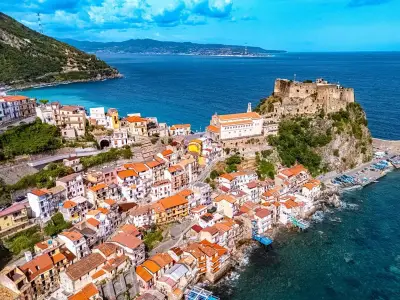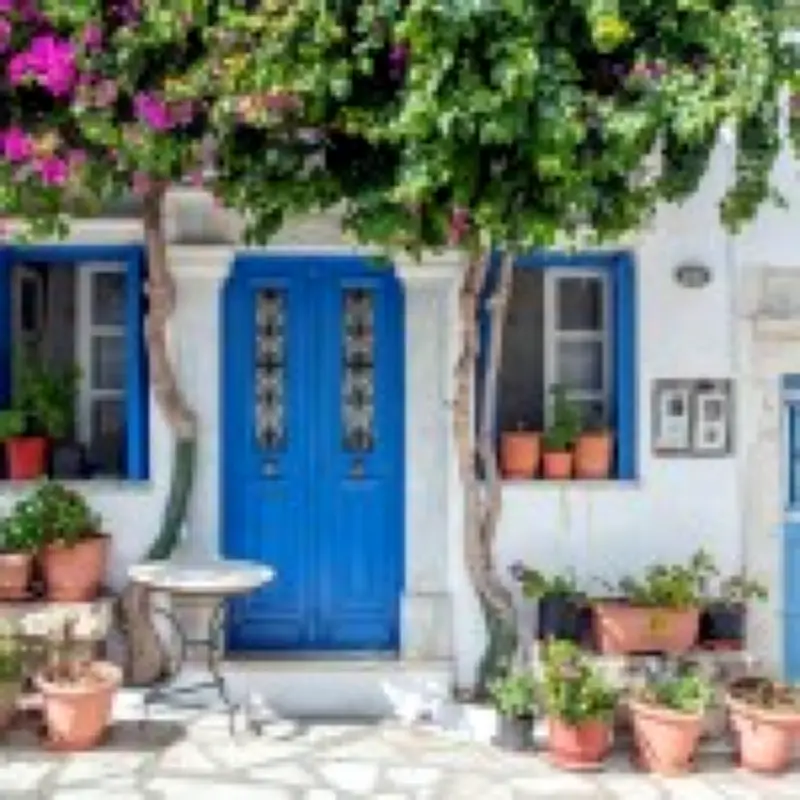
British travel consultant Duncan Greenfield-Turk, with 30 years of experience, has visited 14 Greek islands over the past two decades. Despite exploring Athens and the Peloponnese recently, he maintains that Tinos, just 30 minutes by boat from Mykonos, is the lesser-known island that most rewards the effort of getting there.
What makes Tinos stand out
Greenfield-Turk describes Tinos as still relatively undiscovered, featuring elegant Venetian-influenced architecture, a living tradition of marble carving in working ateliers, and a landscape of granite hills, dovecotes, and charming villages unchanged for generations. The island was once a centre of worship for Poseidon, and in 1823, a famous shrine to the Virgin Mary was established in the main town, now housed in the grand Orthodox church Panagia Megalochari, adorned with red satin like an Edwardian wedding cake. Pilgrims visit year-round for the Church of Panagia Evangelistria, some crawling on their knees from the ferry along a carpet leading to the church.
Food and atmosphere
Tinos has quietly become one of the most exciting food destinations in the Aegean, with restaurants focusing on local ingredients. Visitors see chefs hanging octopus tentacles to dry outside tavernas and plates being smashed through doors. Greenfield-Turk notes that the island has not yet reached the point where the experience has been 'managed away.' People who long owned homes on Mykonos are selling up and relocating to Tinos for its slower pace of life.
How to get there and where to stay
From the UK, the most elegant route is a direct flight to Mykonos from London Gatwick or Luton with easyJet, or from Heathrow with British Airways, followed by a high-speed ferry. A cheaper but more arduous alternative is flying direct to Athens from airports including Heathrow, Gatwick, Stansted, Luton, Manchester, Edinburgh, and Bristol, then taking a five-hour ferry from Piraeus. Accommodation options include Odera, a five-star Autograph Collection hotel in a converted neoclassical mansion with a pool and harbour views; Pnoēs Tinos, a three-villa property in the hills with a quiet atmosphere; and Under the Sun Cycladic Village, a four-star villa-style property that blends into the landscape.
Other island recommendations
If Tinos does not appeal, Greenfield-Turk suggests Ikaria, a Blue Zone island in the northern Aegean with nocturnal villages, panigiri festivals that start after midnight, and geothermal springs flowing into rock pools. He also recommends Milos, positioned as Santorini's successor; Porto Heli, a deep-water marina in the Peloponnese with a turquoise bay and minimal tourist infrastructure; Hydra, a neoclassical harbour town and birthplace of five Greek prime ministers; Dokos, with one of the oldest known shipwrecks in its waters; Ermioni, a mainland port town with an authentic fishing village feel; and Nafplio, accessible as a day excursion from the Argolic Gulf. Greenfield-Turk is the founder of luxury travel studio Global Travel Moments and specialises in journeys for queer travellers and allies.