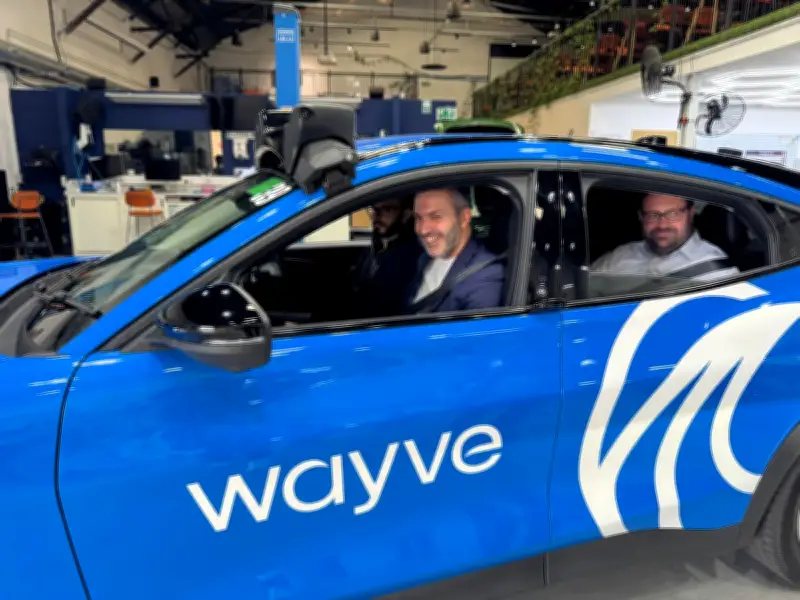
London is set to become the first city in the world to use Wayve's autonomous driving technology for commercial journeys, after Transport for London (TfL) awarded private hire vehicle (PHV) licences to a fleet of self-driving Ubers. The vehicles, pure electric Ford Mustang Mach-Es modified by technology company Wayve, will initially operate with a human driver behind the wheel ready to take control, while the technology is demonstrated to be safe.
Licence granted to Wayve's autonomous fleet
Wayve confirmed that TfL has issued PHV licences to a number of its autonomous vehicles. Uber said that some of the 100,000 people who signed up to express interest in experiencing robotaxis will be offered rides “later this summer”, ahead of a full public launch. The move marks a significant step for autonomous ride-hailing in the UK capital.
Sarah Gates, Wayve's vice president for global affairs and assurance, said: “This licence is an important step towards giving Londoners the chance to experience autonomous driving technology. The responsible deployment of these vehicles will bring us safer, cleaner and quieter streets, and we’re proud to continue working alongside regulators, communities and the public as we take the next steps towards making autonomous rides a reality in the capital.”
Uber's response and safety measures
Annie Duvnjak, Uber's global head of autonomous mobility operations, said: “This licence is a key milestone in bringing autonomous rides to London on Uber. Our interest list has seen an incredible response from Londoners who are excited to experience Wayve’s British-built autonomous driving technology.”
A TfL spokesperson said safety is its “top priority” and any new vehicle licensed to carry passengers in London must align with its target of eliminating all deaths and serious injuries on London’s roads by 2041. Wayve’s modifications to the Mustang Mach-E, including its six cameras, were assessed by experts and found “they do not compromise passenger safety”, the spokesperson added.
Regulatory framework and driver requirements
Under the terms of a PHV licence, a qualified driver must be present and remain responsible for the car. Uber and Wayve will need separate approval from the Driver and Vehicle Standards Agency (DVSA) if they want to operate the cars without a driver. Wayve was founded in 2017 by two University of Cambridge PhD students and is also working with car manufacturers such as Nissan and Stellantis to deploy its systems in private vehicles.
Concerns over devolved powers
The announcement comes amid concerns from senior London Assembly members that the government is overstepping its authority. Caroline Russell, who chairs the London Assembly Transport Committee, said ministers must hand over full control of driverless taxi trials to TfL. She told MyLondon's Inside City Hall podcast: “The regulation of all of this is being controlled by the government when TfL should have a licensing role in this. We're all a bit surprised because this is a new technology but the government has been controlling these trials and giving permission for the trials without TfL having any say.”
Russell added: “They really should have a say in how the regulation works, what kind of data the companies have, and the rules around the way the vehicles work. There's all sorts of issues around that London's got to get on top of before anything gets unleashed on our streets.” She described the smooth ride as “reassuring” after testing the vehicle.
Who controls robotaxi trials?
Currently, the Department for Transport (DfT) authorises driverless vehicles on public roads, but any paid passenger service falls under TfL’s jurisdiction. Permits for Automated Passenger Services to operate in London cannot be issued without TfL's consent. TfL Commissioner Andy Lord has warned of a “risk” of the DfT “cutting across London's devolution powers”. In March, he told the London Assembly Transport Committee: “We're focusing on devolution because, again, there is a risk here, depending how the government introduces this, that actually the Department for Transport would have greater regulation on autonomous vehicles than TfL currently has. We need to be really clear that this doesn't cut across around London's devolution powers, and particularly the Mayor and TfL's.”
Lord also noted that there is no trial involving commercial use of autonomous vehicles that TfL is aware of, adding: “We want to engage with the DfT to understand what that looks like.”
Government applications and legal framework
In 2024, ministers passed the Automated Vehicles Act as an initial legal framework for operators, ensuring legal responsibility for accidents lies with approved operators rather than drivers. The Act will be fully implemented in the second half of next year. In May 2026, the DfT opened applications for operators to run self-driving taxis commercially across Britain. Roads and Buses Minister Simon Lightwood said such vehicles “represent a transformative opportunity”. Ministers hope the technology will boost the economy and create thousands of jobs, but there are concerns in London about job losses among taxi and private hire drivers.
Officials clarified that “local transport authorities, such as TfL, will also need to provide local consent to ensure services reflect local priorities”. TfL sources say the body is in talks with potential operators and will set out guidance shortly.
Potential loophole and TfL's response
Mr Lord confirmed TfL has powers to prevent firms from gaining a licence for commercial taxi services, but companies could apply for other purposes, such as shopping and food delivery, without TfL approval. A TfL spokesperson said they are “actively engaging with government to help shape any future services”. They added: “Safety is our top priority and any new passenger carrying service would need the appropriate regulatory approvals. Vehicles that have automated features would need to seek an Automated Passenger Services (APS) permit from the government, as set out in the Automated Vehicles Act 2024. Further legislation must set a high benchmark and consider the impact on all road users, and in London the roll out of automated vehicles must support achieving the aims of the Mayor’s Transport Strategy. This includes the management of congestion and alignment with Vision Zero, supporting the goal of eliminating all deaths and serious injuries from collisions on London’s streets by 2041.”
“TfL is responsible for taxi and PHV licensing in London. Any proposed modifications to a licensed vehicle, or one proposed to be licensed, would need to be submitted to Transport for London for approval. As with any licensing decision, TfL will prioritise safety and will need to be assured that any vehicle modifications present no additional risk to the travelling public.”
A DfT spokesperson said: “Permits for Automated Passenger Services to operate in London cannot be issued without TfL’s consent. This requirement was set out in the Automated Vehicles Act 2024, which was fully scrutinised by Parliament before becoming law. We continue to work closely with TfL ahead of any future pilots.”