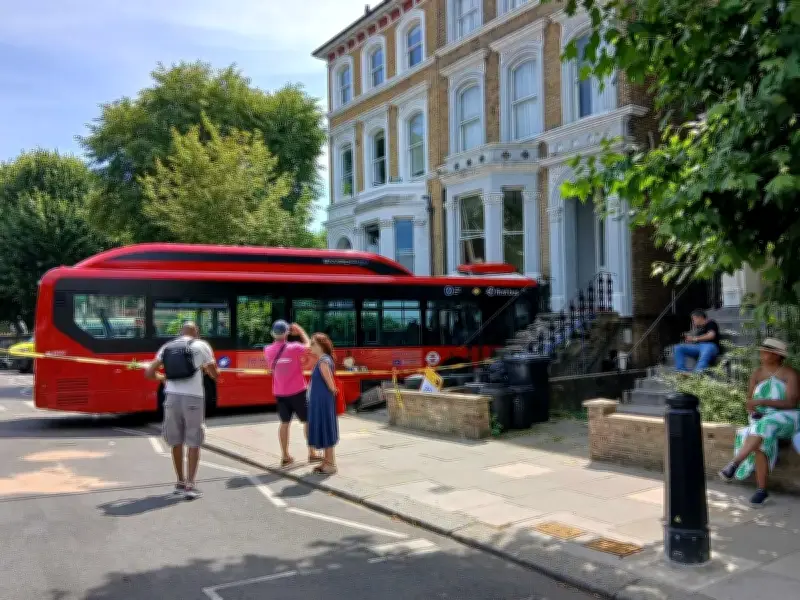
Pedal confusion—drivers mistakenly pressing the accelerator instead of the brake—is causing an average of three bus crashes per month in London, according to Transport for London (TfL) data. In 2025, 40 collisions were attributed to pedal application error, the second-highest annual figure since TfL began recording such incidents in 2019. Although this marks a reduction from the 49 incidents recorded in 2024, bus drivers argue that transport bosses have not done enough to address the underlying design issues.
Drivers call for design changes to prevent pedal errors
Bus driver Joe, who runs the YouTube channel ‘Better Buses,’ believes TfL should focus on designing pedal confusion out of the system. He points out that bus drivers cannot see their feet while driving, and when both pedals feel similar underfoot, mistakes become more likely. “Distraction is the key case [of bus pedal confusion],” he told his followers. “When drivers are being harassed by controllers, attention can divert away from where their feet are.”
Joe also described a personal incident from about 20 years ago when he pressed the wrong pedal. “I had taken my feet off the pedals to coast along the road, but suddenly the car in front stopped. I looked down at the pedals themselves, and at that moment, I couldn’t cognitively know which pedal to go for. I tried one, and it was the accelerator, and then by deduction I went for the brake. It did thankfully stop, and only caused a minor crash [with the vehicle].”
Fatal consequences and vehicle differences
In August 2021, pedal confusion had deadly consequences when 32-year-old Melissa Burr was killed by a bus at Victoria Station. The pedestrian was walking between two 507 route buses when one vehicle shot forward and smashed into the other. Other incidents often see buses speed up until they collide into a building, a lamppost, or a row of parked cars.
Joe believes the mix of diesel, hybrid, and electric buses in London is exacerbating the problem. “Hybrids give misleading feedback to drivers,” he said. “In diesels, the revs indicate what the driver is trying to do; they correlate to your motion like an ordinary car. That’s also true to an extent for electric buses, but hybrids have this mix of engine noise that can generate electricity for the motor. I’ve been a passenger on hybrid buses at a traffic light that were revving up, which really creates a mismatch for how the driver feels the pedals and engine.”
Proposed solutions and TfL’s response
Joe suggests a complete redesign of buses could eliminate pedal confusion by removing human error. He proposes replacing the accelerator pedal with a hand-controlled system, leaving only the brake pedal in the footwell. He compares this to the solution the US Air Force implemented for B-17 planes, where confusing flap handles and landing gear switches were moved apart and redesigned to prevent similar incidents.
Alternatively, Joe believes the ‘kick-down’ feature—which triggers a gear drop and sudden burst of speed when the accelerator is pressed fully—could be reversed, so that pushing the pedal all the way down slows the bus instead. This would help bring buses to a stop when drivers panic after pressing the wrong pedal.
Responding to a Freedom of Information request, TfL said its efforts to tackle pedal confusion are part of its wider ‘Vision Zero’ action plans, which aim to end all road deaths in London by 2041. The Bus Safety Standard 2, published this year, includes specific changes to help eliminate the issue. “Our work includes improving data on pedal error incidents involving the bus fleet, including through the use of footwell CCTV cameras,” the FOI officer added. “This data helps us to better understand the extent of pedal error incidents on its bus network, but care should be taken when comparing incident rates to those on other vehicle types, or other bus fleets, where the same level of incident reporting is often not present.”