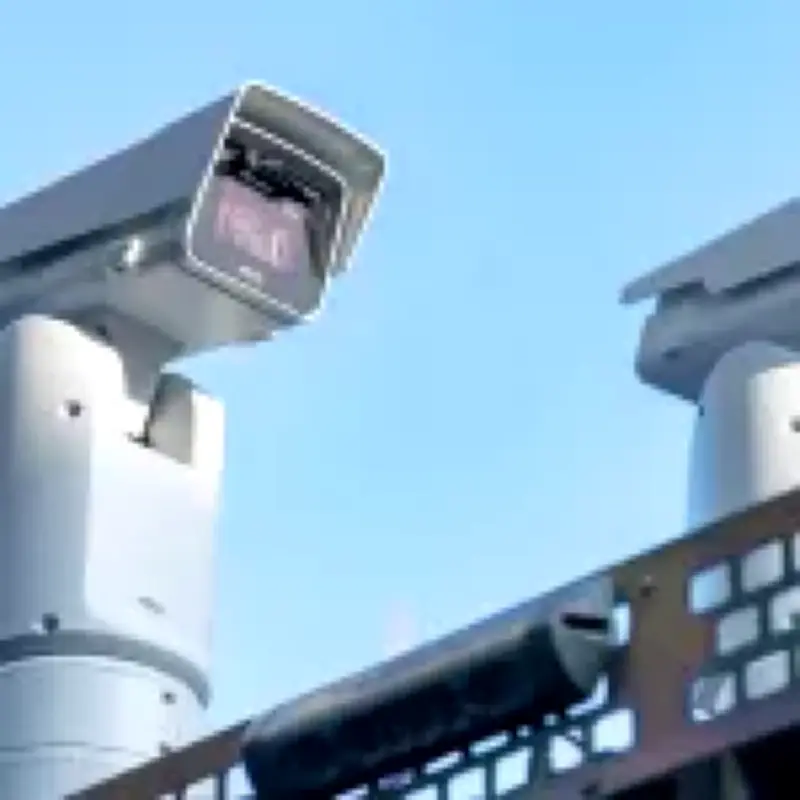
Transport for London (TfL) has activated live facial recognition cameras at Victoria station today (Tuesday, August 11), marking a significant expansion of the technology's trial across the capital's transport network. The cameras feed live images to a database that compares faces against a police watchlist targeting individuals wanted for serious crimes including sexual offences, robbery, and knife crime.
According to TfL, images of people who do not match the watchlist will be 'automatically and immediately deleted'. The trial, which began in February with an initial pilot at London Bridge, is set to run for six months. British Transport Police (BTP) are overseeing the project, with the technology being deployed at 'key spots around the city'.
How the technology works and its purpose
The live facial recognition system operates by scanning faces in real-time and cross-referencing them with a police database of wanted individuals. The stated aim is to identify and apprehend 'high harm' offenders, with a particular focus on preventing sexual offences and violence against women and girls. Siwan Hayward, director of security, policing and enforcement at TfL, said: 'Everyone should be able to travel without fear of harassment, intimidation or violence. Tackling violence against women and girls and preventing sexual offending on our network remains a key priority.'
Hayward added: 'Live facial recognition has the potential to be a powerful additional tool in helping police quickly identify those wanted for high-harm offences, including sexual offences, and supports early intervention and helps stop incidents before they happen.' The technology is being introduced with 'alternative routes' and clear signage in stations to allow passengers to make 'informed choices about passing through'.
Criticism and concerns over privacy
The deployment has drawn sharp criticism from privacy campaigners. Big Brother Watch, a civil liberties organisation, has questioned the system's effectiveness and labelled the surveillance 'dystopian'. Silkie Carlo, director of Big Brother Watch, said: 'This is a disturbing and dystopian expansion of live facial recognition that will capture millions of innocent people's faces. Far from reserving this for exceptional cases, British police are now using live facial recognition routinely in the sort of pervasive way you might expect in China but not in a democracy.'
The technology has also been criticised for errors. A previous trial of the software, which was first tested at Notting Hill Carnival in 2016 and officially deployed in 2020, saw zero true matches and no arrests despite scanning more than 530,000 faces, according to force deployment logs. The system triggered a single false identification during that period, mirroring an incident at a Sainsbury's store in February.
Previous false identification at Sainsbury's
In February, a man named Warren Rajah was ejected from a Sainsbury's store in Elephant and Castle after being incorrectly identified as an offender by facial recognition software called Facewatch. Sainsbury's apologised, calling the incident a 'human error'. A spokesperson said: 'We have been in contact with Mr Rajah to sincerely apologise for his experience in our Elephant and Castle store. This was not an issue with the facial recognition technology in use but a case of the wrong person being approached in store.'
Rajah, however, argued that staff were insufficiently trained and that the software relies on human interpretation. He said: 'Am I supposed to walk around fearful that I might be misidentified as a criminal? Imagine how mentally debilitating this could be to someone vulnerable, after that kind of public humiliation.'
BTP defends the trial
Despite the concerns, BTP has defended the trial. Ch Supt Chris Casey, BTP's senior officer responsible for the project, said: 'This marks an important new stage in our trial of LFR technology. Expanding deployments into London Underground stations will help us assess the technology in a different transport environment while continuing to refine how it is used across the railway network.' The deployments are described as 'intelligence-led', focusing on wanted individuals, including those breaching bail conditions.
The trial comes as TfL also grapples with fare evasion issues, with recent reports of a fare dodger who avoided almost £4,000 in tickets using a contactless trick, and another caught with over £2,000 in unpaid Elizabeth Line tickets. The new facial recognition system is part of broader efforts to enhance security on the network, but its effectiveness and ethical implications remain under scrutiny.