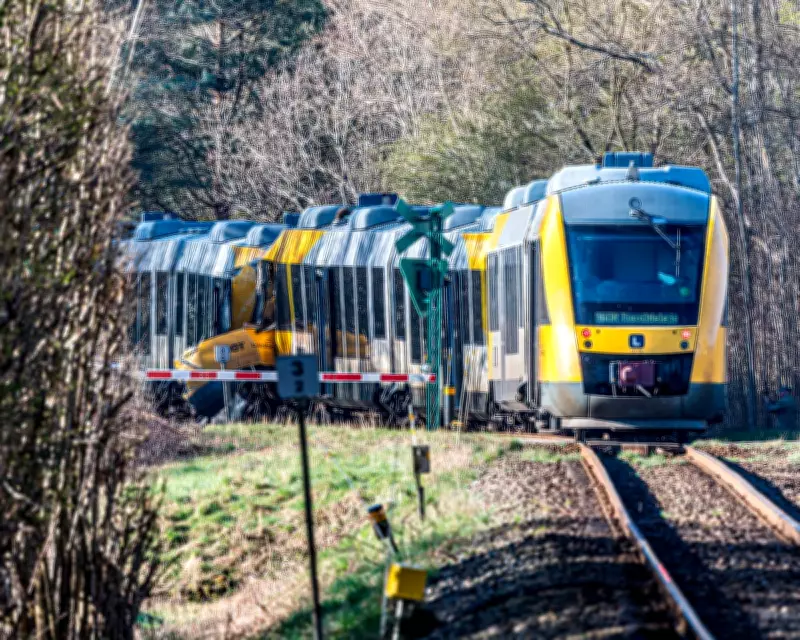
At least 18 people were injured, five critically, when two trains collided head-on near Hillerød, Denmark, on Thursday morning. The crash occurred at a level crossing on the Gribskov line, about 19 miles northwest of Copenhagen.
Emergency services received reports of the collision just before 6:30 am. Photographs from the scene showed the two trains head-to-head, with one substantially crushed at the front. North Zealand police confirmed that the trains were traveling at high speed, though exact speeds remain unknown.
Political Response and Investigation
Denmark's acting prime minister, Mette Frederiksen, expressed being "very moved by the terrible train accident" and stated that several people were in critical condition. Swedish Prime Minister Ulf Kristersson offered assistance, but Danish police declined the offer.
All 37 passengers were evacuated from the trains, and a military helicopter airlifted the most severely injured to hospitals. The Copenhagen region's emergency services chief physician, Anders Heimdal, reported a variety of injuries, noting that "people were thrown around."
Technical Investigation Underway
Inspector Morten Pedersen stated it was "far too early" to determine if signal errors caused the crash, though such information would be included in the overall investigation. Denmark's accident investigation board is collecting evidence, focusing on potential technical issues with signaling systems, rails, and whether human factors played a role.
Claus René Pedersson, safety director at Lokaltog, the line operator, emphasized that such collisions "should not be possible" given the safety measures in place, including signaling systems and driver training. He added that these incidents occur "very, very, very rarely."
A crisis center was established in Hillerød for passengers and relatives. The investigation continues as authorities seek to determine the cause of this rare and tragic event.