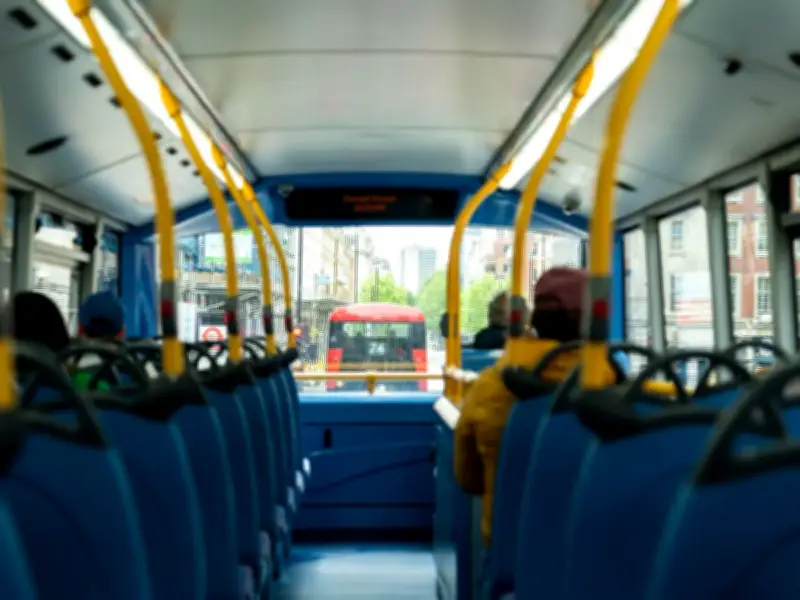
Singapore has introduced fines of up to £293 for antisocial behaviour on buses, prompting Londoners to call for similar action over noisy and inconsiderate passengers. The new regulations, announced by Singapore's Land Transport Authority (LTA), allow for fines of up to S$500 (£293) for offences including putting feet on seats, playing loud audio, eating, drinking or littering on board.
More serious offences can attract heftier fines, including causing obstruction or danger to other commuters at bus terminals and “the soiling of any part of a public bus, bus interchange, or terminal”. The LTA said the measures were designed to create “a safer, more considerate and pleasant public transport environment for all”. The rules, announced on Monday, bring buses more closely into line with regulations already in place on Singapore's Mass Rapid Transit network.
How Singapore's new bus rules will work
Previously, behaviours such as eating on an MRT train could result in punishment, but rules covering buses were generally company policies enforced by drivers, who could ask passengers to leave. Under the new regulations, authorised bus staff, including ticket inspectors and bus interchange staff, can issue official notices to passengers suspected of committing an offence.
Bus drivers – known in Singapore as “captains” – will not have the same powers. They are expected to concentrate on safely operating their vehicles, although they can tell passengers to stop disruptive behaviour. People who refuse to cooperate can be asked to leave the bus and, in serious cases, police may become involved.
Londoners debate enforcement and confrontation
The Singapore rules have drawn attention in London because the same frustrations – particularly passengers playing music or videos aloud from their phones – are familiar to commuters in the capital. In the UK, existing laws already prohibit certain forms of anti-social behaviour on trains and at stations, including using “sound-producing equipment” without permission where it annoys other passengers. Some British politicians have also called for specific fines aimed at so-called “headphone dodgers”. British politicians (specifically the Liberal Democrats) have publicly advocated for fines of up to £1,000 targeting "headphone dodgers" on public transport.
One Reddit user argued that direct confrontation could be more effective than introducing new laws, writing: “If everyone had the guts to say ‘hey, do you have some headphones?’ this would barely be an issue. Instead people silently seeth and the people who do it continue to be oblivious.” Another added that they had challenged people themselves but rarely saw anyone else do the same, asking: “How many times have you called someone out? I have done maybe 3-4 times but never seen anyone else do it. People just keep their mouths shut always.”
But other Londoners said confronting strangers could carry its own risks. One Reddit user recalled challenging a passenger playing music and television programmes aloud on a train. They said the man initially argued with them and accused them of being racist, but eventually switched the sound off after the confrontation continued. Another said they did not blame people for keeping quiet, describing a story they had read about a mother who asked someone to turn down their music and was allegedly assaulted afterwards. “Some of these people are genuinely deranged,” the user wrote, arguing that an irritating noise was not worth risking violence.
Broader concerns about rule enforcement in London
Another Reddit user recalled travelling home on a bus after a long double shift when a woman was watching something loudly on her phone. They said they politely asked her to lower the volume, only to receive the response: “Is this your bus? I can do what I want.” The user eventually said the woman lowered the volume, but questioned what had happened to signs on London buses asking passengers not to eat smelly food, to be mindful of noise and to offer seats to elderly passengers. “All that gone along with it everyone’s manners,” they wrote.
The discussion soon moved beyond loud music to the wider question of whether London has stopped enforcing basic rules on public transport. One Reddit user wrote: “Our problem isn’t that we don’t have any rules. The problem is that we don’t enforce the rules we do have.” Another said London could not even reliably stop people barging through ticket barriers, before describing the capital as having reached a point where bad public-transport behaviour was “normalised”. “We are well past the turning point and it’s Wild West now - feet on seats, loud music, vaping, bumping past the barriers, large rucksacks on back during rush hour, it’s all normalised now,” they wrote.
The debate also exposed sharply differing views about Singapore itself. Some commenters praised the country's approach to public behaviour. One British Reddit user who said they had lived in Singapore for several years described it as having an effective government and civil service, arguing that people were brought up to think about their responsibilities to the wider community. They added: “Not sure there are many similarities with the UK.”
Singapore is not the only place to have introduced measures aimed at keeping public transport peaceful. The BBC report notes that Kraków in Poland introduced similar rules earlier this year, with commuters facing fines of up to 200 złoty (£39) for disturbing the peace and quiet of a vehicle with mobile phones or other electronic devices.
For Singapore's transport authority, the principle behind the new bus rules is straightforward: public transport is shared space. “Every commuter has a part to play in ensuring a gracious and pleasant commuting environment,” Singapore’s Land Transport Authority said.