Britain's 'Most Expensive Cycle Lane' Costs Taxpayers £4,000 Per Metre
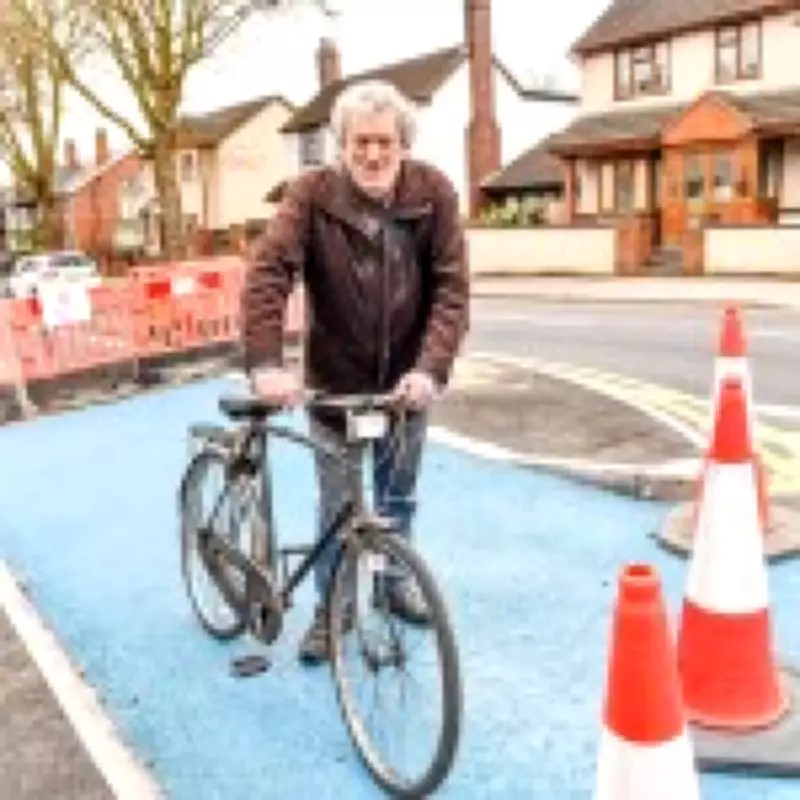
Local residents and business owners in Willenhall, Walsall, are expressing fury over what has been labeled Britain's most expensive cycle lane, a project costing taxpayers an astonishing £4,198 per metre. The newly constructed segregated cycle lane, stretching just 0.8 miles along New Road and Bilston Street, carries a total price tag of £5,037,792, sparking widespread condemnation as a colossal misuse of public funds.
Public Outrage Over Cost and Design
The cycle lane, which has been under construction for approximately one year, has drawn sharp criticism from the community. Angie Watson, a 40-year-old local resident, voiced her disbelief at the expenditure. 'When I heard about the final cost being more than £5 million I was honestly gobsmacked,' she stated. 'How on earth can anyone justify spending such a crazy amount of money on a cycle path? Especially one which is all over the place and not even a mile long.'
Watson further highlighted discrepancies in the project's reported length, noting that while the council claims the lane is 1.2km long, the actual dedicated cycling portion measures only a few hundred metres. 'It hardly seems worth it,' she added, calling it 'a monumental waste of public money and the council leaders should hang their heads in shame.'
Business Disruption and Criticism
The construction has severely impacted local businesses, with many reporting significant drops in footfall as customers struggle to navigate the ongoing work. Jack Taylor, the 24-year-old assistant manager of Angling Direct, observed a noticeable decline in shop visitors since the project commenced last year. 'I think the money would have been better spent fixing the potholes in the roads rather than providing a blue path for a few cyclists,' he remarked.
The situation is particularly dire for Shah Ali, owner of the Bengal Relish restaurant, who expressed grave concerns about the survival of his business amidst the disruption. Labour councillor Simran Cheema, representing Willenhall South, echoed these sentiments, describing the project as a 'waste of money' that has caused major upheaval for both residents and enterprises.
Design Flaws and Safety Concerns
Critics have pointed to the lane's disjointed design, which requires cyclists to cross the road multiple times to rejoin the path every few hundred metres. Councillor Cheema emphasized this issue, stating, 'The design of the lanes is disjointed and confusing with people having to keep crossing the road to rejoin the lane every few hundred metres.' She also questioned the necessity of such infrastructure in Willenhall, noting, 'Willenhall is not a cycling town like Oxford or Cambridge so I don't know who will use the lanes anyway.'
However, the project comes against a backdrop of cycling safety concerns in the area. Historical data reveals several accidents involving cyclists on New Road and Bilston Street. For instance, a 17-year-old boy was seriously injured in a collision in May 2015, a 38-year-old cyclist suffered serious harm in September 2017, and a 19-year-old man was seriously hurt in a crash at the junction of New Road and Pinson Road in January 2021. Between 2002 and 2024, these roads witnessed nine slight injury crashes involving cyclists, and tragically, an 85-year-old man lost his life in a cycling accident on Temple Bar in June 2020.
Council Defense and Comparative Costs
In defense of the project, Walsall Council Leader Adrian Andrew argued that the cycle lane, along with other transport initiatives in Willenhall, aims to enhance cycling safety and attractiveness. 'This scheme, along with the other transport schemes currently being delivered in Willenhall, will help make cycling more direct, safe and attractive,' he asserted. 'Improving our connectivity across the borough and the wider Black Country means more opportunities for local people to travel for work and leisure.'
Nevertheless, the cost per metre of this cycle lane starkly contrasts with other infrastructure expenses. For comparison, a single divided zebra crossing typically ranges from £37,000 to £52,000, while upgrades to major motorway junctions can reach up to £100 million. This disparity has only fueled public skepticism about the value and prioritization of the £5 million investment in a relatively short cycling path.
The controversy underscores ongoing debates about public spending on transport infrastructure, particularly in areas where cycling may not be a predominant mode of travel. As the cycle lane nears completion, residents and business owners continue to voice their frustrations, calling for greater accountability and more prudent use of taxpayer funds in future projects.