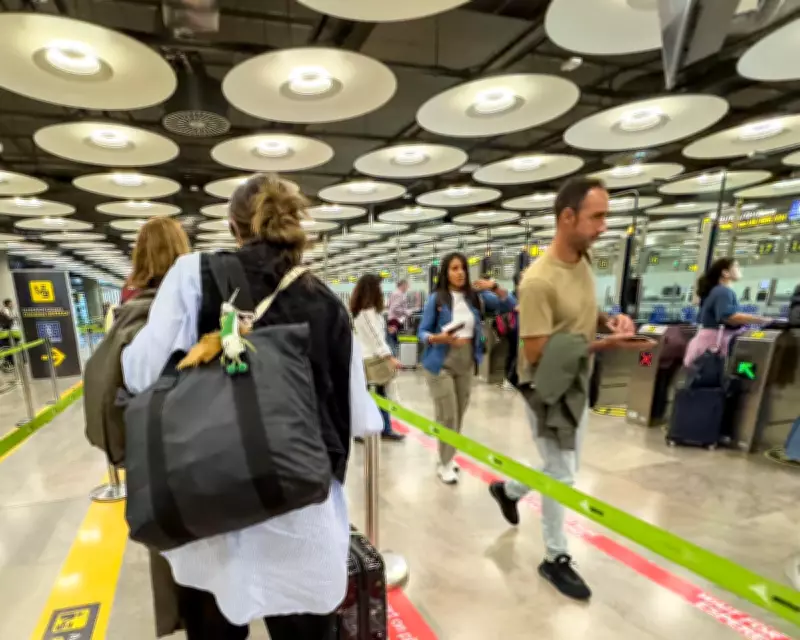
Travel industry leaders across Europe are raising urgent alarms over potential summer chaos, as airports in Spain, Portugal, France, and Italy grapple with severe delays caused by the new Entry-Exit System (EES) biometric checks at border controls. With fears mounting of a "disastrous" passenger experience, calls have been made for the European Commission to authorise authorities to suspend the system if necessary to prevent lengthy queues and missed flights.
Mounting Delays and Industry Concerns
The Airports Council International (ACI) Europe has reported that the rollout of EES, which requires most non-EU visitors to be fingerprinted, photographed, and registered, is already causing delays of up to three hours at some airports. Olivier Jankovec, Director General of ACI Europe, highlighted that even with only 35% of travellers currently being registered, queues have stretched to two hours, warning that this could escalate to five hours during the peak summer months of July and August.
Jankovec expressed deep concern, stating: "The chronic understaffing of border control guards was an issue before, and the rollout of EES makes it worse. We're routinely seeing queues of up to two hours, and it's not sustainable. With double the traffic in summer, we could see queues of up to five hours, creating a disastrous passenger experience, safety hazards, and possible missed connecting flights."
Calls for EU Action and Contingency Measures
In response to these challenges, the UK travel association Abta has urged the EU to ensure all member states instruct border staff to use contingency measures to avoid long delays. Mark Tanzer, Chief Executive of Abta, has written to EU Migration Commissioner Magnus Brunner, requesting a review of the system and additional border guards during busy periods.
Tanzer remarked: "The ambition of a project like EES means it was never going to go completely smoothly, and we were prepared for that. However, what is frustrating is that border authorities have it within their power to ease queues and deal with issues as they arise – but that doesn't seem to be happening across the board."
Technical Issues and Inconsistent Implementation
The staggered implementation of EES since its soft launch in October has revealed significant technical problems and inconsistent application of rules. Many self-service kiosks have proven unreliable, and only Sweden has allowed the use of a pre-registration app for travellers. In one notable incident, queues at Lisbon airport reached seven hours just before New Year, prompting Portuguese authorities to temporarily suspend the system.
Jankovec emphasised the need for a coordinated European approach, saying: "We can do a band-aid for the summer, but we need all these things to be addressed under a unified strategy." The European Commission has hinted at extending contingency measures for at least 90 days from the April deadline, potentially covering the summer season, but formal notification has not been provided to airports.
Impact on UK Travel and Rail Services
In the UK, the effects of EES are being felt at key transport hubs. Eurotunnel has begun a phased rollout for coach passengers and lorry drivers smoothly, reporting it is "fully prepared," but has yet to start registering tourist vehicles, awaiting a date from French authorities. Meanwhile, Eurostar has invested in new kiosks at London's St Pancras International station but has not activated them, with checks currently being completed manually by border officers until software and dates are confirmed by the French interior ministry.
As the summer travel season approaches, the travel industry remains on high alert, advocating for swift EU intervention to mitigate disruptions and ensure a smoother experience for millions of holidaymakers crossing European borders.